





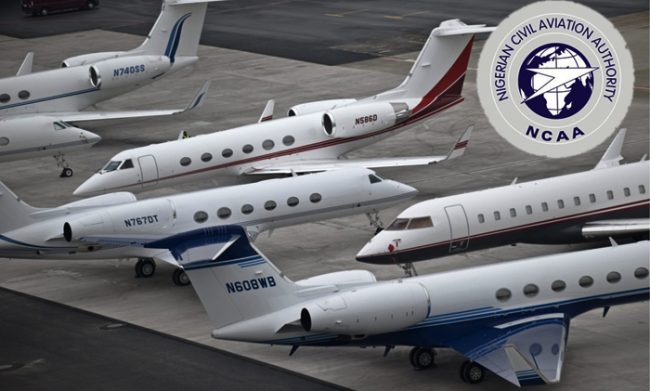
Nigeria has emerged as the country with the highest number of grounded aircraft globally, with only 44 serviceable planes currently in operation, according to industry data.
Findings show that in 2022, local airline operators had 65 serviceable aircraft out of a total fleet of 107. However, data from CH-Aviation indicate that by 2025, Nigeria’s registered aircraft fleet had grown to 123, while the number of grounded planes rose to 79, leaving just 44 aircraft available for commercial operations across 15 scheduled airlines.
The situation places Nigeria ahead of Hong Kong on the global list of grounded aircraft, with Hong Kong recording 151 grounded planes out of a fleet of 244.
The sharp decline in serviceable aircraft has disrupted air travel nationwide, particularly during the yuletide season, with passengers facing frequent delays and flight cancellations on major domestic routes.
Confirming the industry-wide reduction in fleet capacity, the chief financial officer of Aero Contractors, Charles Grant, said the combined fleet of Nigeria’s scheduled airlines has continued to shrink. He disclosed that the aviation industry generated an estimated revenue of between 400 million dollars and 700 million dollars in 2024.
Grant said each serviceable aircraft generates between 10 million dollars and 18 million dollars annually and supports about 15,200 jobs, representing roughly 0.01 percent of Nigeria’s aviation workforce. He added that most domestic airlines now operate with only four to six active aircraft, a number far below national demand.
According to him, the reduced fleet size is not a deliberate business decision but the outcome of harsh operating conditions. He said aircraft shortages have resulted in delays, cancellations, missed connections and declining passenger confidence in local airlines.
Grant noted that the industry’s growth remains constrained by structural challenges, warning that unreliable service, job losses and declining competitiveness would persist unless underlying cost pressures are addressed.
Nigeria’s aviation sector, which plays a critical role in connecting its population of over 200 million and supporting trade, oil and tourism activities, has steadily lost aircraft capacity over the past decade. Available records show that about 90 aircraft were operational in 2014, but the COVID-19 pandemic grounded nearly 40 percent of the fleet between 2020 and 2022.
By 2025, fleet attrition accelerated further, driven largely by foreign exchange scarcity and rising operating costs. The naira’s depreciation from about N410 to the dollar in 2022 to over N1,600 significantly increased dollar-denominated expenses such as aircraft leasing and maintenance.
Industry data also show that more than 65 percent of Nigeria’s aircraft are over 15 years old, beyond their optimal operational lifespan. Global post-pandemic shortages of spare parts, combined with regulatory inspections by the Nigerian Civil Aviation Authority, have further sidelined dozens of aircraft.