








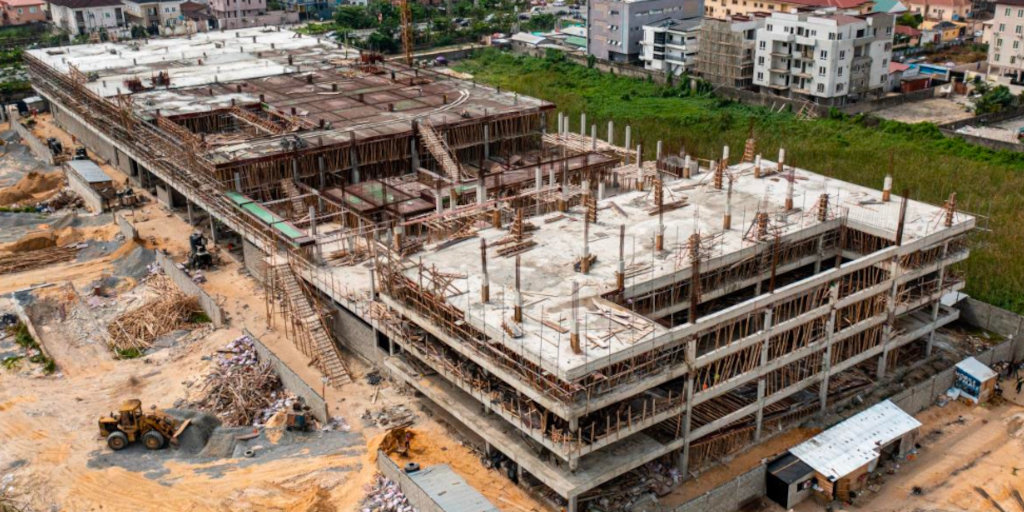
Nigeria’s real estate market may be entering a recovery phase as economic conditions stabilise, according to a new industry report.
The Nigeria Real Estate Capital Trends Report 2025, published by Estate Intel Limited, shows that key commercial segments such as office and retail are moving out of years of hyper-supply and recession. The report projects that asset values will begin to rise if the economic recovery holds. It also notes that acquisition prices seen in 2024 and 2025 represent the lowest entry point in the next 10-year property cycle.
Recent transactions show capitalisation rates above 10 percent, which is higher than levels recorded through most of the past decade. In Lagos, strong demographic growth continues to drive residential demand. Residential investment has been rising since 2020 with no signs of slowing.
The report states that the office market is usually the first to benefit during periods of economic recovery as businesses expand or enter the market. It adds that the industrial and data centre sectors have enjoyed even stronger conditions.
Nigeria’s data centre capacity has grown rapidly since the COVID-19 pandemic strengthened its position as a resilient asset class. Capacity is projected to rise from 56.1MW in 2025 to more than 218MW by 2030. Major projects include Equinix’s 20MW facility in Alaro City, Airtel’s 35MW Nxtra centre in Eko Atlantic and OADC’s 24MW development along the Lekki Corridor.
The report links the emerging recovery to government reforms aimed at stabilising the economy and restoring investor confidence. The Naira strengthened to N1,422 per dollar at the end of October 2025 in the official market. Foreign reserves increased to 42.1 billion dollars, the highest level since 2019. Inflation has slowed to 18.02 percent. The Nigerian equity market has gained 49.88 percent year to date.
Updated GDP figures place Real Estate Services at 13.3 percent of GDP, making it Nigeria’s third-largest sector after Trade and Crop Production. Real estate and construction together contribute nearly 18 percent of GDP, showing their importance to urbanisation and national investment growth.
Estate Intel Founder and Research Director Dolapo Omidire said the market is responding positively to improving stability. Commercial property transactions rose from 53 million dollars in 2023 to 336 million dollars in 2024. He said the growth was driven by income funds and corporates acquiring headquarters buildings.
He added that Nigerian corporates and owner-occupiers are becoming more active through office acquisitions and new developments. He linked the trend to relatively low asset prices, high construction costs and a desire to avoid high dollar rents in Lagos Grade A offices.
As the year ends, the firm is tracking nearly 50 million dollars in acquisition activity. Omidire cautioned that Nigeria’s opaque property market means full transaction data may not be available until early 2026.
He said the new wave of activity shows that Nigeria is on track to reintroduce its major cities as destinations for international institutional capital.