










KEY POINTS
- Nigeria’s palm oil production reached 1.57 million metric tons (MMT) in 2025, a 12% increase from 1.4 MMT in 2024.
- Despite the output jump, a domestic supply gap persists as consumption rose to 2.61 million tons, necessitating continued imports.
- The Council of Palm Oil Producing Countries (CPOPC) has pledged technical support to help Nigeria reclaim its status as a global leader in the sector.
MAIN STORY
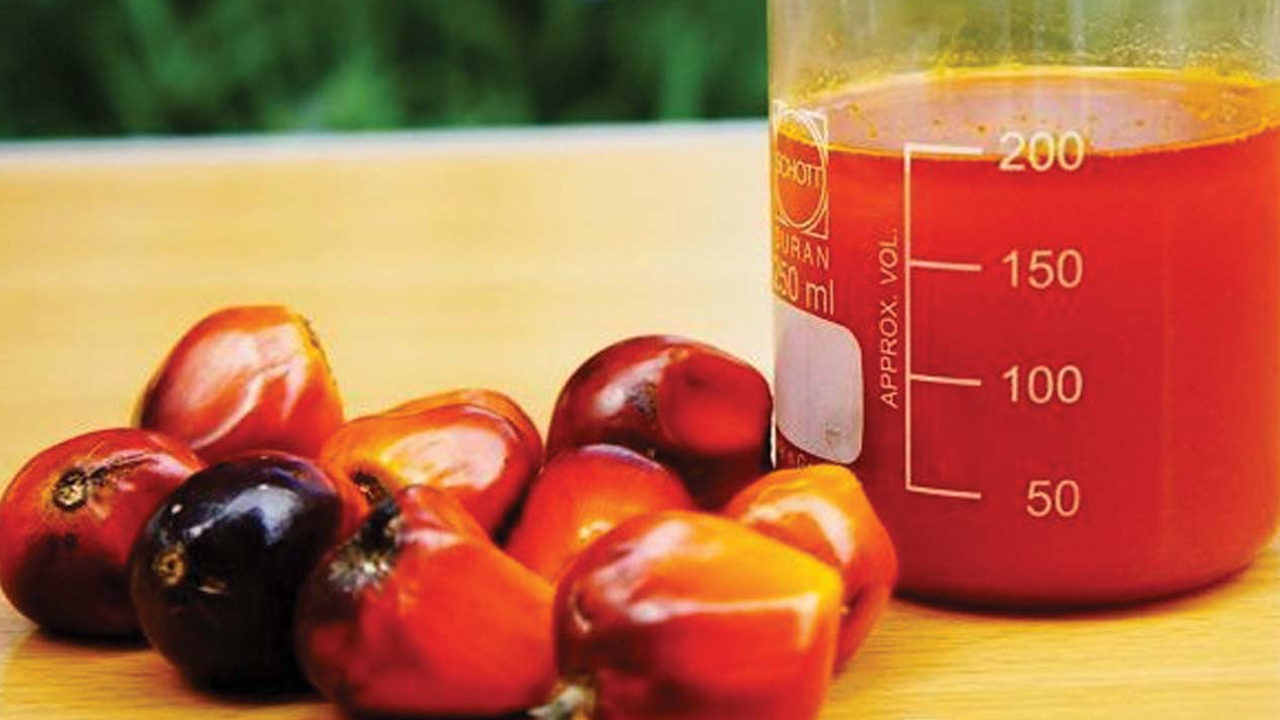
Nigeria’s palm oil industry is showing renewed momentum, with national output climbing to 1.57 million metric tons in 2025. This 12% year-on-year increase was disclosed by the Council of Palm Oil Producing Countries (CPOPC) during a recent mission to Abuja. The surge reflects a consistent five-year growth trend, up from 1.28 million tons in 2020. The CPOPC highlighted that while the growth is encouraging, Nigeria still lags behind global peers like Colombia and Malaysia, largely due to a high prevalence of aging trees and traditional production methods.
The commercial success of large-scale, vertically integrated producers has been a major driver of this growth. For the 2025 financial year, Presco Plc and Okomu Oil Palm Plc reported record pre-tax profits of ₦178.56 billion and ₦87.3 billion, respectively. These figures underscore improved operational efficiency and favorable domestic pricing. However, smallholder farmers still account for over 80% of national production, and the CPOPC has emphasized that bridging the productivity gap will require providing these farmers with hybrid planting materials and modern mechanized mills.
Despite the production gains, Nigeria faces a significant supply deficit of over 1 million tons, as domestic consumption has hit 2.61 million tons. This gap results in substantial foreign exchange outflows. Alphonsus Inyang, President of the National Palm Produce Association of Nigeria (NPPAN), noted that full membership in the CPOPC could accelerate Nigeria’s drive toward self-sufficiency by opening access to international research, capacity building, and investment frameworks.
WHAT’S BEING SAID
- “Nigeria’s palm oil production has increased from 1.28 million tons in 2020 to 1.57 million tons in 2025,” noted Izzana Salleh, Secretary General of CPOPC.
- “The gap we see is not just a trade statistic. It represents foreign exchange outflow and untapped agro-industrial potential,” Salleh added.
- NPPAN President Alphonsus Inyang stated that the sector stands to gain from “hybrid planting materials and technical support to improve yields” through global partnerships.
WHAT’S NEXT
- Nigeria is expected to seek full membership in the CPOPC to facilitate deeper policy and technical cooperation.
- Stakeholders are pushing for a national replanting program to replace aging oil palm trees with high-yield hybrid varieties.
- Large-scale producers like Presco and Okomu are likely to continue their expansion strategies, leveraging record profits to increase plantation acreage in 2026.
BOTTOM LINE
The Bottom Line is that while a 12% increase in palm oil output marks a significant step toward agricultural recovery, the widening consumption gap remains a fiscal challenge. Nigeria’s path to “Red Gold” dominance depends on transforming its massive smallholder network from traditional methods to high-yield, modern agribusiness.



 during a recent mission to Abuja.)