






The Federal Government of Nigeria has announced that the National Agricultural Growth Scheme and Agro-Pocket initiative successfully added over 2.5 million metric tonnes of food to the national supply within the last two years.
During a stakeholders’ review workshop in Abuja on February 5, 2026, the Minister of State for Agriculture and Food Security, Dr. Aliyu Sabi Abdullahi, revealed that this surge in production carries an estimated market value of approximately ¥2.31 trillion. This achievement is part of a broader emergency support program designed to bridge supply gaps and ensure that essential staples remain available and affordable for the Nigerian population.
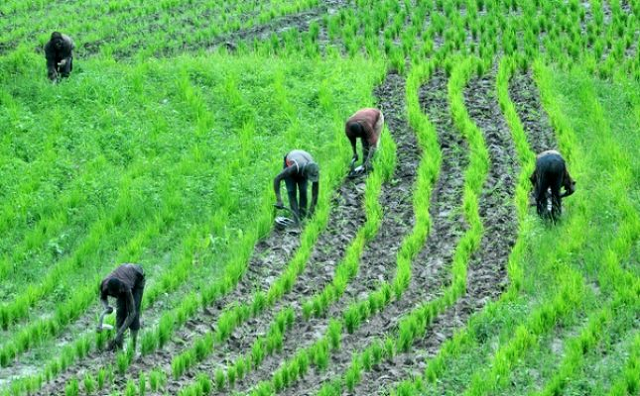
The production milestone was recorded across four distinct farming seasons and focused on six critical staple crops including wheat, rice, maize, sorghum, soybean, and cassava. Dr. Abdullahi highlighted that this significant increase in output has played a substantial role in stabilizing food prices and increasing the physical availability of food across the country.
He noted that the success of the program underscores the importance of the government’s declaration of a state of emergency on food security, which has elevated agricultural productivity to a top national priority.
Looking ahead, the government is preparing to transition into a new phase of the program dubbed NAGS 2.0. This upcoming cycle will feature expanded collaborations with international partners such as the Japan International Cooperation Agency to further scale the production of rice, maize, and cassava.
For the current 2025/2026 dry season, the initiative will cover all thirty-six states and the Federal Capital Territory with a specific focus on intensive irrigation farming. The Ministry is also working closely with the Bank of Agriculture to refine its implementation framework and ensure that subsidized inputs reach registered farmers more efficiently.
A key component of the future strategy includes a heavy emphasis on wheat production to reduce the nation’s reliance on expensive grain imports. For the ongoing dry season, the government has set an output value target of approximately ¥160 billion for wheat alone, earmarking forty thousand hectares of land across sixteen states.
By deploying specialized extension agents and quality control officers to guide farmers in modern agronomic practices, the government aims to consolidate these gains and foster a more resilient, self-sufficient agricultural economy.