










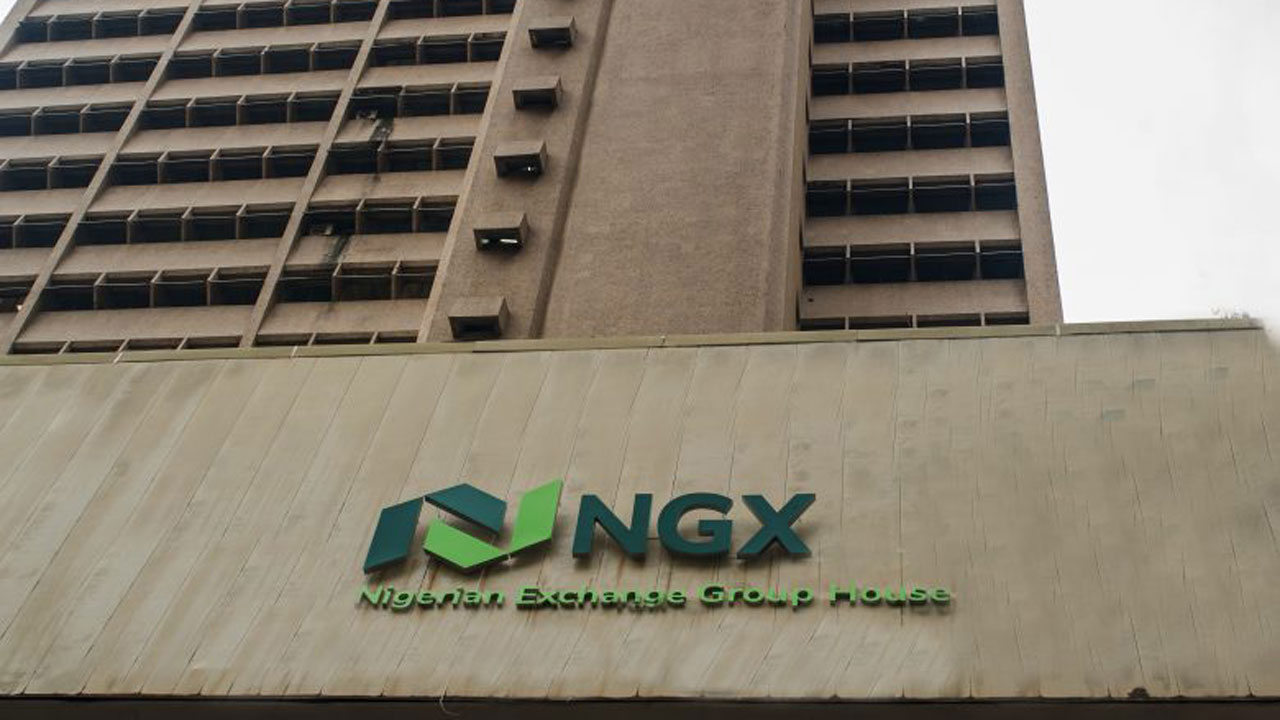
The Nigerian Exchange Group (NGX Group), working alongside Germany’s development finance institution DEG and Africa Foresight Group, has intensified efforts to mobilise between $2.5 billion and $3.0 billion in climate-related capital for Nigerian corporates.
This initiative took centre stage at an NGX–DEG Chief Executive Officer Roundtable, which convened business leaders, development finance institutions, and capital market stakeholders to accelerate corporate participation in the NGX Net-Zero Programme (N-Zero). The event was held at NGX’s Lagos headquarters on Thursday, January 15, 2026, and concluded with a Closing Gong Ceremony.
As global investors increasingly link capital allocation to sustainability performance, NGX Group and its partners noted that the conversation has shifted from whether Nigerian corporates should adopt climate strategies to how quickly they can convert ambition into execution.
Net-Zero Climate Capital, according to NGX Group, refers to targeted financing aimed at reducing greenhouse gas emissions to net-zero levels. The approach seeks to balance emissions produced with emissions reduced or removed, while still delivering financial returns.
Such capital supports investments in clean energy, energy efficiency, low-carbon manufacturing, climate-smart agriculture, electric mobility, and carbon removal technologies. The objective is to combat climate change without stalling economic growth, enabling businesses to scale using cleaner and more sustainable technologies.
Opening the roundtable, NGX Group Chairman, Alhaji (Dr.) Umaru Kwairanga, emphasised that Africa’s climate response must be anchored in its capital markets to achieve scale and credibility. He said the NGX Net-Zero Programme provides a structured pathway for companies to move from climate pledges to measurable outcomes, adding that transparency and credible transition plans are increasingly critical to corporate competitiveness.
The N-Zero Programme is a market-driven initiative designed to strengthen the long-term investment appeal of listed companies by aligning them with global net-zero benchmarks, climate disclosure standards, and transition planning frameworks.
Presenting the investment case, NGX Group Managing Director and Chief Executive Officer, Mr. Temi Popoola, noted that climate risk has evolved from a reputational concern into a core financial issue. He explained that global capital is becoming more conditional, with climate exposure directly influencing valuation and the cost of capital.
Discussions at the roundtable suggested that Nigerian corporates with credible climate strategies could unlock as much as $3.0 billion in blended finance, green bonds, and sustainability-linked investments over the medium term.
DEG’s Member of the Management Board, Ms. Monika Beck, said the collaboration reflects DEG’s strategy of mobilising private capital to drive climate action while delivering development impact. She noted that partnerships such as the NGX–DEG initiative enable the scaling of solutions that are both commercially viable and environmentally impactful.
Participants also highlighted execution as the primary challenge. Chapel Hill Denham’s Chief Executive Officer, Mr. Bolaji Balogun, stressed that climate disclosures must translate into tangible investor value, supported by access to capital, technical expertise, and credible frameworks.
Similarly, Transcorp Plc President and Group Chief Executive Officer, Dr. Owen Omogiafo, OON, underscored the need for Africa’s climate transition to remain practical and inclusive, balancing sustainability goals with economic growth and social development.
The roundtable builds on a multi-million-naira co-funding partnership between NGX Group and DEG Impulse gGmbH under Germany’s develoPPP programme. The collaboration provides subsidised net-zero transition planning, technical capacity building, and access to globally recognised climate frameworks for listed companies.
Net-Zero Climate Capital forms part of the broader global effort to balance carbon emissions with carbon removal, a goal formalised under the 2015 Paris Agreement. Over time, the concept has evolved into a central pillar of international climate finance, driving public and private capital toward renewable energy, clean technology, and decarbonisation projects that support long-term sustainability.




, working alongside Germany’s development finance institution DEG and Africa Foresight Group, has intensified efforts to mobilise between $2.5 billion and $3.0 billion in climate-related capital for Nigerian corporates.)