








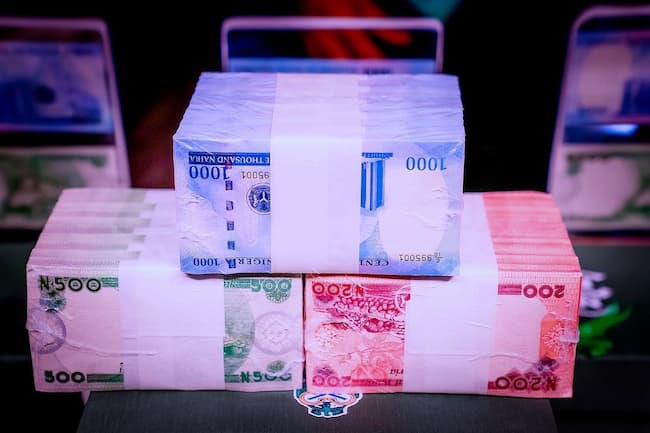
According to market data, the local currency closed at N1,535.03 per dollar, slipping by N2.52 from the previous week. Trading activity fluctuated as demand and supply dynamics shaped the FX market.
In early sessions, weak dollar demand pushed the naira to N1,529, but stronger buying interest quickly lifted trades back to the N1,535 level. Midweek, sustained demand pressure drove the rate as high as N1,538.50 before the CBN’s $50 million intervention and inflows from oil firms eased liquidity concerns.
By the end of the week, trades stabilized between N1,534.50 and N1,536.00, with the naira closing weaker by 16 basis points week-on-week. Analysts at AIICO Capital Limited noted that while interventions provided relief, liquidity constraints persisted.
Meanwhile, Nigeria’s external reserves rose by $242 million to $41.07 billion, strengthening the country’s ability to support the currency.
On the global scene, oil prices showed slight gains, with Brent crude settling at $67.73 per barrel and U.S. West Texas Intermediate closing at $63.66. Both benchmarks ended the week with positive returns after three weeks of losses.
Gold also gained momentum, climbing 1.1% to $3,373.89 per ounce, buoyed by expectations of a September interest rate cut by the U.S. Federal Reserve.
Looking ahead, analysts forecast that oil price volatility and geopolitical uncertainty will continue to influence Nigeria’s FX market, though strong reserves and interventions may help stabilize the naira.