







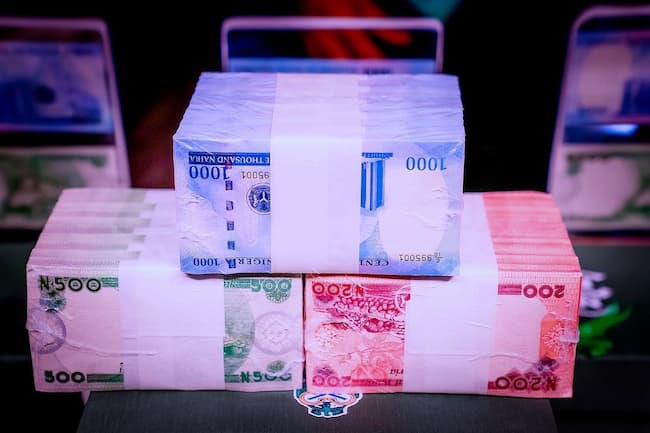
The Nigerian naira ended the week weaker against the U.S. dollar, despite two separate foreign exchange interventions by the Central Bank of Nigeria (CBN) aimed at stabilising the market.
According to CBN data, the naira closed at ₦1,475.35 per dollar on Friday, depreciating by ₦4.32 or 0.29% compared with Thursday’s ₦1,471.02. The week saw consistent declines across most trading sessions, underscoring sustained pressure in the FX market.
The local currency opened the week at ₦1,457.51 on Monday and progressively weakened to ₦1,463.23 on Tuesday and ₦1,473.29 on Wednesday before recording a brief rebound on Thursday.
Analysts attributed the fluctuations to surging demand for foreign exchange amid limited liquidity inflows, noting that such conditions continue to weigh on the naira’s short-term performance.
TrustBanc Financial Group Limited reported that the CBN sold $70 million in FX interventions on Tuesday and Thursday to authorised dealer banks in an effort to bolster supply and narrow the market spread.
By week’s end, the naira had depreciated by ₦20.18 in the official market and ₦5 in the parallel market, closing at ₦1,490 per dollar. Consequently, the gap between both markets widened to 0.99%.
Despite the currency pressure, Nigeria’s external reserves increased by $92.5 million to $42.68 billion, supported by steady crude oil production, which averaged 1.46 million barrels per day over the past nine months.
In the commodities market, Brent crude prices declined to $61 per barrel amid U.S. inventory builds and IEA forecasts of a 2026 surplus. Meanwhile, gold prices climbed 4.87% to $4,202.10 per ounce, driven by investor concerns over a potential U.S. government shutdown and expectations of future interest rate cuts.
Market analysts predict continued naira volatility in the short term but remain optimistic that sustained reforms and reserve growth could support medium-term stability.



 aimed at stabilising the market.)