

By Boluwatife Oshadiya | April 17, 2026
KEY POINTS
- Naira appreciates by 11 basis points or ₦1.44 to close at ₦1,342.30 per dollar in NFEM trading
- Money market rates end mixed with overnight rate climbing 11 basis points to 22.31 percent on robust ₦3.82 trillion liquidity surplus
- Nigerian bond yields rise 1 basis point to 15.85 percent as disinflation reverses and investor appetite weakens
MAIN STORY
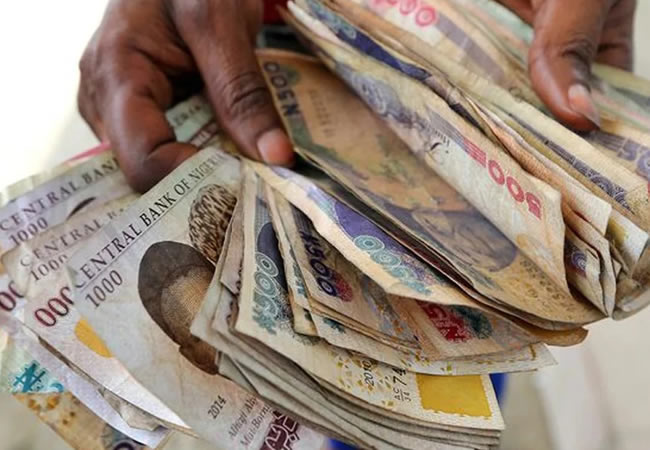
The naira strengthened in the Nigerian Foreign Exchange Market (NFEM) on Thursday, closing at ₦1,342.30 per dollar after gaining ₦1.44 or 11 basis points. The move followed improved FX supply conditions relative to demand, with the market delivering a stronger performance than the previous session. Inflows from foreign portfolio investors, exporters and non-bank corporates continued to support the local currency.
Central Bank of Nigeria data showed NFEM interbank turnover fell to ₦72.255 million across 82 deals, down from ₦114.347 million previously. The spot rate traded in a tight ₦1,344.00–₦1,340.00 band before settling at the stronger level. External reserves stood at $48.70 billion, below the 2009 peak of $50 billion, amid global commodity uncertainty.
Oil prices rose on Thursday as scepticism grew over forthcoming US-Iran peace talks resolving Middle East supply disruptions. Brent crude gained 3.39 percent to $98.15 per barrel while West Texas Intermediate climbed 5.89 percent to $93.32 per barrel. Spot gold eased 0.66 percent to $4,791.81 per ounce.
In the money market, rates closed mixed as banks’ heavy placements at the CBN Standing Deposit Facility window were partly offset by borrowing at the Standing Lending Facility. Liquidity opened the day with a surplus balance of ₦3.82 trillion, up ₦58 billion from the previous session.
“This sustained surplus was mainly supported by ₦3.75 trillion in banks’ placements at the CBN’s SDF window and inflows of ₦535.61 million from Primary Market Repayments,” AIICO Capital Limited said in a note. The surplus was slightly offset by ₦28 billion in SLF borrowing. Average funding cost nevertheless rose 5 basis points to 22.16 percent. The Open Repo Rate held at 22.00 percent while the Overnight Rate climbed 11 basis points to 22.31 percent. Nigerian Interbank Offered Rates finished mixed, with the overnight tenor steady at 22.29 percent, the 1-month tenor down 8 basis points and the 3- and 6-month tenors up 0.2 and 4 basis points respectively.
In the Treasury Bills secondary market, average yield dipped 2 basis points to 17.42 percent on increased demand.
THE ISSUES
A higher-than-expected consumer price index print of 15.38 percent reversed an 11-month disinflation trend that began in April 2025 following the statistics office’s rebased CPI series. The shift has triggered repricing across the fixed-income market and heightened caution among domestic investors already contending with global uncertainties and subdued external reserves. At the same time, the CBN’s liquidity management through the SDF and SLF windows continues to anchor system funding costs above 22 percent, even as ample liquidity prevents sharper spikes.
WHAT’S BEING SAID
“Liquidity in the banking system opened the day with a slightly improved surplus balance of ₦3.82 trillion,” Broadstreet investment analysts reported.
“Performance across the curve was mixed, with selective pressures observed at key maturities,” AIICO Capital Limited added in its market commentary.
WHAT’S NEXT
Analysts expect coupon inflows from the 17-Apr-29 bond to provide additional liquidity support in the coming session, barring fresh funding activity by banks. The next Monetary Policy Committee meeting will offer further direction on rate policy amid the ongoing inflation reversal.
The Bottom Line: Thursday’s mixed signals — naira resilience on better FX supply, ample liquidity yet elevated funding costs, and renewed selling in bonds — underscore persistent tension between short-term market stability and the longer-term challenge of restoring investor confidence after the disinflation reversal.





%20on%20Thursday,%20closing%20at%20%E2%82%A61,342.30%20per%20dollar%20after%20gaining....)