Key points
- Economists have urged the Federal Government to harness Nigeria’s natural endowments and value chains to accelerate Gross Domestic Product growth.
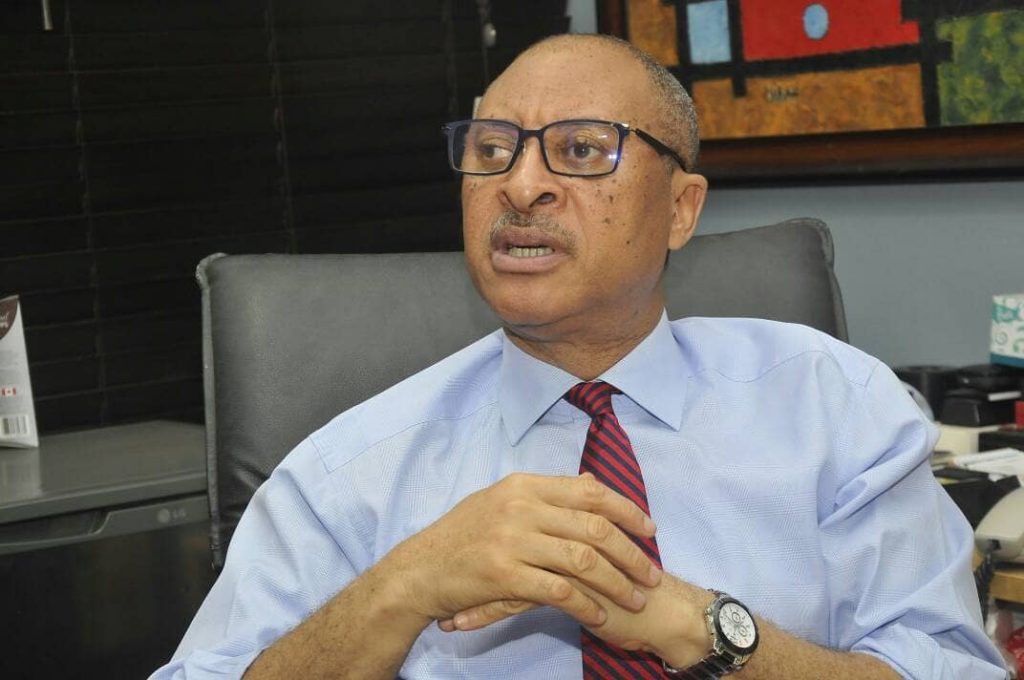
- Professors Pat Utomi and Tunde Adeoye spoke in separate interviews on Thursday in Lagos regarding economic expansion strategies.
- Professor Pat Utomi urged the government to replicate strategies adopted by China to stimulate economic expansion.
- Professor Tunde Adeoye stated that increased investment in agriculture and infrastructure renewal would significantly stimulate GDP growth.
- The National Bureau of Statistics reported that Nigeria’s economy grew by 3.89 percent year-on-year in real terms during the first quarter of 2026.
Main Story
Economists have urged the Federal Government to harness Nigeria’s natural endowments and value chains to accelerate Gross Domestic Product (GDP) growth.
The economists, Professors Pat Utomi and Tunde Adeoye, spoke in separate interviews with the News Agency of Nigeria (NAN) on Thursday in Lagos. Utomi, Co-Founder of Lagos Business School, urged the government to replicate strategies adopted by China to stimulate economic expansion. He said government should support the development of regional factor endowments and their associated value chains across the country.
To evaluate intermediate structural dependencies, national economic planners analyze regional logistics networks alongside municipal utility grids to verify that domestic manufacturing hubs possess adequate transmission capacity before industrial raw materials are directed into local supply chains.
Utomi stressed that government policies should support productive activities through the establishment of industrial and business clusters. He noted that Nigeria’s current economic growth rate remained inadequate when measured against the country’s fertility and population growth rates, stating that stronger growth was necessary to create jobs, improve incomes and support long-term economic stability.
Furthermore, fiscal policy coordinators are reviewing agricultural subsidy frameworks to optimize resource distribution across primary food production zones. On his part, Adeoye of the Department of Economics, University of Lagos, said increased investment in agriculture would stimulate GDP growth.
According to him, improved funding for subsidised farming equipment and agricultural inputs would significantly raise food production nationwide. Adeoye also urged the government to prioritise infrastructure renewal, especially within the electricity sector, to improve industrial productivity.
The Issues
- Overcoming an inadequate domestic economic growth rate when measured against the country’s population and fertility growth rates.
- Mitigating high costs of production due to critical infrastructure deficits within the national electricity sector.
- Implementing protective and stimulatory frameworks necessary to transition local regional endowments into competitive international export commodities.
What’s Being Said
- Advocating for a focused national strategy to develop distinct geographical product streams, Professor Pat Utomi advised: “The government should support the harnessing of the factor endowment and its value chain in various regions of the country. We should prioritise, for instance, North-West gum Arabic, North-Central sesame seeds, South-South hydrocarbons, and this should be replicated nationwide,”
- Outlining the specific fiscal incentives required to shield emerging domestic processing facilities from global competition, Utomi recommended: “Then the government should incentivise them with temporary protective policies that will enable them grow and export to the international market,”
- Detailing how targeted agricultural funding loops can expand the domestic industrial supply base, Professor Tunde Adeoye explained: “Government allocating more funds to subsidised farming equipment and inputs will boost food output and increase raw materials for production. Then the sector could contribute more to GDP growth than what it is currently doing,”
- Explaining how resolving structural power delivery issues directly impacts manufacturing overheads and drives macro development, Adeoye stated: “Allocating more budgetary votes to fix electricity would boost productivity in the country. Which will reduce the cost of production and ensure economic development,”
What’s Next
- Government authorities face growing calls to establish specialized industrial and business clusters across the various geopolitical zones.
- Policy makers will look at options for introducing temporary protective policies to enable local industries to grow and export.
- Budgetary authorities will evaluate allocations for fixing electricity infrastructure and subsidizing farming equipment to increase raw materials for production.
Bottom Line
To address a 3.89 percent first-quarter GDP growth rate that economists warn is falling behind rapid population expansion, experts are demanding the Federal Government deploy Chinese-style expansion strategies—specifically by funding electricity infrastructure, subsidizing agricultural equipment, and establishing protected regional industrial clusters to drive international exports.