





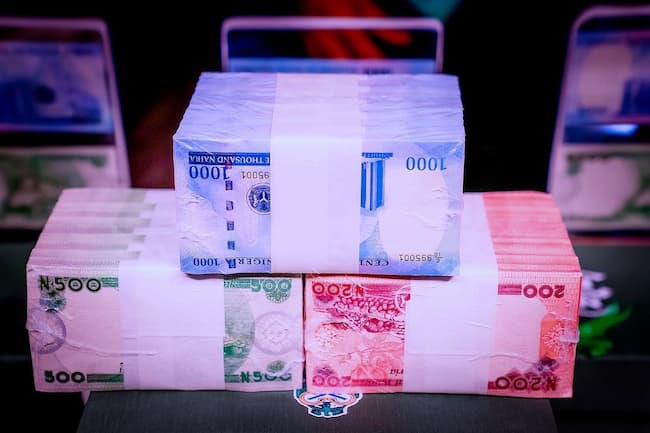
The naira appreciated by 0.50% in the official foreign exchange market, closing at ₦1,491.67 per dollar on Tuesday. This happened despite the Central Bank of Nigeria (CBN) reducing its intervention in the market. The exchange rate fluctuated between ₦1,490.00 and ₦1,503.00 during the trading session, reflecting some stability.
Data from the Nigerian Foreign Exchange Market (NFEM) revealed that foreign exchange inflows dropped by 50% over the past week. According to Coronation Research, the market recorded an inflow of $977.40 million, significantly lower than the previous week’s $1.96 billion. The decline was mainly due to reduced contributions from the CBN, which accounted for only 8.28% of total inflows.
Foreign portfolio investors (FPIs) contributed the most to the market, making up 40.53% of total inflows, followed by non-bank corporates (30.77%) and exporters (15.90%). Other sources accounted for 4.52%.
In the parallel market, the naira strengthened slightly, gaining N5 to trade at an average of N1,500 per dollar as demand pressure eased. Analysts predict ongoing efforts to stabilize the currency, with expectations that the CBN will implement further measures to support the naira. These may include tightening liquidity and improving forex supply channels.
Meanwhile, global oil prices fell as OPEC+ announced plans to increase output in April. Additional pressure came from new U.S. tariffs on imports from Canada, Mexico, and China, with China responding with its own trade restrictions. Brent crude dropped by $1.04 (1.45%) to $70.58 per barrel, while WTI crude declined by 73 cents (1.07%) to $67.64 per barrel.
Gold prices, however, surged due to increased demand for safe-haven assets amid trade uncertainties. Spot gold rose 0.9% to $2,918.90 per ounce, continuing its upward trend after hitting a record $2,956.15 on February 24.