









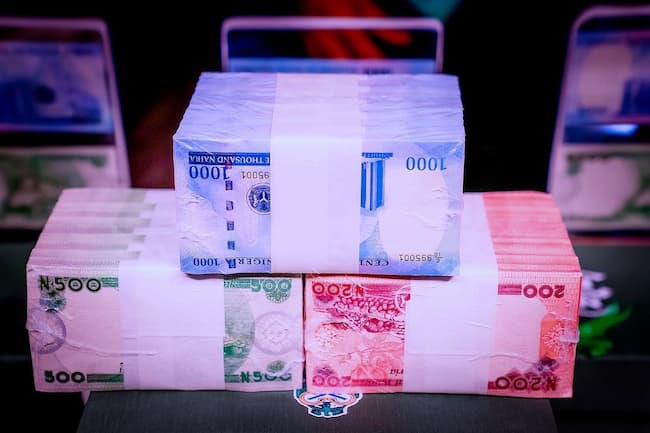
The naira posted gains against the US dollar at the Central Bank of Nigeria (CBN)’s official window, coinciding with a notable rise in the country’s foreign reserves to their highest level in six months.
According to updated data from the CBN, the spot rate strengthened to ₦1,531.95/$ from ₦1,533.74/$ in the previous session, amid reduced FX pressure and renewed foreign investor confidence.
The external reserves climbed to $39.543 billion as of August 1, marking a continued upward trend driven by sustained foreign inflows. Market observers attributed the boost to increased foreign portfolio investment in the CBN’s Open Market Operations (OMO), attracted by elevated yields on government instruments.
Analysts project that the naira will likely remain within a tight trading range, bolstered by consistent reserve inflows and policy support from the Central Bank. MarketForces Africa Research cited multiple investment banks noting that recent macroeconomic reforms have helped stabilize sentiment around the local currency.
During the past week, the Naira was largely stable at the Nigerian Autonomous Foreign Exchange Market (NAFEM), appreciating by 0.06% week-on-week to close at ₦1,533.74/$, up from ₦1,534.72/$ the previous week. The parallel market remained flat at ₦1,535/$, maintaining a slim premium over the official rate.
Nonetheless, FX inflows dipped slightly, falling to $791.10 million from $979.10 million the prior week, as reported by Coronation Merchant Bank. Foreign portfolio investors (FPIs) accounted for the majority of inflows at $60.90 million, while other sources contributed only 0.76%.
On the domestic front, non-bank corporates significantly increased their participation, contributing $483.60 million. Exporters and importers contributed $168.60 million, while inflows from the Central Bank and individuals amounted to $68.40 million and $3.50 million, respectively.
Looking ahead, Coronation analysts anticipate the FX market will continue to hover within the ₦1,500–₦1,600 range, supported by continued growth in reserves and favorable macro data. However, waning inflows could restrict further currency gains, making investor sentiment a key driver of direction.
On the global front, crude oil prices climbed last week, rising by 2.59% as markets awaited the outcome of the OPEC+ meeting and geopolitical developments surrounding Russian oil.
At the August 3 virtual summit, OPEC+ members agreed to boost production by 547,000 barrels per day from September, finalizing the reversal of earlier voluntary supply cuts initiated in 2024. While some production restraints will persist through 2026, the group will continue monthly evaluations to adjust supply as needed.
Meanwhile, geopolitical pressure is intensifying as U.S. President Donald Trump issued an ultimatum to Russia, demanding progress in its peace talks with Ukraine or face fresh sanctions, including punitive tariffs on countries importing Russian crude.
Amid these uncertainties, Brent crude closed Friday at $69.35 per barrel, while Bonny Light ended the week higher at $74.76 per barrel, up 1.91%. Despite recent gains, the average year-to-date price for Brent remains 11.76% lower than its 2024 average, signaling continued volatility.




’s official window, coinciding with a notable rise in the...)