








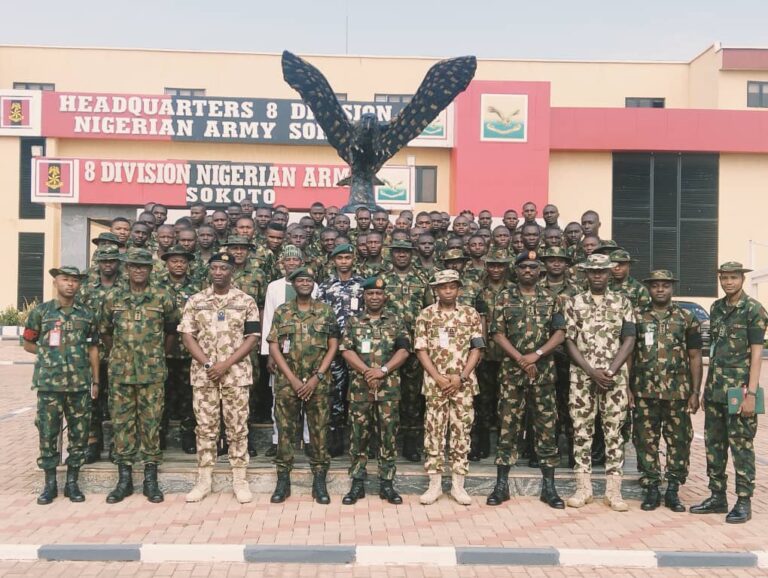
The Armed Forces of Nigeria has begun the 2025 first biannual sensitisation training on stress management, post traumatic stress disorder, and emotional intelligence for frontline troops serving in active combat theatres. The programme opened Friday at the Eight Division Auditorium in Sokoto and targets officers and soldiers deployed for Operation FANSAN YAMMA and other internal security missions nationwide.
Declaring the training open, Chief of Defence Staff General Christopher Musa reaffirmed the military commitment to force mental readiness, stressing that personnel face not only physical danger but profound psychological strain in the course of duty. Speaking through the Director of Innovation and Concept Development at Defence Headquarters, Major General Warrah Idris, he said managing mental health is as critical to modern warfare as weapons and logistics.
“Our troops are exposed to invisible wounds, stress, trauma, and emotional fatigue that can linger long after combat. This training is a strategic step toward equipping them to manage these realities,” General Musa said. He called for emotional resilience to be embedded in all levels of military preparation and for structured mental health support to be woven into daily operational routines across commands.
Also speaking, General Officer Commanding Eight Division and Commander Sector Operation FANSAN YAMMA, Major General Ibikunle Ajose, represented by Chief of Staff Brigadier General Abubakar Suru, described the initiative as timely. He said the course will help personnel recognise warning signs of post traumatic stress disorder, develop practical coping skills, and build emotional intelligence that supports mission success and long term well being. He commended the Chief of Defence Staff for giving priority to troop welfare and elevating mental health within the service hierarchy.
The session drew military psychologists, mental health specialists, and soldiers from multiple formations to share field experience, strengthen peer networks, and promote a culture of psychological preparedness across the Armed Forces.