






Nigeria’s lingering fuel supply crisis deepened this week as petrol prices inched closer to ₦1,000 per litre across major cities, sparking outrage among motorists and raising fears of another inflationary surge.
Petroleum marketers have blamed the steep rise on supply bottlenecks and disruptions at the Dangote Petroleum Refinery, which has slowed production amid reports of internal restructuring and technical hiccups.
The National Publicity Secretary of the Independent Petroleum Marketers Association of Nigeria (IPMAN), Chinedu Ukadike, stated that the Depot and Petroleum Products Marketers Association of Nigeria (DAPPMAN) members were already making arrangements to commence independent petrol importation.
According to Ukadike, this move could reintroduce competition into the market and potentially drive down prices if alternative imports arrive at lower costs than Dangote’s supply.
“Some DAPPMAN members have applied for import permits. Once their landing cost is cheaper, prices will come down naturally because the market will favour the lowest offer,” Ukadike said.
Currently, petrol retails between ₦920 and ₦955 per litre across most urban centres, while some filling stations in Abuja, Lagos, and Sokoto are charging as high as ₦1,000 per litre depending on the location and brand.
This price spike comes despite expectations that the Dangote refinery’s logistics-free distribution model would lower pump prices to ₦841 per litre in the South-West and ₦851 in the North-Central and South-South regions.
However, the anticipated reduction has not materialised. Instead, retail prices have climbed, with many filling stations citing limited supply and increased ex-depot costs.
In the Federal Capital Territory, NNPC retail outlets in Gwarinpa and Lugbe sold petrol at ₦955 per litre, while similar outlets in Lagos recorded prices between ₦920 and ₦940. Motorists in Edo, Rivers, and Oyo states paid between ₦900 and ₦1,000 per litre amid long queues and panic buying.
The Independent Petroleum Marketers Association of Nigeria has accused depot owners of exploiting the supply gap to inflate ex-depot prices. IPMAN President, Abubakar Shettima, alleged that depots hiked prices from an average of ₦830 to ₦890 after Dangote temporarily halted loading operations.
According to data from Petroleumprice.com, major depots like Matrix, Fynefield, and Liquid Bulk sold petrol at ₦900 per litre as of Tuesday, while RainOil, Pinnacle, and Aiteo charged between ₦878 and ₦895.
Consequently, retail outlets adjusted their pump prices to reflect the higher landing cost, with NNPC stations in Lagos and Ogun now selling at ₦928 — a ₦50 increase from August’s ₦870.
Speaking on the development, NNPC spokesperson Andy Odeh explained that the retail arm had no choice but to adjust its prices to match new ex-depot rates.
“When depot prices rise, retail outlets adjust accordingly. It’s a reflection of market dynamics,” he said.
Meanwhile, reports indicate that Dangote Refinery recently paused sales to independent marketers, further tightening supply. Industry sources attribute the slowdown to maintenance activities and the fallout from the mass dismissal of over 800 engineers.
IPMAN’s Ukadike confirmed that ongoing internal reorganisation at the refinery and labour-related disruptions had caused “temporary supply delays,” allowing private depot operators to take advantage of the situation.
“This is a reflective market — once suppliers raise prices, retailers follow suit. The issue is not the exchange rate anymore but production and distribution challenges,” Ukadike explained.
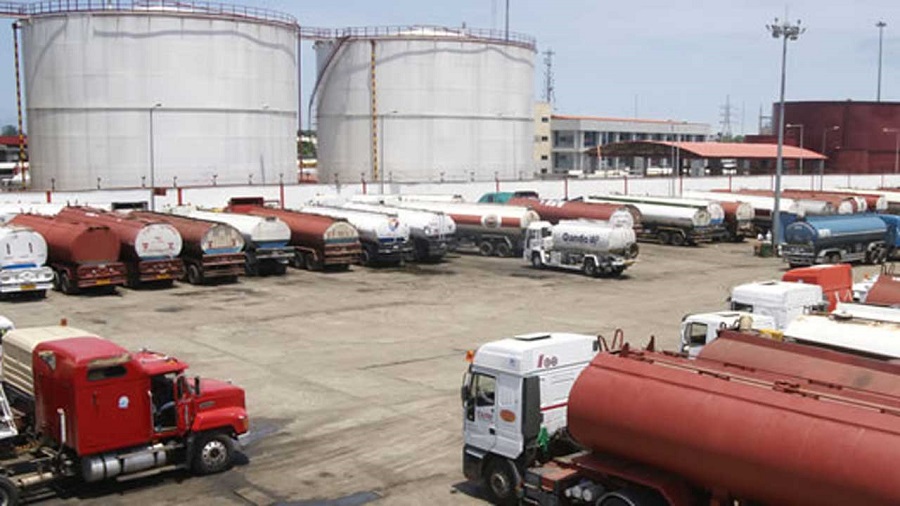
The Major Energies Marketers Association of Nigeria (MEMAN) also confirmed in its daily bulletin that the refinery had restricted gantry loading since last Thursday, serving only its own and MRS trucks.
Similarly, the CEO of PetroleumPrice.ng, Jeremiah Olatide, revealed that Dangote’s limited loading has affected private depots, forcing them to suspend sales or hike prices.
“The refinery is only loading its own trucks and those of MRS. Private marketers have not been able to lift products for days,” Olatide said.
He added that the refinery’s crude supply shortages and workforce reduction had exacerbated the crisis, warning that the situation mirrors the earlier nationwide gas shortage.
“There’s clearly a supply problem — depots are scrambling for limited stock and have begun raising prices again,” he cautioned.
In Sokoto State, residents reported fresh hikes, with pump prices rising from ₦930 to between ₦1,000 and ₦1,050 per litre. Many NNPC stations in the metropolis have remained shut for days, worsening the scarcity. A motorist in Sokoto, who joined a long queue at an AA Rano station, said he had to borrow money just to refuel.
“I heard it’s ₦992 per litre in Lagos. Nobody knows how much we’ll pay next week. I had to borrow money from my wife to fill my tank,” he lamented.
With petrol prices edging towards ₦1,000, economists warn of another inflationary wave that could destabilise transportation, food, and manufacturing sectors. Nigerians, meanwhile, await assurances of stable supply from the country’s 650,000-barrels-per-day refinery — once heralded as the solution to decades of fuel dependency.
Repeated attempts to contact Dangote Group spokesperson, Anthony Chiejina, were unsuccessful as calls and messages remained unanswered.