







By Emmanuella Opara | November 11th 2026
KEY POINTS
- Orile-Agege LCDA Chairman Akinola Idowu says his administration inherited 21 ongoing infrastructure and construction projects.
- The council has undertaken road rehabilitation, drainage construction, healthcare improvements and school support programmes.
- The administration has introduced a N100,000 monthly empowerment scheme for 200 residents and provided 4,000 streetlights across the LCDA.
MAIN STORY
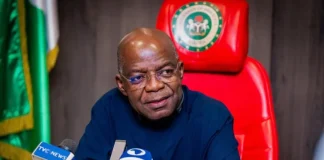
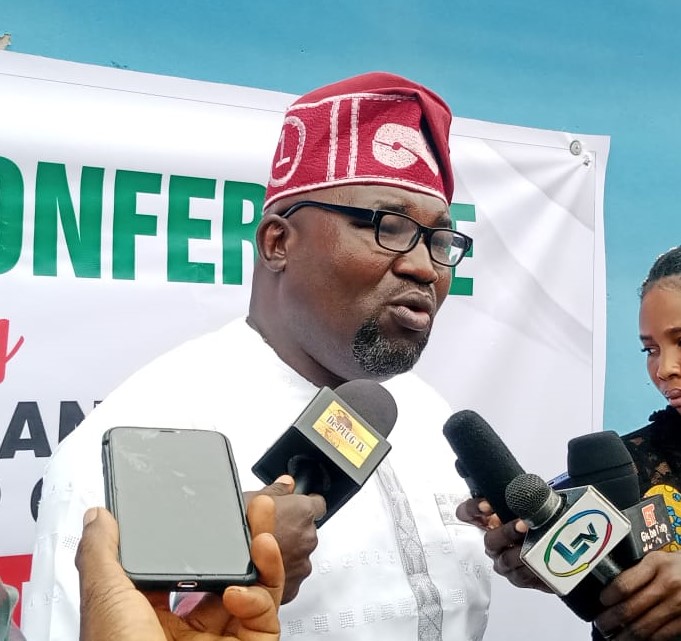
The Chairman of Orile-Agege Local Council Development Area, Akinola Idowu, has pledged to complete 21 infrastructure and construction projects inherited by his administration, saying the council will not abandon projects funded with public resources.
Idowu made the commitment during a media parley marking his administration’s first-year scorecard, where he outlined projects and interventions carried out across infrastructure, education, healthcare, youth development, sanitation and security.
He said the decision to continue the inherited projects was informed by the need to ensure accountability and prevent the waste of public funds.
“When I assumed office, I inherited 21 ongoing infrastructure and construction projects. We did not abandon them. We prioritised their completion because public money must not be wasted,” he said.
Among the infrastructure projects highlighted were road construction and rehabilitation works in Egbatedo, Dada Akapo Street and Bade Abiona.
At Dada Akapo Street, the council embarked on reinforced concrete drainage construction with covered slabs, alongside road works intended to address recurring flooding.
The administration also desilted 12 drainage channels, began constructing a primary healthcare centre on Gbadamosi Street and renovated three existing health centres. A borehole was also constructed on Adebayo Johnson Street.
Other projects included an area office at Oyewole, an entrance arc at Olakrokun Street, rehabilitation of the Independent National Electoral Commission office at Arigbanla Street and reinforced concrete drainage construction at Ejire Lane.
Idowu disclosed that procurement had commenced for the rehabilitation of two additional streets, following a bid opening exercise conducted on October 12, 2026.
On education, he said the council had distributed furniture and learning materials to public primary schools. Through a partnership with Apata Humanitarian Foundation, 500 school uniforms and writing materials were provided to pupils.
The council also distributed free Joint Admissions and Matriculation Board forms and 500 General Certificate of Education forms to ease the financial burden on parents.
In addition, 20 beneficiaries secured international training opportunities through a partnership with a Chinese renewable energy agency.
The chairman said the council also organised a two-week free skills boot camp covering photography, cinematography, graphic design, drone piloting, coding, renewable energy, electric vehicle technology and artificial intelligence animation.
He added that outstanding participants were offered further training opportunities in China and at the Nigerian Institute of Journalism.
In the health sector, the administration supported measles-rubella vaccination, maternal and child health services, routine immunisation, Vitamin A supplementation and deworming programmes.
For sanitation, Idowu said the council provides N2m monthly support to eight Private Sector Participation waste operators and had acquired two waste compactors.
The administration also introduced relief measures for residents with outstanding waste bills, including a waiver covering January 1999 to December 2022 and a 50 per cent reduction in arrears accumulated between January 2023 and August 2025.
Under its economic empowerment programme, the council provides N100,000 monthly to 200 residents. It also introduced a N12m interest-free loan facility under the PSP scheme.
On security, Idowu disclosed that 4,000 streetlights had been installed across the LCDA, while discussions were ongoing on the introduction of CCTV surveillance.
He acknowledged that more work remained and said the administration would focus on completing ongoing projects while pursuing proposed interventions through established procedures.
THE ISSUES
The completion of inherited projects remains an important test of continuity and accountability in local government administration. Abandoning unfinished infrastructure can result in wasted public funds, while completing such projects can help communities benefit from previous government investments.
However, the chairman’s scorecard does not provide the total financial value of the 21 inherited projects, the amount spent on completing them or the number that have been fully delivered.
The absence of project-specific completion timelines and expenditure details also makes it difficult to independently assess the pace of implementation and the administration’s overall progress.
Beyond infrastructure, the council’s empowerment and social intervention programmes will also need sustained funding to maintain their benefits for residents.
WHAT’S BEING SAID
“When I assumed office in July last year, I promised the good people of Orile-Agege that I would not let them down.”
Akinola Idowu, Chairman, Orile-Agege LCDA.
“This parley is not just to list projects. It is to account for our decisions, explain work in progress and receive your feedback. We remain open to constructive criticism.”
Akinola Idowu, Chairman, Orile-Agege LCDA.
WHAT’S NEXT
The administration says it will prioritise the completion of ongoing infrastructure projects and continue with proposed interventions through due process.
The next phase will include the rehabilitation of two additional streets for which procurement has commenced, alongside continued efforts to improve healthcare, sanitation, education and security.
Discussions on CCTV surveillance are also ongoing.
BOTTOM LINE
Orile-Agege LCDA’s first-year scorecard highlights efforts to sustain 21 inherited projects while expanding interventions across essential public services. The administration’s progress will ultimately depend on completing outstanding projects and demonstrating measurable results from its spending and empowerment programmes.