






The Comptroller-General of Customs (CGC), Adewale Adeniyi, on Monday, 5 January 2026, charged officers of the Customs Intelligence Unit (CIU) of the Nigeria Customs Service (NCS) to place intelligence at the centre of their professional conduct, warning that no modern security or revenue operation can succeed without timely, credible and well-applied intelligence.
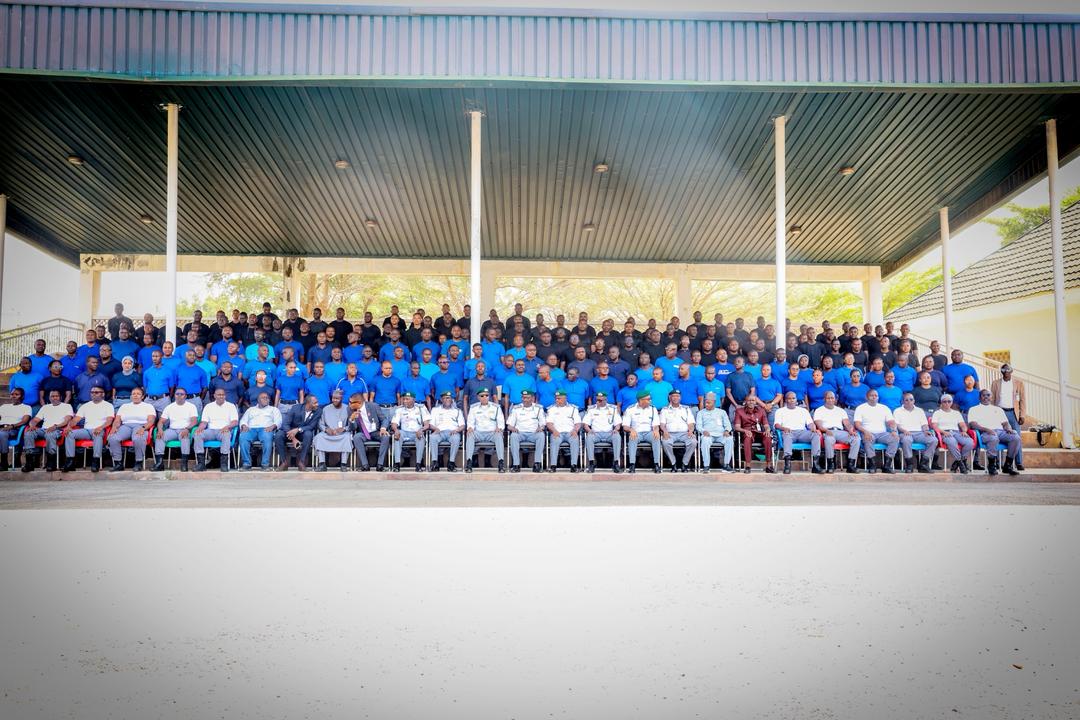
CGC Adeniyi charged the CIU Officers at the Nigeria Customs Command and Staff College (NCCSC), Gwagwalada, during the opening ceremony of the training programme. He described the training programme as the Service’s first formal engagement of the year and a moment that could shape the professional outlook of participants.
Welcoming officers to the College, the Comptroller-General said the programme came at a critical time, urging participants to see the new year as an opportunity to make tangible contributions to the Service and the country.
Reflecting on recent global and domestic security developments, Adeniyi referenced military and security interventions across different regions, including operations within Nigeria that led to the interception of arms and ammunition.
According to him, intelligence remains the common thread behind every successful military or paramilitary operation, stressing that Customs officers must appreciate its value beyond theory.
He urged participants to revisit papers earlier presented during the programme, noting that they already contained practical guidance required for effective field operations.
In his address, the Commandant of the NCCSC, Assistant Comptroller General of Customs Dow Gaura, described intelligence as a quiet but decisive force in institutional transformation.
He said the ability to gather, analyse and apply intelligence has become indispensable in responding to emerging security and economic realities.
ACG Gaura said the Nigeria Customs Service has consistently invested in intelligence-led training as part of its capacity-building strategy, describing the programme as a key phase in the professional development of participants.
He explained that intelligence underpins risk management, revenue protection, the disruption of smuggling networks and the protection of the national economy.
He urged officers to approach the training with seriousness, noting that Management had provided experienced facilitators, relevant materials and a structured learning environment to enhance focus and outcomes.
While acknowledging that comfort levels might differ from what some participants were used to, he said the objective was to instil discipline and concentration.
Senior officers present at the opening ceremony included the Deputy Comptroller General of Customs in charge of Human Resources Development, Tijjani Abe, the Deputy Comptroller General of Customs in charge of TRADOC, Sulaiman Chiroma and the Assistant Comptroller General of Customs in charge of Headquarters, Muhammad Shu’aibu, among others.



, Adewale Adeniyi, on Monday, 5 January 2026, charged officers of the Customs Intelligence ...)