







In today’s digital asset market, building an investment base no longer requires large capital outlays. Many new investors delay entering the crypto space because they assume significant funds are required. However, wealth creation in any asset class often begins with a willingness to take calculated risks—and cryptocurrency remains one of the most accessible risk-driven markets available.
Crypto’s price movement is notoriously sharp, and this volatility forms the foundation of its business appeal. Unlike forex trading, which shares similar characteristics but operates within defined trading hours, cryptocurrency markets run non-stop—24 hours a day, seven days a week—without any downtime.
The first rule for beginners is simple: stepping into the crypto economy without fully understanding its risks can lead to painful losses. While the upside potential can be impressive, critics argue that the lack of regulation still places digital assets closer to high-stakes gambling than traditional investment. Even within investment circles, some asset managers maintain reservations about crypto due to its unregulated structure.
Allocating a $100 Budget
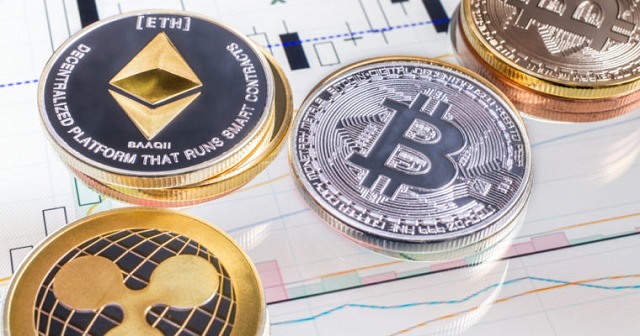
With a starting capital of $100, entry-level investors typically cannot target blue-chip tokens such as Bitcoin, Ethereum, or Ripple. Instead, understanding market trends and the ease of price movement becomes crucial. For instance, a 1% movement in the BTC/USD pair can escalate anxiety—particularly among investors in developing economies facing exchange-rate pressure.
If Bitcoin trades around $100,000, a 1% drop equals a $1,000 decline. By contrast, holding a small position in a low-cost token like Dogecoin provides more psychological comfort. A $20 position in Dogecoin can retain stability even during small market dips.
Patience becomes a survival tool. Much like penny stock investors, crypto newcomers must maintain discipline during price swings. Significant volatility in Bitcoin can prompt rushed decisions, forcing investors into premature exits. A typical scenario might involve watching BTC drop from $100,000 to $95,000 and regretting not selling earlier when the loss was smaller.
Fear and greed shape every investor’s behaviour. Asset choices directly reflect the size of an investor’s wallet. Individuals whose net worth matches the price of a single Bitcoin should avoid such exposure unless they are prepared for speculative risk.
At a December 4 trading price of $0.1492, a $100 investment yields roughly 670 units of Dogecoin. However, purchasing during an upward rally often backfires due to the natural law of market correction. Still, many crypto traders jump in aggressively during rallies. Timing becomes a critical skill because an uptrend can quickly evolve into a seller-dominated market.
Experienced investors—often referred to as “crypto whales”—tend to go against public sentiment. They offload assets during surges and accumulate more during declines. While this strategy can be profitable, it requires experience and the ability to absorb risk.
Building a $200 Portfolio
With $200, diversification becomes more realistic. Investors are advised not to concentrate solely on Dogecoin. Spreading risk allows the decline in one asset to be offset by gains in another. A simple calculation helps determine overall performance at any given moment.
Cardano (ADA/USD), priced at $0.4450, represents one suitable alternative. Allocating $100 to ADA secures about 225 units. With this combination, investors would have a portfolio comprising Dogecoin and Cardano—two assets with different market behaviours.
At this point, portfolio management becomes about monitoring price direction. If Cardano experiences an upward trend while Dogecoin declines, investors should examine broader market sentiment. News reports, regulatory actions, liquidation events, and large whale transactions often determine price direction.
For instance, a single announcement from a major influencer—such as Elon Musk offering a discount to Tesla buyers who pay with Dogecoin—could trigger immediate market reactions. Such developments highlight the influence of news and public figures on cryptocurrency valuation.