






KEY POINTS
- UN Secretary-General António Guterres wants governments to tax excess profits made by fossil fuel companies and direct the revenue towards communities affected by climate disasters.
- He said nine major oil companies earned about $95 billion in profits in the previous quarter, while the Loss and Damage Fund had received around $600 million.
- Guterres called for developed countries to provide at least $300 billion annually in climate finance by 2035.
- He also urged governments to make the broader $1.3 trillion climate finance target accessible to developing countries.
MAIN STORY
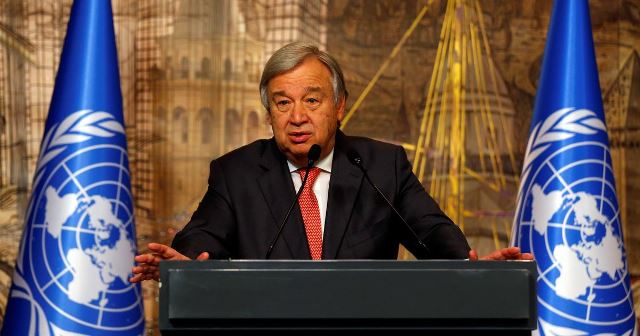
United Nations Secretary-General António Guterres has called on governments to impose taxes on windfall profits made by fossil fuel companies and use the proceeds to help vulnerable countries recover from climate-related disasters.
Guterres made the proposal at the COP31 Leaders’ Summit in Antalya, Türkiye, where he introduced a proposed global Climate Justice Compact aimed at addressing the growing gap between climate damage and the funding available to affected countries.
He warned that greenhouse gas emissions reached record levels in 2025, while extreme weather events continued to threaten livelihoods, economic activity and development.
According to the UN chief, exceeding the Paris Agreement’s 1.5-degree Celsius warming threshold was now inevitable. However, he said governments could still limit how far temperatures exceed the threshold and how long the overshoot lasts.
“The brutal truth is that the climate crisis is outrunning us,” Guterres said.
He outlined four priorities for governments: accelerating the transition away from fossil fuels, protecting vulnerable populations, expanding climate finance and strengthening international cooperation.
Guterres said developing economies outside China account for nearly two-thirds of the world’s population but receive less than one-fifth of global clean-energy investment.
He also highlighted the financing difficulties facing these countries, noting that many pay borrowing costs two to three times higher than those faced by wealthier economies.
“We need an extraordinary acceleration,” he said, calling for stronger emissions reductions and increased investment in renewable energy.
On climate finance, Guterres urged developed countries to deliver at least $300 billion annually by 2035 and establish credible plans to increase funding for adaptation.
He also called for the broader $1.3 trillion climate-financing target to translate into funding that developing countries can actually access.
The proposed windfall tax would address what Guterres described as an imbalance between fossil fuel industry profits and the resources available to communities suffering climate damage.
He said nine of the largest oil companies made approximately $95 billion in profits during the previous quarter, compared with about $600 million received by the Loss and Damage Fund.
“Polluters must pay,” he said, urging governments to direct revenue from windfall-profit taxes towards communities affected by climate-related losses.
He further called on multilateral development banks to increase lending, attract private investment and develop financing instruments better suited to vulnerable economies.
UN Climate Change Executive Secretary Simon Stiell also warned that volatile energy markets and climate disasters were driving inflation and putting pressure on government budgets.
“The political costs of fossil fuel dependency are unforgiving,” Stiell said, urging governments to turn their climate commitments into practical investments in electricity access, adaptation and affordable financing.
THE ISSUES
Guterres’ proposal addresses a major problem in climate financing: countries that contribute relatively little to global emissions often face some of the greatest costs from climate-related disasters, while having fewer financial resources to respond.
A windfall tax is a levy imposed on unusually high profits earned by companies, often when favourable market conditions allow them to make significantly more money than expected. In this case, the proposal would require governments to collect part of the exceptional profits made by fossil fuel companies and use the revenue to support climate recovery.
The proposed approach would not automatically guarantee funding for affected communities. Governments would still need to agree on how the tax is calculated, which companies are covered, how much revenue is collected and how the money is distributed.
The funding gap is particularly important for African economies. Many face the combined pressure of climate vulnerability, limited infrastructure, energy poverty and high debt-servicing costs. These conditions make it harder to finance flood protection, drought resilience, clean energy and recovery after extreme weather events.
The borrowing-cost problem also matters. When developing countries pay substantially more to access finance, climate projects become more expensive and governments have less room in their budgets for other priorities.
WHAT’S BEING SAID
“The brutal truth is that the climate crisis is outrunning us.” – António Guterres, UN Secretary-General.
“We need an extraordinary acceleration.” – António Guterres, UN Secretary-General.
“Polluters must pay.” – António Guterres, UN Secretary-General.
“The political costs of fossil fuel dependency are unforgiving.” – Simon Stiell, UN Climate Change Executive Secretary.
WHAT’S NEXT
COP31 runs from November 9 to 20, with negotiations focused on emissions reductions, climate resilience and the implementation of previous climate commitments.
The key question is whether governments will translate the proposed Climate Justice Compact and existing climate-financing targets into actual funding arrangements. This will require agreement on contributions, access conditions and accountability for how the money is spent.
BOTTOM LINE
Guterres wants fossil fuel companies’ exceptional profits to contribute more directly to climate recovery. For developing countries, particularly those in Africa, the proposal highlights the need for climate finance that is not only promised but affordable, accessible and available when disasters occur.