






The Federal Government has reaffirmed its commitment to borrowing only within sustainable and manageable limits, in line with the Debt Management Office (DMO)’s debt sustainability framework. This assurance was contained in a statement issued in Abuja on Wednesday by the Director of Information and Public Relations at the Ministry of Finance, Mohammed Manga.
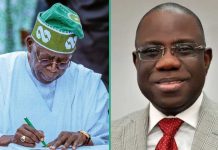
The statement follows President Bola Tinubu’s recent request for the National Assembly’s approval of the 2024–2026 External Borrowing Rolling Plan. The plan includes proposals to secure $21.5 million and 15 billion Yuan in external loans, along with a €65 million grant, as part of the government’s broader strategy to finance critical development projects.
Manga explained that the borrowing plan is a vital component of the Medium-Term Expenditure Framework (MTEF), in compliance with the Fiscal Responsibility Act of 2007 and the DMO Act of 2003.
“The plan outlines external borrowing projections for both the federal and sub-national governments over a three-year period and is supported by detailed appendices covering project scope, loan terms, implementation timelines, and other key information,” the statement read.
He noted that the rolling plan provides a strategic, forward-looking approach to borrowing, helping to avoid inefficient, ad-hoc debt practices and allowing for better financial planning. However, Manga clarified that inclusion in the borrowing plan does not automatically translate into immediate debt accumulation.
“Actual borrowings are implemented annually and tied to the national budget. For instance, the 2025 budget proposes an external borrowing component of $1.23 billion, which has not yet been drawn and is scheduled for the second half of the year.”
The plan encompasses projects across multiple states, including Abia, Bauchi, Borno, Gombe, Kaduna, Lagos, Niger, Oyo, Sokoto, and Yobe. He emphasized that most of the loans are project-tied, with multi-year disbursement timelines spanning five to seven years. The funding is intended for key sectors such as power transmission, irrigation for food production, nationwide fibre optic infrastructure, rail and road development, and national security—including the procurement of fighter jets.
The federal government intends to source most of the financing from development partners such as the World Bank, African Development Bank (AfDB), French Development Agency (AFD), European Investment Bank (EIB), Japan International Cooperation Agency (JICA), China EximBank, and the Islamic Development Bank (IsDB). These lenders offer concessional loans with favorable terms and extended repayment periods.
Manga also pointed out that Nigeria’s debt service-to-revenue ratio has begun to improve, decreasing from a peak of over 90% in 2023. He added that the government has ceased relying on the inflationary and unsustainable “Ways and Means” financing from the Central Bank.
“With increased revenue expected from NNPC Limited, improved oversight of government-owned enterprises, and recovery of legacy debts, we are making significant fiscal progress,” he said.
He concluded by emphasizing the administration’s focus on using borrowing strategically to spur long-term, inclusive growth.
“The overarching goal is to shift the economy onto a trajectory of rapid, sustained, and inclusive development. Achieving this requires significant investment in transportation, energy, agriculture, and other infrastructure. Our debt strategy is guided not just by how much we borrow, but by how effectively the funds are used to generate economic returns and drive national development.”