





The Federal Government has raised concerns over the recent tightening of visa policies by the United States and the United Arab Emirates, describing the moves as disproportionate and calling for a reconsideration in the spirit of mutual respect and cooperation.
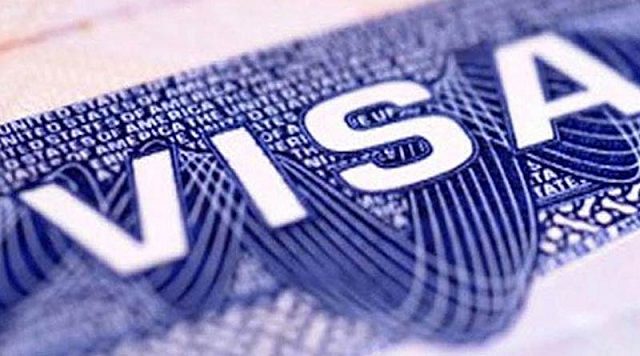
On Tuesday, the US Department of State announced that, effective July 8, 2025, most non-immigrant and non-diplomatic visas issued to Nigerian citizens—such as the B1/B2 (business and tourism), F (student), and J (exchange visitor) categories will be valid for only three months and limited to a single entry. The US government said the policy was part of a global visa reciprocity review to align with international standards and the integrity of its immigration system.
In a statement issued on Wednesday and signed by the spokesperson for the Ministry of Foreign Affairs, Kimiebi Ebienfa, the Nigerian government expressed disappointment, noting that the new policy appeared “misaligned with the principles of reciprocity, equity, and mutual respect that should guide bilateral engagements between friendly nations.”
“The attention of the Federal Government of Nigeria has been drawn to the recent decision by the United States Government to revise its visa reciprocity schedule for Nigerian citizens,” the statement read. “The Federal Government views this development with concern and keen interest, particularly given the longstanding cordial relations and strong people-to-people ties between our two countries.”
Ebienfa confirmed that the government was assessing the policy and would engage relevant stakeholders to determine its implications. “We are assessing the new policy and its necessary implications. The government will respond soon, after due consultation with relevant stakeholders,”
The FG warned that the policy could negatively impact students seeking education in the US, professionals engaging in legitimate business, and families reuniting with loved ones. “While acknowledging the sovereign right of every country to determine its immigration policies, Nigeria respectfully urges the United States to reconsider this decision in the spirit of partnership, cooperation, and shared global responsibilities,” Ebienfa added.
In a bid to resolve the issue, the Minister of Interior, Olubunmi Tunji-Ojo, led a delegation on Wednesday to meet with the US Ambassador to Nigeria, Richard M. Mills Jr. Tunji-Ojo stated on X (formerly Twitter) that the meeting was “constructive” and focused on visa reciprocity and ongoing cooperation. According to him, “The discussions centred on visa reciprocity, with Ambassador Mills Jr. providing valuable insights into the revised protocol and its alignment with established practices to uphold the integrity of the visa process.”
He added that the Nigeria Immigration Service and the US Mission in Nigeria had agreed to enhance collaboration, especially on secure documentation, visa overstay management, and information sharing on security matters. “Our government under the leadership of President Bola Tinubu will continue to ensure strict compliance across key areas,” Tunji-Ojo said. The US Embassy also clarified that the policy applies only to visas issued from July 8, 2025, and does not affect existing visas. It emphasised the need for compliance with US visa conditions and reiterated its commitment to maintaining strong ties with Nigeria.
Meanwhile, new entry requirements by the United Arab Emirates have further complicated travel for Nigerians. Dubai immigration now requires Nigerians aged 18 to 45 to be accompanied to qualify for a tourist visa. Those above 45 must present a six-month personal bank statement showing a monthly balance of at least $10,000 or its naira equivalent. Travel agents say the move is likely to significantly reduce travel between Nigeria and the UAE, particularly to Dubai, a popular destination for business and tourism. “For Nigerian nationals… an applicant aged 18 to 45 years travelling alone is not eligible for the tourist visa category,” a travel advisory read.
In a separate development, the British High Commission in Abuja announced a shift to digital eVisas for most Nigerians applying for study or work visas starting July 15, 2025. Successful applicants will receive secure, online immigration records instead of visa stickers. According to a statement, “From 15 July 2025, most individuals applying to enter the UK on study or work-related visas will no longer receive a physical visa sticker in their passport. Instead, successful applicants will be issued an eVisa.”
The High Commission clarified that all applicants would still be required to submit biometrics at Visa Application Centres. Gill Atkinson Obe, Chargé d’Affaires at the BHC, said the change is aimed at making the process more efficient and secure. “This is a further big step to a fully digital UK immigration system,” To the growing list of visa restrictions, Labour Party Deputy National Chairman, Dr Ayo Olorunfemi, blamed the Federal Government’s “incompetence” for Nigeria’s worsening international image. “It is not just about the visa bans,” he said. “Every country is moving forward, but Nigeria is stuck… our people are leaving in search of greener pastures.”
He warned that unless the government addressed insecurity, economic hardship, and poor leadership, international backlash would continue. “You can’t expect them to keep their borders open when we have refused to fix our own house,” Now The New Nigeria Peoples Party also described the restrictions as a reflection of how Nigeria is perceived globally. National Publicity Secretary, Ladipo Johnson, called the situation a “wake-up call,” highlighting the absence of appointed ambassadors under President Tinubu as a possible reason for weakened diplomacy.
“There is no clear strategy for presenting Nigeria’s interests to international partners,” he said. “It is a shame that things seem to be degenerating for us on the international stage.” The diplomatic tensions also sparked conversations on social media. Dele Momodu of the Peoples Democratic Party posted, “The ramifications of President Tinubu’s limited diplomatic experience and strategic vision are becoming increasingly evident.”
Former presidential aide Bashir Ahmad suggested that the US visa policy shift may not be about reciprocity alone. “Rather, it appears to reflect growing US discomfort with Nigeria’s increasing global realignment,” he said, referencing Nigeria’s recent participation in the BRICS summit. Special Adviser to President Tinubu on Policy Communication, Daniel Bwala, however, dismissed any suggestion that Nigeria’s relationship with the US had deteriorated. “We are in a good relationship with the US,”
“The reciprocity requires review, and we are taking steps to rectify issues. No problems at all.” As the diplomatic back-and-forth unfolds, the Federal Government maintains that it will continue engaging with all parties to ensure outcomes that respect Nigeria’s interests and protect its citizens abroad.