






By Boluwatife Oshadiya | March 25, 2026
Key Points
- Federal Government advances Nigeria Education Sector Renewal Initiative (NESRI) to improve access, quality, and financing
- Education Minister Tunji Alausa outlines six reform priorities including STEM and vocational training expansion
- Nigeria eyes up to $500 million support through Global Partnership for Education matching fund mechanism
Main Story
The Federal Government has reaffirmed its commitment to overhauling Nigeria’s education system through the Nigeria Education Sector Renewal Initiative (NESRI), with a renewed call for private sector investment to scale impact and funding.
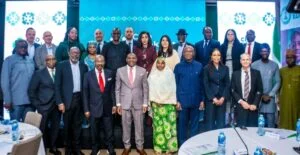
Speaking at a high-level stakeholder engagement in Lagos, Minister of Education Tunji Alausa said the reform programme is designed to reposition Nigeria’s education sector for global competitiveness, while addressing systemic challenges in access, quality, governance, and financing.
Alausa outlined six strategic priorities under NESRI, including the expansion of Technical and Vocational Education and Training (TVET), promotion of Science, Technology, Engineering and Mathematics (STEM), and aggressive reduction of out-of-school children. He added that reforms will also focus on strengthening education data systems, digital infrastructure, and institutional governance through collaboration with subnational governments, private enterprises, and civil society organisations.
Central to the funding strategy is Nigeria’s partnership with the Global Partnership for Education (GPE), which offers a matching fund model. Under this structure, every dollar raised by private sector stakeholders is matched one-for-one by GPE, effectively doubling available financing for education interventions.
“Every dollar mobilised by the private sector is matched one-for-one by GPE, doubling available resources for impactful education interventions,” Alausa said.
He noted that Nigeria could unlock up to $500 million in funding, depending on outcomes from GPE’s Replenishment Summit scheduled for June 2026 in Rome, which aims to raise $5 billion globally.
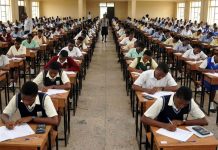
The minister disclosed that more than one million out-of-school children have already been reintegrated into classrooms through targeted investments in infrastructure, teacher development, and digital tracking platforms.
Minister of State for Education Suwaiba Ahmad, who convened the CEO Breakfast session, emphasised the need for shared responsibility in achieving sustainable education reform.
“No nation can achieve sustainable growth without a strong, inclusive and forward-looking education system,” Ahmad said.
She added that NESRI aligns with the broader human capital development agenda of President Bola Tinubu, noting early signs of progress including increased private sector interest and policy momentum.
What’s Being Said
“This presents a major opportunity for the private sector to play a catalytic role in advancing education and unlocking resources at scale,” said Tunji Alausa, Minister of Education.
“We are deepening engagement to encourage innovative partnerships and collaborative solutions to accelerate sector transformation,” said Suwaiba Ahmad, Minister of State for Education.
“We are creating conditions for smarter investment by ensuring accountability and measurable impact across Nigeria’s education system,” said Jim Ovia, Chairman of Zenith Bank.
What’s Next
- GPE Replenishment Summit scheduled for June 2026 in Rome will determine Nigeria’s funding envelope
- Federal Government to scale private sector engagement through structured financing frameworks under NESRI
- Continued rollout of digital tracking systems and teacher development programmes to sustain gains in school enrolment
The Bottom Line: Nigeria’s education reform strategy is increasingly shifting toward blended financing, where public policy meets private capital. The success of NESRI will depend less on policy articulation and more on execution—particularly the government’s ability to attract credible private investment and deliver measurable outcomes at scale.