








The Federal Government has announced a seven-year suspension on the establishment of new federal universities, polytechnics, and colleges of education, citing the proliferation of underutilised institutions, strained resources, and a decline in academic quality across Nigeria’s tertiary education system.
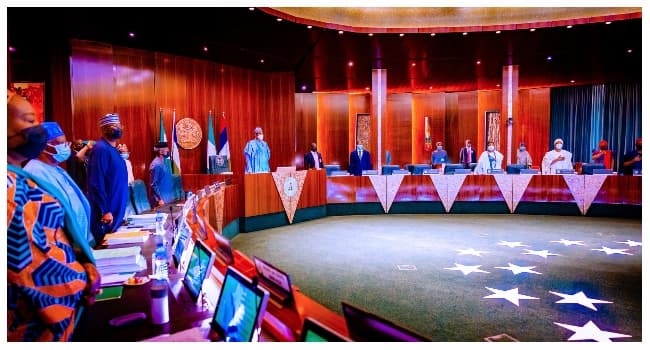
The policy was approved on Wednesday during the Federal Executive Council (FEC) meeting, chaired by President Bola Ahmed Tinubu at the Presidential Villa, Abuja. The decision followed a presentation by the Minister of Education, Dr. Tunji Alausa.
Ironically, the Council also granted approval for the establishment of nine new universities during the same meeting. Briefing journalists after the session, Dr. Alausa explained that the country’s tertiary education challenge was no longer centred on access but on inefficient duplication, inadequate infrastructure, poor staffing, and dwindling enrolment figures in existing institutions.
“Some federal universities operate far below their capacity, with certain institutions having fewer than 2,000 students. In one case, a northern university employs 1,200 staff for fewer than 800 students. This is an unsustainable use of public funds,” the minister stated.
Statistics provided by the ministry revealed that last year, 199 universities received fewer than 100 applications through the Joint Admissions and Matriculation Board (JAMB), with 34 institutions recording zero applications. Of the 295 polytechnics nationwide, many recorded fewer than 99 applicants, while 219 colleges of education had similarly poor enrolment numbers, including 64 with no applicants at all.
Dr. Alausa warned that the unchecked spread of poorly subscribed institutions would produce graduates ill-prepared for the job market, reduce the global credibility of Nigerian degrees, and worsen unemployment rates.
The minister clarified that the moratorium would allow the government to concentrate on upgrading facilities, recruiting qualified staff, and increasing the carrying capacity of existing institutions.
“If we aim to enhance quality and restore global respect for our degrees, halting the establishment of new federal tertiary institutions is the logical step,” he noted.
Nigeria currently has 72 federal universities, 42 federal polytechnics, and 28 federal colleges of education, in addition to hundreds of state-owned and privately-run institutions, alongside specialised schools such as colleges of agriculture, health sciences, and nursing.
On the approval of nine new universities despite the moratorium, the minister explained that they were private institutions whose applications had been pending for as long as six years and had undergone rigorous evaluation by the National Universities Commission (NUC).
“When we took office, there were 551 pending applications for private universities. We cleared over 350 dormant applications and introduced stricter guidelines. Of the 79 active proposals, nine met the requirements and were approved,” Alausa revealed.
He added that the owners of these approved institutions had already invested billions of naira in infrastructure. The minister also confirmed that the freeze applies to the creation of new private polytechnics and colleges of education to prevent further under-enrolment.
Dr. Alausa commended President Tinubu for backing the reform, describing it as a necessary reset for Nigeria’s higher education system.
“Mr President is deeply committed to education and has given us the mandate to ensure that every Nigerian has access to world-class education,” he added.