






Key Points
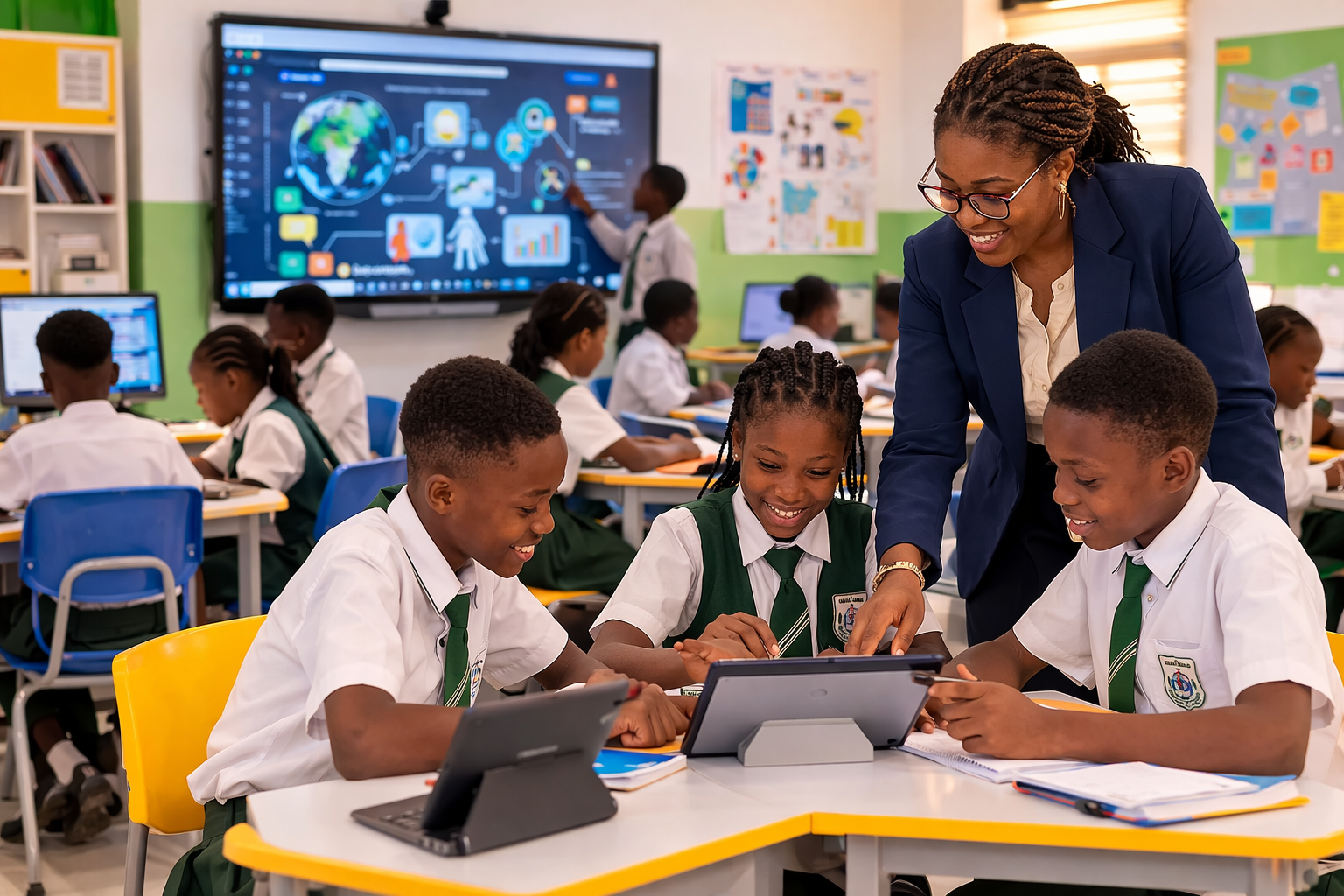
- Federal Capital Territory Universal Basic Education Board says the Model Smart School Karshi is using technology to improve student learning.
- The project was initiated by the Universal Basic Education Commission with support from Korea International Cooperation Agency (KOICA).
- Despite modern facilities, the school faces challenges such as poor water supply, unstable electricity, and staff shortages.
- The school placed third among six KOICA-supported smart schools in 2025.
Main Story
The Federal Capital Territory Universal Basic Education Board (FCT UBEB) says the Model Smart School Karshi is using modern technology to improve the quality of learning for students.
The acting Executive Chairman of the board, Florence Wenegieme, made this known during a familiarisation visit to the school in Abuja on Monday.
She explained that the smart school project was initiated by the Universal Basic Education Commission and supported by the Korea International Cooperation Agency (KOICA) to introduce advanced technology into teaching and learning.
During the visit, Wenegieme inspected several facilities in the school, including modern classrooms, science laboratories, and digital learning tools designed to improve students’ academic performance.
She described the initiative as an important step toward providing technology-driven and world-class education for students in the Federal Capital Territory.
The issues
Although the school has modern facilities, it still faces several operational challenges. These include lack of consistent water supply, unstable electricity, and inadequate teaching and non-teaching staff.
These challenges highlight broader infrastructure and staffing issues affecting some public education institutions, even when modern learning technologies are introduced.
What’s Being Said
According to Wenegieme, the smart school initiative aims to promote innovation and improve the education system.
“This project represents a significant step toward providing students with a modern, technology-based education,” she said.
The school principal, Ado Murtala, also said the Korea International Cooperation Agency played a major role in developing the school’s facilities.
He explained that KOICA supported the construction of the Content Development Studio, internet services, and teacher training.
What’s Next
Wenegieme assured the school management that the identified challenges would be addressed by Nyesom Wike, Minister of the Federal Capital Territory Administration, who she said remains committed to improving education in the FCT.
She also called on non-governmental organisations and development partners to support government efforts in strengthening the school’s learning environment.
Bottom Line
The Karshi Model Smart School represents Nigeria’s push toward digital and technology-driven education. However, addressing basic infrastructure and staffing challenges will be critical for such initiatives to fully deliver on their promise of improving learning outcomes.