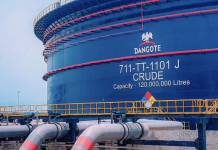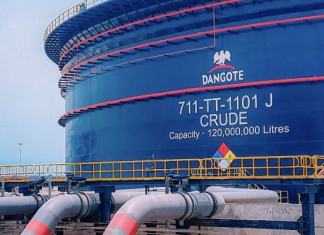




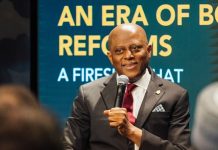


President of Dangote Group, Alhaji Aliko Dangote, has reiterated that powerful interests within and outside Nigeria’s oil sector are still actively working to sabotage his $20 billion refinery project in Lagos.
Speaking at an investor forum in Lagos, Dangote said his battle for the survival of the 650,000 barrels-per-day Dangote Refinery is far from over, citing entrenched interests benefiting from decades of government-subsidised fuel imports as key opponents.
“We’re fighting, and the fight is not yet finished,” he said. “But I’ve been fighting all my life, and I am 100 per cent sure I will win at the end of the day.”
According to international publication Semafor, Dangote accused these groups of resisting the deregulation of Nigeria’s downstream oil sector and funding opposition to President Bola Tinubu’s removal of petrol subsidies. He said the same interests are deliberately frustrating refinery operations by restricting local crude supply and undermining distribution.
Dangote has previously accused some International Oil Companies (IOCs) of deliberately inflating the price of local crude oil, forcing his refinery to source crude from distant markets like the United States—at a significantly higher cost. In June 2024, the company’s Vice President for Oil and Gas, Devakumar Edwin, accused the Nigerian Midstream and Downstream Petroleum Regulatory Authority (NMDPRA) of issuing licences for the importation of substandard refined products to sustain dependence on imports.
“The objective of the IOCs appears to be to keep Nigeria exporting crude and importing refined products—sacrificing national economic value and employment opportunities,” Edwin said.
Despite the hurdles, the refinery has already begun production and contributed to a reduction in petrol prices across Nigeria—from over ₦1,100 per litre to as low as ₦860—following a naira-for-crude deal facilitated by the Federal Government. Although the Nigerian National Petroleum Company Limited (NNPCL) temporarily paused the arrangement, the deal enabled the refinery to stabilise domestic fuel supply and challenge the dominance of importers.
Industry responses have been mixed. The Independent Petroleum Marketers Association of Nigeria (IPMAN) expressed strong support for Dangote’s efforts, describing the opposition as expected market competition.
“Every successful businessman will be challenged,” said IPMAN spokesperson Chinedu Ukadike. “We’re happy with him for his price slashes, even when it affects our own projections. Nigerians should not suffer, and we stand with him.”
However, the Petroleum Products Retail Outlet Owners Association of Nigeria (PETROAN) called for a level playing field and healthier competition in the downstream sector. Its president, Billy Gillis-Harry, urged the government to supply crude fairly to all refineries, including Dangote’s, while also supporting importers.
“The naira-for-crude policy is a good initiative and should be properly reviewed. All operators must coexist in a competitive but fair environment,” Gillis-Harry said.
Despite past moments of frustration—at one point describing Nigeria’s oil mafia as more formidable than drug cartels—Dangote remains resolute in achieving full-scale operations.
He stressed that sub-Saharan Africa needs the refinery, which, when operating at capacity, is expected to transform Nigeria from a major importer of refined fuel into a net exporter, boosting self-reliance, job creation, and industrial growth.