




By Boluwatife Oshadiya | April 6, 2026
Key Points
- China’s 2026 trade fair calendar features over 25 major exhibitions across manufacturing, technology, logistics, and consumer goods
- The Canton Fair remains the most critical entry point for Nigerian importers seeking factory-direct sourcing across multiple sectors
- High-tech expos in Shenzhen and Shanghai offer strong access to investors, startups, and innovation ecosystems
- Logistics and supply chain fairs are increasingly vital for Nigerian businesses navigating shipping costs and port inefficiencies
- Strategic attendance—rather than broad participation—is key to maximising ROI from China’s competitive trade exhibition landscape
Main Story
China’s 2026 trade fair ecosystem is shaping up to be one of the most expansive and strategically significant in recent years, offering global businesses—particularly from emerging markets like Nigeria—direct access to manufacturers, investors, and industrial innovation hubs.
From April through November, major cities including Guangzhou, Shanghai, Beijing, Shenzhen, and Yiwu will host a dense calendar of exhibitions spanning electronics, artificial intelligence, logistics, textiles, automotive components, and consumer goods. These events serve as critical nodes in global supply chains, where sourcing decisions, partnerships, and pricing negotiations are increasingly made face-to-face rather than through digital platforms alone.
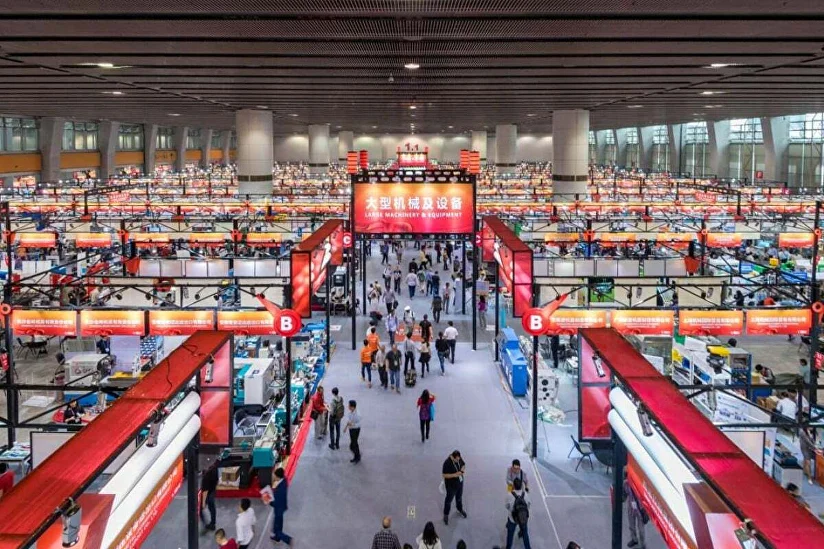
At the centre of this ecosystem is the Canton Fair (China Import and Export Fair), scheduled in two major editions—Spring (April–May) and Autumn (October–November) in Guangzhou. Structured in three phases, the fair covers a wide spectrum of industries: from electronics and heavy machinery to textiles, home décor, and fast-moving consumer goods. For Nigerian importers, particularly those in electronics retail, fashion, and household goods distribution, the Canton Fair remains the single most comprehensive sourcing platform globally.
Beyond Canton, China’s trade calendar includes specialised exhibitions such as the China International Industry Fair (CIIF) in Shanghai, which focuses on industrial automation and robotics, and the China Hi-Tech Fair (CHTF) in Shenzhen, widely regarded as the country’s leading technology showcase for artificial intelligence, big data, and green energy solutions.
In Beijing, the China International Fair for Trade in Services (CIFTIS) highlights sectors such as telecommunications, finance, and healthcare—areas increasingly relevant as Nigeria’s services sector expands. Meanwhile, niche fairs such as the China International Optoelectronic Expo (CIOE) and the China (Shenzhen) International Logistics and Supply Chain Fair (CILF) provide targeted access to optical technologies and global shipping solutions respectively.
For Nigerian businesses, the strategic value of these fairs lies not only in product sourcing but also in supply chain optimisation, cost negotiation, and long-term partnership building.
The Issues
Despite the opportunities, participation in China’s trade fairs presents structural challenges that Nigerian businesses must navigate carefully.
First is the issue of verification. While trade fairs provide access to thousands of suppliers, not all exhibitors represent direct manufacturers. Industry reports and buyer feedback consistently emphasise the need for factory inspections before finalising contracts. This is particularly critical in sectors such as electronics and machinery, where product quality directly affects market credibility back home.
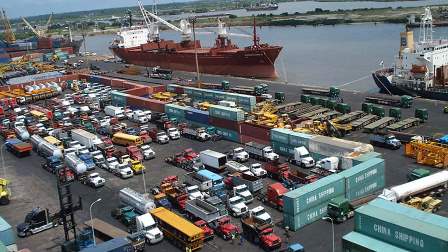
Second is the logistics bottleneck. Nigeria’s import ecosystem—characterised by port congestion, fluctuating customs duties, and forex volatility—means that sourcing decisions made in China must account for downstream inefficiencies. This is why events like CILF are gaining importance, as they connect buyers with freight forwarders, shipping companies, and logistics technology providers.
Third is the growing complexity of global competition. Buyers from Europe, Southeast Asia, and Latin America increasingly dominate these fairs, often placing bulk orders that secure preferential pricing. Nigerian SMEs, operating with tighter capital constraints, must adopt more targeted sourcing strategies to remain competitive.
Finally, there is the digital transition. While many fairs now operate hybrid models, industry consensus suggests that physical attendance remains superior for trust-building and product verification—two critical components of international trade.
What’s Being Said
Across global sourcing communities, there is broad agreement on the enduring value of China’s trade fairs despite the rise of digital marketplaces.
Trade analysts and procurement consultants consistently highlight that in-person exhibitions offer a level of transparency that online platforms cannot replicate. Buyers are able to assess manufacturing capabilities, inspect product samples, and evaluate supplier credibility in real time.
Participants in previous editions of the Canton Fair have noted that direct engagement with factory representatives often leads to better pricing structures, customised product specifications, and more flexible payment terms. This aligns with broader industry observations that relationship-based sourcing continues to outperform transactional, platform-based procurement.
In the technology space, attendees of events like CHTF and CIIF frequently point to the concentration of startups, venture capital firms, and innovation labs as a major draw. These events are not just marketplaces but ecosystems where partnerships are formed and future technologies are commercialised.
Logistics professionals also emphasise the growing relevance of supply chain exhibitions, particularly as global shipping routes adjust to geopolitical and economic pressures. Events like CILF are increasingly seen as essential for businesses seeking to optimise delivery timelines and reduce costs.
What’s Next
- The Spring Canton Fair (April–May 2026) will set the tone for global sourcing trends, particularly in electronics and consumer goods
- The China International Industry Fair (October 2026) is expected to showcase advancements in industrial automation, with implications for manufacturing partnerships
- The China Hi-Tech Fair (November 2026) will attract global investors and startups, particularly in AI and green technology
- Logistics-focused events in Shenzhen later in the year are likely to influence shipping strategies ahead of peak global trade cycles
- Nigerian businesses are expected to increase delegation participation, particularly through trade associations and private sourcing agencies
Bottom Line
The Bottom Line: China’s 2026 trade fair calendar is not just a series of exhibitions—it is a strategic marketplace where global supply chains are negotiated and future business relationships are built. For Nigerian importers and exporters, success will depend less on attendance volume and more on precision: choosing the right fairs, verifying the right partners, and converting contacts into structured, long-term trade pipelines.