










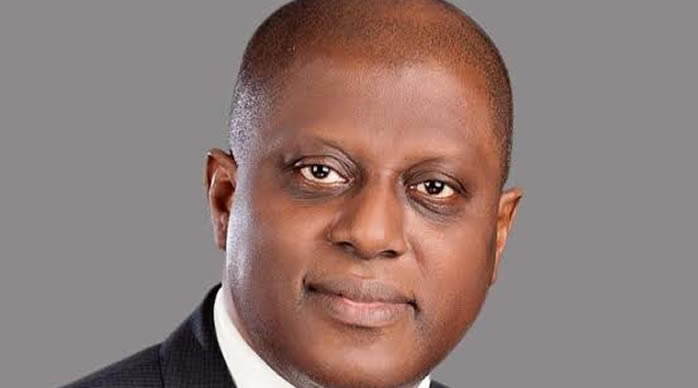
The Central Bank of Nigeria (CBN) has stated that its disciplined and transparent reforms are successfully strengthening macroeconomic fundamentals and restoring confidence in the nation’s financial system. Speaking at the “Egypt 30by30” programme in Cairo on Wednesday, February 18, 2026, CBN Governor Olayemi Cardoso emphasized that these ongoing adjustments are laying a critical foundation for sustainable growth.
According to a statement issued by the apex bank, Cardoso noted that building a resilient financial system requires anchoring the economy on trustworthy institutions, predictable policies, and transparent markets.
The apex bank’s reform agenda has already produced measurable improvements in key economic indicators over the past year. Data shows that headline inflation has more than halved from a peak of 34.6% in late 2024 to 15.1% in January 2026, signaling that aggressive monetary tightening is having its intended effect.
Furthermore, Nigeria’s gross external reserves have climbed to $49 billion as of early February 2026, providing the bank with a stronger buffer to manage foreign exchange volatility. Cardoso pointed out that the premium between the official and parallel market rates has collapsed to under 2%, effectively ending the era of damaging arbitrage.
Beyond price stability, the CBN is pushing for a broader transformation that links financial resilience with environmental sustainability. The governor highlighted that climate risk is now a direct financial risk, affecting everything from food security to sovereign ratings.
Through collaborations with international partners like the International Finance Corporation (IFC), the CBN is advancing “green finance” frameworks and supporting cross-border cooperation across Africa.
The bank maintains that these structural reforms, coupled with the ongoing banking sector recapitalization, will ensure that the Nigerian economy is not just capable of withstanding future shocks but is also positioned for long-term global competitiveness.




 has stated that its disciplined and transparent reforms are successfully strengthening macroeconomic fundamentals and restoring confidence in the nation's financial system.)