






Aviation sector growth slowed sharply to 2.88 percent in the third quarter of 2025 as passengers continued to grapple with high airfares, according to the latest Gross Domestic Product report released by the National Bureau of Statistics.
The NBS data showed that the nominal year on year growth rate of air transport dropped significantly from 30.60 percent in the second quarter and 57.21 percent in the first quarter of 2025. The slowdown came despite an increase in the sector’s output value during the period under review.
At current basic prices, air transport GDP rose from N78.71 billion in the third quarter of 2024 to N80.98 billion in the same period of 2025. In the first quarter of 2025, output increased from N67.28 billion recorded a year earlier to N105.77 billion, while the second quarter expanded from N28.59 billion to N37.35 billion.
Quarterly figures for 2025 highlight the volatility in the sector. Output fell by about 64.7 percent between the first and second quarters, declining from N105.77 billion to N37.35 billion. It then rebounded strongly in the third quarter, rising by about 116.8 percent to N80.98 billion. However, because growth is measured against corresponding quarters of the previous year, the year on year growth rate still declined sharply.
The data also showed that aviation’s contribution to the overall economy remained marginal. The sector accounted for 0.07 percent of total GDP in the third quarter of 2025, slightly lower than the 0.08 percent recorded in the same quarter of 2024. Its share stood at 0.11 percent in the first quarter of 2025 and 0.04 percent in the second quarter.
In contrast, the broader economy continued to expand in nominal terms. GDP at current basic prices increased from N96.16 trillion in the third quarter of 2024 to N113.59 trillion in the corresponding period of 2025. Quarterly figures also rose from N79.51 trillion in the first quarter of 2024 to N94.05 trillion in the first quarter of 2025, and from N84.48 trillion to N100.73 trillion between the second quarters of 2024 and 2025.
Real GDP figures indicate that the aviation sector has moved out of contraction but with weakening momentum. Real growth remained negative throughout 2024, recording minus 9.51 percent in the first quarter, minus 11.18 percent in the second quarter, and minus 9.90 percent in the third quarter. In 2025, the sector returned to positive territory, posting minus 0.81 percent in the first quarter, 6.34 percent in the second quarter, and 1.60 percent in the third quarter.
Overall, the figures show an industry that recorded strong year on year growth at the start of 2025 but experienced a steep slowdown by the third quarter, even though output levels remained higher than in 2024. The moderation comes at a time when travellers are facing rising ticket prices, raising concerns about the sustainability of growth amid high operating costs and pressured demand.
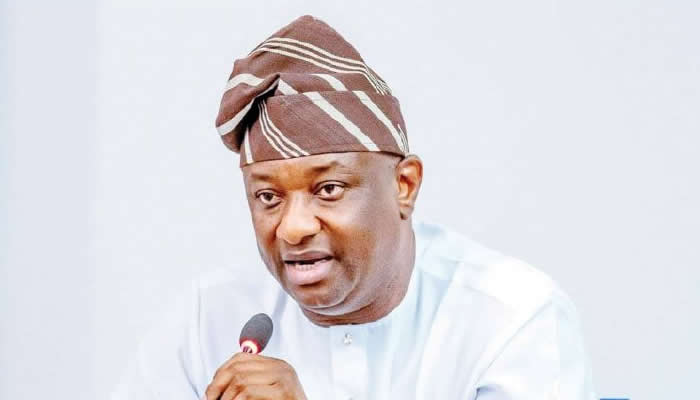
Against this backdrop, the Senate recently summoned the Minister of Aviation and Aerospace Development, Festus Keyamo, alongside key industry stakeholders, for an emergency meeting following public outcry over sharp increases in domestic airfares ahead of the festive season.
The summons followed a motion sponsored by Senator Buhari Abdulfatai, who warned that soaring ticket prices threaten national mobility and could disrupt end of year travel plans for millions of Nigerians.
Reports indicate that one way fares on several domestic routes, particularly to the South South and South East, have risen by as much as 200 percent, with some tickets exceeding N300,000. Before the festive rush, fares on the same routes averaged around N120,000.
Checks on airline booking platforms showed that some fares increased by more than 150 percent compared to pre holiday levels, deepening concerns among travellers already strained by inflation and rising transport costs.
During plenary, Senator Abdulfatai cited complaints from constituents, noting that a one way ticket from Abuja to Lagos now sells for between N400,000 and N600,000, a level many Nigerians can no longer afford, especially as insecurity and poor road conditions have made air travel the preferred option.
He urged urgent engagement with aviation stakeholders, saying immediate steps were needed to address the situation before the festive period.