






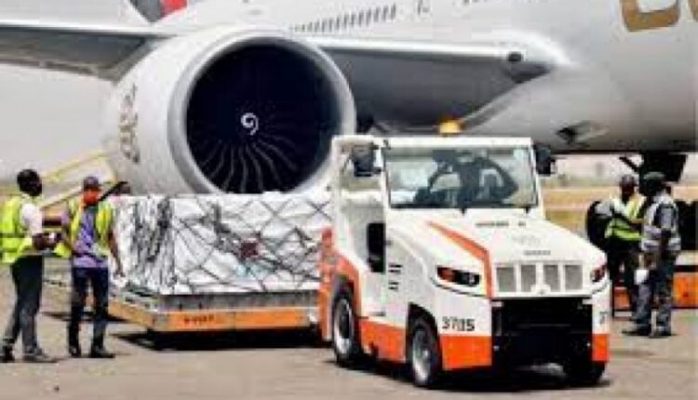
Aviation ground handling companies in Nigeria have called on the Federal Government to grant them duty waivers and concessionary loans to ensure the sustainability of their operations amid rising costs and shrinking profit margins.
The operators, speaking in separate interviews over the weekend, highlighted the financial burden of clearing imported operational equipment and the need for government support to remain competitive in the aviation industry.
Chairman of the Aviation Ground Handlers Association of Nigeria (AGHAN), ‘Niyi Adigun, expressed concern that, for nearly a decade, indigenous airlines had enjoyed customs waivers while ground handling companies with substantial investments were excluded.
“The huge amount we pay to clear our imported equipment at the ports is crippling our businesses,” Adigun stated. “If granted, duty waivers will significantly reduce our operational costs and ease the harsh economic conditions we face.”
He further appealed to the government to facilitate concessionary loans through the Central Bank of Nigeria (CBN), allowing operators to access funding at single-digit interest rates.
“Aviation is a key driver of economic growth. If we want real development, all contributing sectors must be supported. The government should create a more business-friendly environment under its ease-of-doing-business initiative,” he added.
Adigun also addressed the recent adjustments in safety threshold rates for ground handling services, noting that the 15% reduction in the initially proposed rates was part of the industry’s contribution to the Minister of Aviation and Aerospace Development, Mr. Festus Keyamo’s, Five-Point Agenda to improve sustainability in the sector.
He stressed that the rate adjustment was necessary due to Nigeria’s economic downturn, adding that ground handlers adhered to the International Civil Aviation Organisation (ICAO) guidelines for rate reviews, which include stakeholder engagement and justification for adjustments.
“What we implemented is simply right-pricing,” he said, thanking Minister Keyamo and Director-General of the Nigerian Civil Aviation Authority (NCAA), Chris Najomo, for their intervention.
Echoing Adigun’s sentiments, Otunba John Adebanjo, Chairman of Swissport, criticised Nigerian airlines for resisting the new rates while paying significantly higher fees for similar services abroad.
“Nigerian airlines flying regional and international routes pay higher ground handling charges in other countries. Why can’t the same be applied here?” he questioned.
Adebanjo also highlighted the rising costs of doing business, stating that currency devaluation, increased fuel prices, and higher staff salaries had made it imperative for handling companies to adjust their rates.
“Since the last major review, the dollar exchange rate has surged by nearly 500%, yet we are not asking for a 500% increase—only a marginal adjustment,” he explained.
Prince Saheed Lasisi, Executive Director of Commercial and Business Development at NAHCO, stressed that while the recently approved rates would allow handlers to stay afloat, a further review would be necessary within the next 12 months.
He also lamented that, unlike airlines that benefit from customs waivers on equipment and spare parts, handling companies were left to bear huge import duties, which in some cases amount to over $1 million annually.
“We import equipment costing as much as $600,000 per unit, yet we pay exorbitant duties. Without concessions or waivers, sustaining operations will be increasingly difficult,” he added.
Vice Chairman of AGHAN, Mr. Ahmed Bashir, thanked Minister Keyamo and DGCA Najomo for their intervention, ensuring a smooth implementation of the new safety threshold rates after nearly a year of negotiations.
Bashir reaffirmed that ground handlers adhered to international best practices, considering factors such as cost recovery, stakeholder engagement, and transparency.