







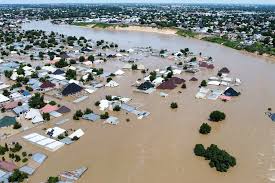
At least eight people have been confirmed dead following a devastating flood in Yola, the Adamawa State capital, as torrential rains wreaked havoc across multiple communities early Sunday morning. The disaster, which displaced hundreds and left dozens missing—many of them children—has triggered a wave of emergency preparedness activities in other states.
The downpour, which began around 1 a.m., intensified over several hours, flooding low-lying communities such as Shagari Low Cost, Yolde Pate, and Sabon Pegi. Residents reported that floodwaters surged into homes, causing structural collapses and sweeping away entire households. Over 600 houses were destroyed, according to local accounts.
Authorities confirmed the recovery of eight bodies, including two children in Sabon Pegi and six others pulled from drainage channels in Ibunu Abbas, also known as Yola Bypass. The victims have been deposited at Modibbo Adama Teaching Hospital, Yola.
Spokesperson for the Adamawa State Police Command, SP Suleiman Nguroje, said rescue operations were still ongoing. “Our officers are on the ground, working with other agencies to find and assist victims. We are standing with the affected communities during this tragic time,” he said.
In response, the National Emergency Management Agency (NEMA) has activated flood readiness plans in 15 high-risk states, including Adamawa. The agency had earlier warned of increased flood threats this rainy season and has intensified awareness campaigns in vulnerable regions.
States across Nigeria are also stepping up their flood mitigation strategies.
In Anambra, the state government has constituted an inter-ministerial committee to coordinate preparedness efforts. Commissioner for Environment, Dr Felix Odimegwu, said Governor Chukwuma Soludo had ordered sensitisation campaigns, drainage clearance, and early warnings to coastal communities.
Drainage and reservoir systems including the Nkissi and Ogboji reservoirs have been upgraded to manage excess water, while officials from NEMA have commenced sensitisation activities in flood-prone LGAs like Ogbaru and Anambra East.
In Edo State, the government has launched a strategic inspection of erosion-prone areas. According to Ahmed Momoh, head of the state’s Flood, Erosion and Watershed Management Agency, ongoing desilting of major drainage systems is expected to ease water flow during peak rainfall. Temporary camps have been set up in flood-prone areas such as Ilushi and Aghenebode to accommodate displaced persons if necessary.
In Bayelsa State, which sits below sea level and is routinely affected by severe flooding, has initiated preemptive measures. According to the Directorate of Flood and Erosion Control, natural water channels in Yenagoa and other parts of the state are being cleared. Public and private schools have also been designated as temporary shelters for displaced residents.
Flood alerts from the Nigeria Hydrological Services Agency (NIHSA) warn that more than 2,000 communities across 293 local councils could face moderate to severe flooding between now and early August. With the River Niger and River Benue expected to overflow in the coming weeks, the disaster in Adamawa is seen as a grim preview of what lies ahead.
State and federal authorities are urging residents in flood-prone zones to relocate to higher ground and avoid blocking drainage systems.
As emergency efforts continue in Adamawa, the tragic scenes in Yola have become a wake-up call for urgent climate resilience, better infrastructure, and swift disaster response across Nigeria.