






By Boluwatife Oshadiya, | February 25 2026
Key Points
- Bilateral trade between Nigeria and China exceeded $15 billion in the first seven months of 2025, with China exporting $2.76 billion to Nigeria in December 2025 alone
- Nigeria’s exports to China rose 44% year-on-year in December 2025, driven largely by petroleum gas and mineral shipments
- Despite strong growth, Nigeria recorded a $2.18 billion monthly trade deficit with China, highlighting structural imbalance in the trade relationship.
- China remains Nigeria’s second-largest trading partner in Africa, reinforcing its strategic role in Nigeria’s non-oil export expansion.
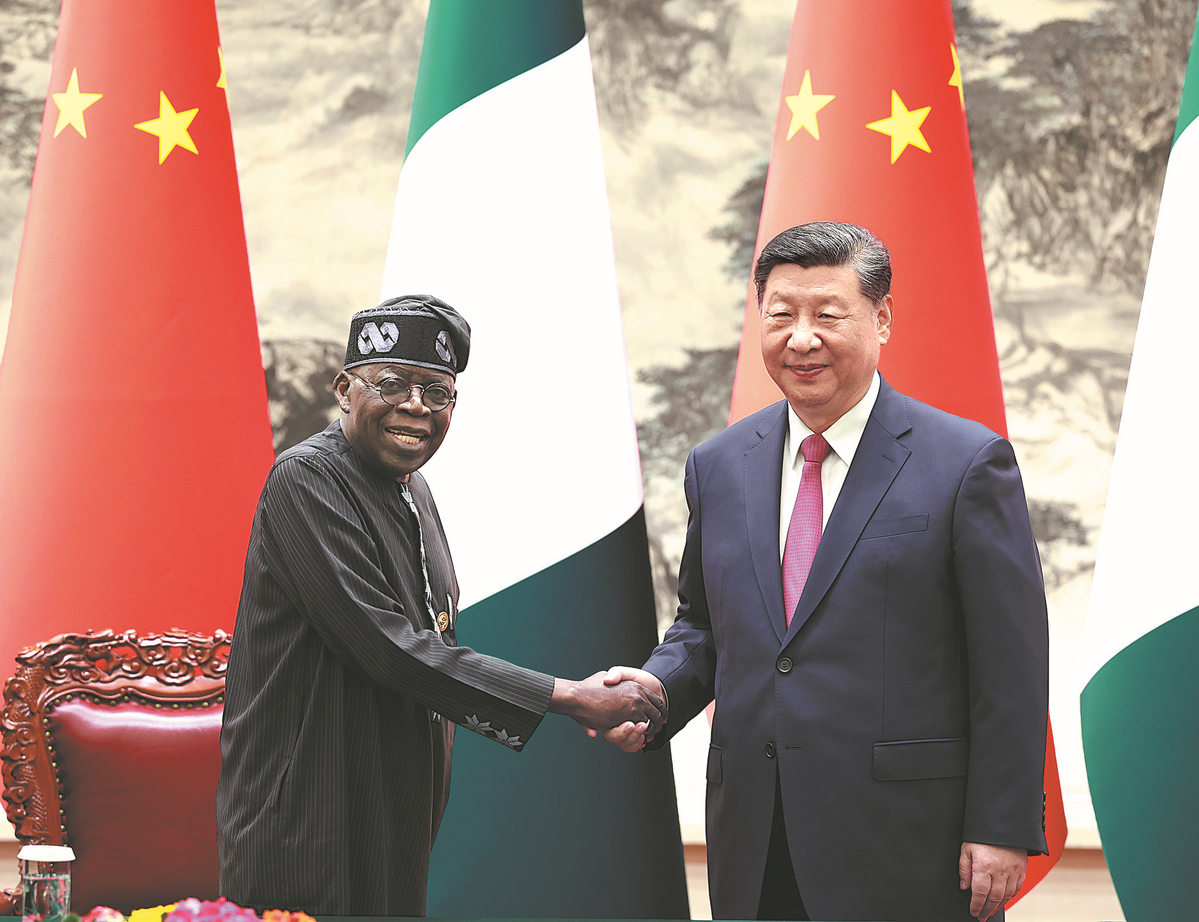
Nigeria’s trade relationship with China has entered a new phase of intensity, with bilateral commerce accelerating sharply through 2025 and reshaping both countries’ economic positions.
Cumulatively, bilateral trade crossed $15 billion in the first seven months of 2025, representing a 34.7% increase compared to the same period in 2024. Over the past five years, trade between the two nations has grown at an annualised rate of 5.61%, cementing China’s status as Nigeria’s second-largest trading partner in Africa.
The composition of trade tells a clear story. Nigeria’s exports to China remain dominated by natural resources — particularly petroleum gas ($275 million in December 2025), crude petroleum ($136 million), and other minerals. Meanwhile, imports from China are largely value-added manufactured goods, including synthetic filament yarn woven fabric ($131 million), telephones ($102 million), and light pure woven cotton ($84.5 million).
The surge in non-oil export activity — especially gas and mineral shipments — signals that Nigeria’s diversification strategy is gaining measurable traction, even if hydrocarbons still dominate the export basket.
China’s increased appetite for Nigerian petroleum gas, which rose 156% year-on-year in December, has been a central driver of export growth. Imports of uranium and thorium ore from Nigeria also rose 152% year-on-year, reflecting expanding energy-sector interdependence.
For China, Nigeria represents both a critical resource supplier and a high-growth consumer market. For Nigeria, China provides machinery, telecommunications infrastructure, industrial inputs, and financing support that underpin domestic production capacity.
The trade architecture between the two countries has therefore become both a growth engine and a structural test of Nigeria’s industrial ambition.
The Issues
Persistent Trade Imbalance
Nigeria’s trade deficit with China remains large and chronic. In December 2025, imports of $2.76 billion dwarfed exports of $586 million. The imbalance reflects Nigeria’s reliance on imported machinery, electronics, textiles, and industrial goods, while exporting primarily raw materials.
This structure reinforces value-chain asymmetry: China exports finished products; Nigeria exports commodities. Without scaling domestic manufacturing, the deficit is likely to persist.
Industrialisation Imperative
Nigeria’s Economic Complexity Index ranking remains significantly lower than China’s, reflecting limited product diversification. While Nigeria’s non-oil export figures are improving in nominal terms, much of the export growth remains resource-based rather than manufacturing-led.
Stakeholders argue that sustainable trade gains will require Nigeria to expand processing capacity — refining petroleum products domestically, upgrading mineral processing, and investing in agro-processing and light manufacturing.
Strategic Interdependence
The relationship is no longer purely transactional. China relies on Nigeria’s hydrocarbons and minerals to feed its industrial engine, while Nigeria depends on Chinese capital goods, telecommunications infrastructure, and construction equipment to support development projects.
This interdependence creates leverage for both countries but also exposes Nigeria to external supply shocks and currency pressures if imports continue to outpace export growth.
What’s Being Said
The Federal Ministry of Industry, Trade and Investment has consistently framed Nigeria–China trade expansion within the context of export diversification and industrial capacity development. In official communiqués outlining Nigeria’s non-oil export strategy, the Ministry emphasises value addition, local manufacturing expansion, and improved trade facilitation as pillars of its bilateral engagement with major trading partners, including China.
Data from the National Bureau of Statistics (NBS) show that China remains one of Nigeria’s largest import partners and a significant destination for mineral and energy exports. NBS trade reports have repeatedly highlighted the structural imbalance in the relationship, noting that manufactured goods account for the majority of Nigeria’s imports from China, while exports remain concentrated in petroleum gas, crude petroleum, and solid minerals. The Bureau’s published trade tables confirm that the export surge in late 2025 was driven primarily by hydrocarbons and mineral shipments rather than processed industrial goods.
Trade figures from the Observatory of Economic Complexity (OEC) further illustrate the asymmetry. As of 2024 data, China’s exports to Nigeria totalled $16.6 billion, compared to Nigeria’s $3.27 billion in exports to China. OEC product-level data show Nigeria’s top export to China as petroleum gas, while China’s leading exports to Nigeria include synthetic filament yarn woven fabric and telecommunications equipment — reinforcing the value-chain gap between raw material supply and finished product imports.
Statements released by the Chinese Embassy in Nigeria have consistently described bilateral trade as mutually beneficial, with emphasis on infrastructure cooperation, industrial park development, and energy partnerships. Embassy briefings on economic engagement typically highlight China’s role in supporting Nigeria’s transport, telecommunications, and power sectors through capital goods exports and technical partnerships.
Independent trade analysts and published policy reports from institutions such as the World Bank and UNCTAD have similarly described Nigeria–China trade as high-volume but structurally imbalanced. These reports note that while trade growth supports Nigeria’s access to affordable machinery and industrial inputs, sustained long-term gains will depend on Nigeria increasing domestic processing capacity and exporting higher-value manufactured goods.
Taken together, official government publications, multilateral trade data, and embassy communiqués present a consistent picture: bilateral trade is expanding rapidly, Nigeria’s non-oil export volumes are rising in nominal terms, but the structure of trade remains heavily commodity-driven on the Nigerian side and manufacturing-driven on the Chinese side.
What’s Next
- Nigeria’s Ministry of Industry is expected to release an updated non-oil export performance report for Q1 2026, detailing sector-level contributions.
- Bilateral trade review talks are scheduled in mid-2026 to assess tariff adjustments and industrial cooperation agreements.
- Nigerian policymakers are considering incentives for value-added exports, particularly in the petrochemical and mineral processing sectors.
- China’s ongoing infrastructure investments in Nigeria may further expand demand for industrial imports in 2026
Bottom Line
The Bottom Line: Nigeria–China trade is expanding rapidly, and non-oil exports are rising — but the structure of that growth remains commodity-heavy. Unless Nigeria converts export momentum into manufacturing capacity, the trade deficit will deepen even as total trade volumes surge. The partnership is economically significant, but its long-term value will depend on whether Nigeria moves up the value chain rather than remaining at its base.