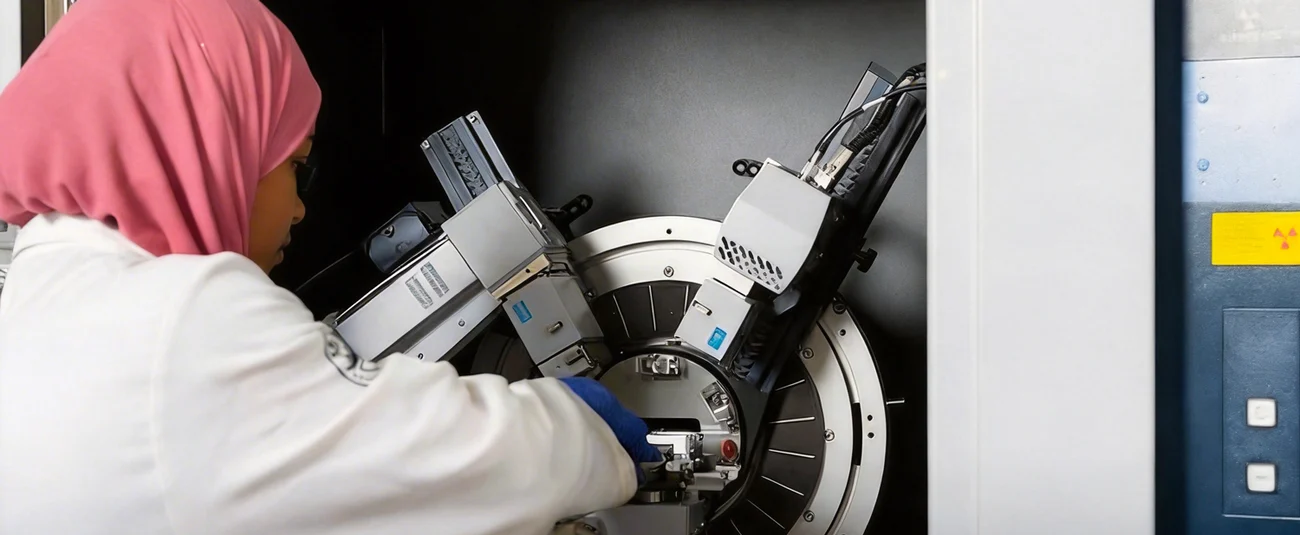
The African Development Bank Group is strengthening Africa’s scientific capacity by investing in women researchers, with Nigeria emerging as a key beneficiary of a continent-wide initiative to advance Science, Technology, Engineering, and Mathematics (STEM) education.
At the centre of the effort is the African University of Science and Technology (AUST) in Abuja, which is helping to train a new generation of African scientists while expanding opportunities for women in fields traditionally dominated by men.
The intervention was implemented through the Nelson Mandela Institute – African Institutions of Science and Technology (NMI–AIST) Project, executed in two phases between 2010 and 2022. The programme supported three centres of excellence, AUST in Nigeria, the International Institute for Water and Environmental Engineering in Burkina Faso, and the Nelson Mandela African Institution of Science and Technology in Tanzania, to provide world-class postgraduate training and strengthen research ecosystems across the continent.
Within this network, AUST plays a critical role in expanding women’s participation in advanced scientific research.
A major driver of this progress is the Bank’s Women in Science and Engineering (WiSE) initiative, which promotes access, leadership, and visibility for female scientists through scholarships, mentorship, and research funding. The programme has enabled women to pursue advanced degrees and assume roles in academia, industry, and research institutions.
One beneficiary, Aisha Aminu, a specialist in nonlinear operator theory, completed her doctoral studies at AUST with AfDB support. In 2025, she was selected for the prestigious Heidelberg Laureate Forum, placing her among leading emerging researchers globally.
She credited the programme with providing access to mentorship, research facilities, and academic networks that shaped her career trajectory.
Another alumna, Stella Nwachukwu‑Dozie, is conducting groundbreaking research on biosynthesised gold nanoparticles for targeted breast-cancer treatment. She currently serves as Principal Laboratory Scientist at Nigeria’s National Biotechnology and Genetic Engineering Advanced Laboratory, where her work is contributing to nationally relevant scientific innovation.
Beyond postgraduate training, the Bank’s interventions have also focused on early-stage engagement. In Nigeria, project-supported STEM outreach initiatives have targeted secondary schools, including a 2021 campaign that reached more than 300 students — the majority of them girls — alongside coding camps designed to spark interest in technology careers.
At AUST, the project has delivered measurable outcomes. The university has produced 398 MSc and PhD graduates, with women accounting for about 35 per cent. Additional gains include improved teaching quality through visiting faculty missions, upgraded laboratories, expanded ICT infrastructure, and increased access to scientific journals, all of which have boosted research output.
Scholarship schemes funded 115 MSc and 90 PhD students from across Africa, while the AUSTInspire innovation hub has supported about 15 student- and faculty-led startups, strengthening links between research and entrepreneurship.
Ongoing research at the institution includes cancer studies in collaboration with National Hospital Abuja, nanoparticle-based remediation of oil-spill-affected areas in the Niger Delta, and the development of sustainable construction materials and energy systems.
The initiative underscores the broader impact of the NMI–AIST Project, particularly in advancing women’s participation in STEM, and highlights how AfDB investments are helping to build Africa’s scientific leadership base for inclusive growth and long-term resilience.