







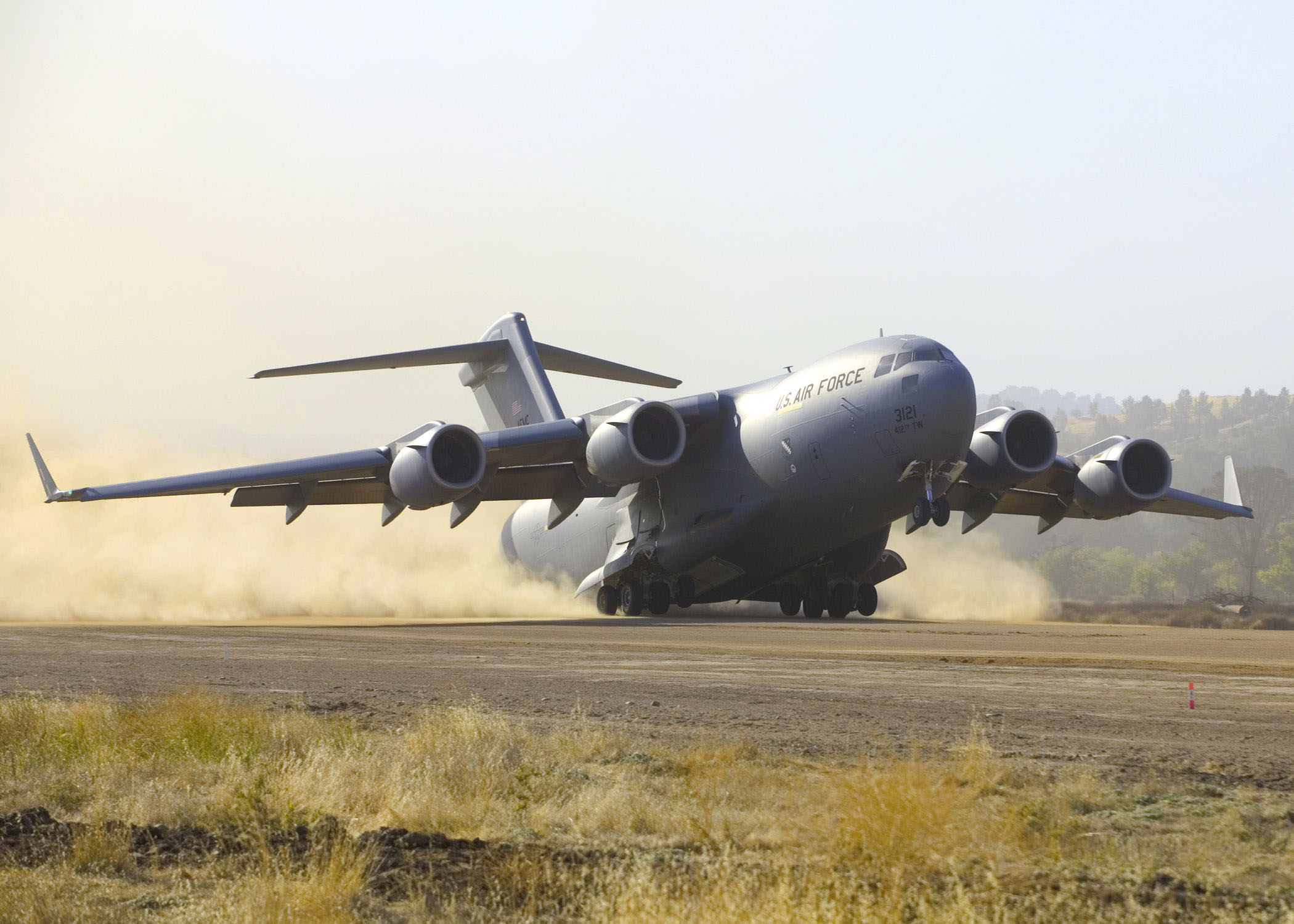
Multiple United States military aircraft arrived in Nigeria between Thursday and Friday, delivering ammunition and logistics support to military installations in the country’s northeastern region, including Borno State.
Senior Defence Headquarters officials confirmed that the aircraft transported ammunition supplied by the American government as part of ongoing bilateral security collaboration.
The deliveries follow high-level Nigeria–U.S. security discussions focused on strengthening counterterrorism operations and improving military capabilities in the fight against insurgency.
Ammunition Deliveries Support Ongoing Operations
According to senior military officers who spoke on background, the shipments represent operational replenishment rather than the introduction of combat forces.
Officials emphasized that sustained counterinsurgency campaigns require continuous resupply of ammunition across various calibres deployed in field operations.
One officer explained that cooperation between both governments — under coordination involving Nigeria’s National Security Adviser — extends beyond troop deployment to include logistics, intelligence, and equipment support.
US Aircraft Sighted at Maiduguri Base
The New York Times reported that U.S. military aircraft landed in Maiduguri on Thursday night, with at least three aircraft visible at the base by Friday evening. Equipment was observed being offloaded from one of the planes.
A U.S. Department of Defense official described the flights as the initial phase of a broader logistics operation involving C-17 transport aircraft scheduled to operate across three primary Nigerian locations. Social media aviation trackers also reported additional movements. An account identified as @mobilisingniger stated that a U.S. Air Force C-130J aircraft landed at Kaduna International Airport after departing from Ghana.
Speculation suggests that the Kaduna Depot could serve as a training and coordination hub for U.S. personnel collaborating with Nigerian forces. Another aviation tracker noted what was described as a substantial equipment delivery to Maiduguri Air Base, further reinforcing reports of expanded logistics activity. As of press time, the Director of Defence Media Operations, Major General Michael Onoja, had not publicly commented.
Broader Context: U.S. Deployment of Military Advisers
In 2025, U.S. President Donald Trump indicated that American forces could be deployed to Nigeria if violence against Christians persisted. Nigeria was subsequently designated as a Country of Particular Concern.
On Christmas Day, the U.S. conducted an airstrike targeting Islamic State fighters in Sokoto State. Subsequent diplomatic engagement appears to have transitioned initial tensions into structured military cooperation. Reports indicate that approximately 200 American intelligence analysts, advisers, and trainers are being deployed to assist Nigeria’s armed forces in targeted counterterrorism operations.
The New York Times stated that the first wave of personnel has already arrived, with additional aircraft expected to continue operations in the coming weeks.
Experts Clarify Scope of Engagement
Retired Nigerian Army Intelligence Corps officer Chris Andrew cautioned against misinterpreting the development as the arrival of combat troops.
He explained that U.S. involvement centers on technical training — particularly in drone warfare, precision targeting, and advanced surveillance systems. Andrew noted that while Nigeria operates domestically produced and Chinese-manufactured drones, Western drone technology offers enhanced precision capabilities.
He further suggested that following the withdrawal of U.S. forces from Niger — previously home to an American drone base — Nigeria could emerge as a strategic alternative location. Security analyst Chidi Omeje described the development as a diplomatic achievement, arguing that effective engagement transformed prior tensions into structured cooperation.
However, he emphasized that Nigerian sovereignty must remain intact, stressing that foreign military operations must occur strictly within agreed parameters.
Experts agree that citizens most affected by terrorism prioritize security outcomes above geopolitical sensitivities, provided national authority is respected.
As insurgency, banditry, and extremist violence continue to challenge stability, expanded U.S.–Nigeria security cooperation may mark a pivotal shift in the country’s counterterrorism strategy.