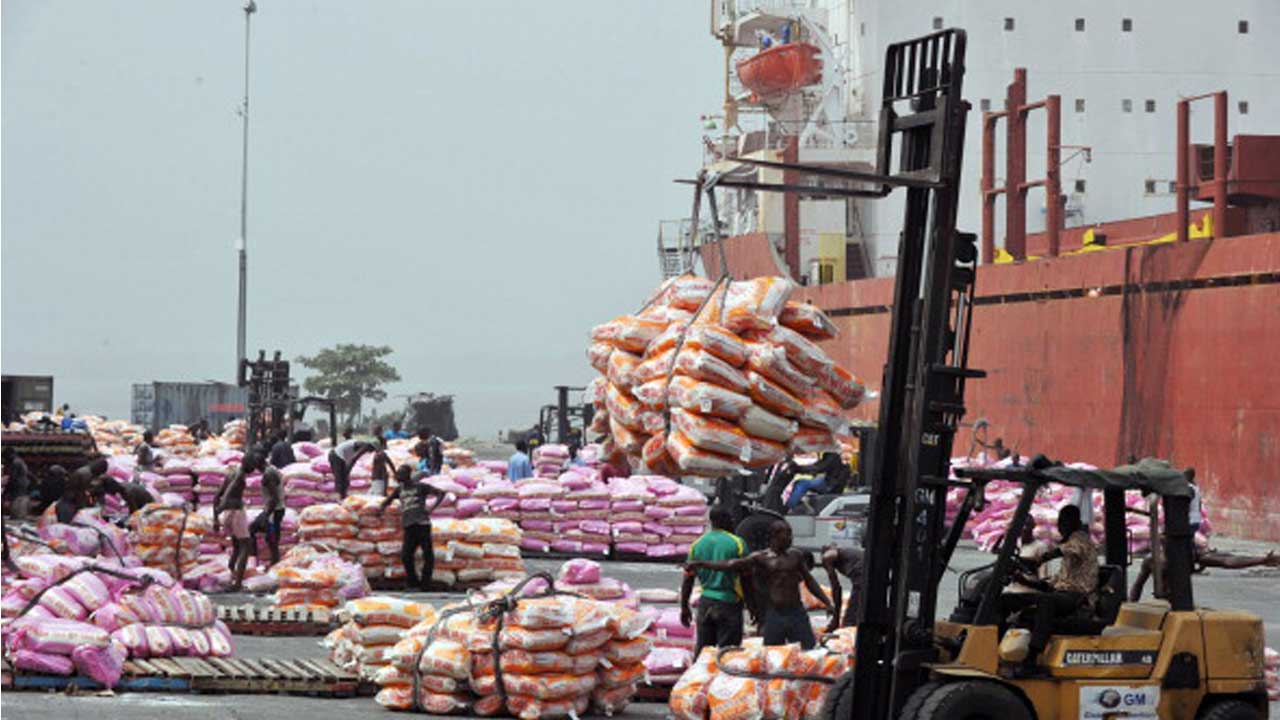
The Federal Government has announced plans to scale up non-oil exports in 2026 as part of a broader strategy to accelerate economic diversification and strengthen Nigeria’s productive base.
The Minister of Industry, Trade and Investment, Dr. Jumoke Oduwole, disclosed this on Wednesday at the National Assembly Complex in Abuja during the review of the ministry’s 2025 budget performance and the presentation of its 2026 budget proposal.
According to the minister, 2025 marked a period of notable progress in trade expansion and investment inflows, and the priority for 2026 would be consolidating those gains, particularly in export development and investment mobilisation.
Nationwide Trade Facilitation Initiative
After appearing before the Joint House of Representatives Committee on Trade, Industry and Small and Medium Scale Enterprises, Oduwole told journalists that the ministry would embark on a nationwide engagement tour across Nigeria’s six geopolitical zones to strengthen trade facilitation frameworks.
She explained that the initiative aligns with the administration’s diversification objectives, particularly the push to reduce dependence on oil revenue.
“The renewed focus is on diversification through non-oil exports,” she said. “Nigeria’s exports have risen by 14 percent compared to other African economies, one of the strongest performances recorded in recent years.”
She noted that non-oil exports surpassed $6 billion last year in both value and volume terms, describing the performance as unprecedented.
“Our agricultural produce and other exportable goods present immense opportunities. With proper packaging and global market access, exports remain the pathway to sustained growth,” she added.
Strengthening Domestic and Foreign Investment
Beyond export expansion, the minister outlined a strategy to reinforce domestic investment participation while sustaining foreign investor interest. She emphasized that the government’s “Nigeria First” policy aims to create an enabling environment for local investors while simultaneously attracting foreign direct investment.
The ministry’s planned nationwide outreach will involve collaboration with state governments and local authorities to address trade bottlenecks and unlock regional economic potential.
Surge in Capital Importation
Providing insight into capital flows, Oduwole revealed that Nigeria attracted approximately $21 billion in capital importation within the first ten months of 2025. This represents a significant increase from about $12 billion in 2024 and less than $4 billion in 2023.
She attributed the recovery to targeted interventions by the ministry, including the development of over $5 billion in structured, investment-ready projects, the establishment of sector-focused deal rooms, and the hosting of Nigeria’s first Domestic Investors’ Summit. On industrial development, she disclosed that special economic zones generated more than $500 million in export revenue while creating upwards of 20,000 direct jobs.
Additionally, the Federal Executive Council approved the National Industrial Policy in November 2025, a framework designed to enhance industrial capacity and competitiveness.
“These efforts reactivated domestic capital flows and resolved approximately 50 investment bottlenecks, enabling projects to transition from concept stage to execution,” she said.
Trade Surplus and 2026 Budget Priorities
Oduwole further disclosed that Nigeria recorded a trade surplus in 2025, with total trade reaching roughly N113 trillion within the first three quarters of the year. Looking ahead to the 2026 fiscal cycle, she said the ministry’s focus would shift toward implementation-driven programmes aimed at strengthening industrial clusters, value chains, and special economic zones.
The proposed capital allocation for 2026 stands at N2.72 billion.
“We are committed to strengthening Nigeria’s productive capacity by linking domestic supply with regional and global demand,” she said.
Legislative Oversight
Meanwhile, the Chairman of the House Committee on Commerce, Ahmed Munir, stated that the National Assembly would adopt stricter oversight measures in the upcoming fiscal year. He stressed that legislative scrutiny would go beyond tracking budget disbursement levels and would instead evaluate value-for-money outcomes and measurable economic impact.
“In 2026, oversight will not be routine. We are focused on tangible results and real economic value,” Munir said.