








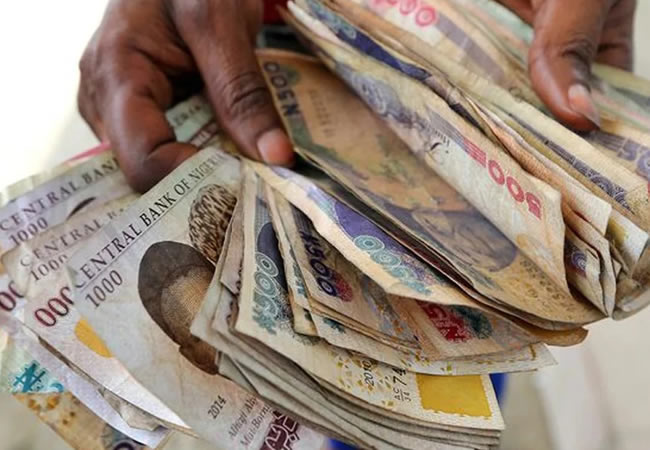
Short-term benchmark interest rates in Nigeria’s money market ended the session on a mixed note as a significant Open Market Operation (OMO) bill debit exerted pressure on system liquidity, pushing funding costs higher toward the close of trading on Thursday.
Liquidity in the financial system declined sharply after the Central Bank of Nigeria (CBN) absorbed approximately ₦4 trillion from excess market funds, despite notable placements by deposit money banks at the CBN’s standing deposit facility.
According to data from AIICO Capital Limited, banking system liquidity opened the day at a relatively moderated surplus position of ₦560.22 billion. However, analysts noted that this figure represented a steep contraction of ₦4.07 trillion compared to the previous opening balance.
The sharp drop in liquidity was largely attributed to OMO bill sales totaling ₦3.79 trillion, even as market participants placed about ₦4.19 trillion during the session. The aggressive liquidity mop-up offset earlier inflows and tightened funding conditions.
Meanwhile, the market received some relief from a ₦41.96 billion coupon payment on the 29-Jan-2035 Federal Government bond, which provided a modest boost to liquidity levels.
As a result of these dynamics, the average funding cost edged up marginally by 2 basis points to 22.67%, from 22.65% previously. The Overnight Rate (OVN) increased by 4 basis points to settle at 22.83%, while the Open Repo Rate (OPR) remained unchanged at 22.50%.
Analysts expect system liquidity to remain relatively supportive in the near term, provided there are no significant outflows. Interbank lending rates are projected to trade within the 22.50% to 22.80% range.
Market participants anticipate a slight upward bias in funding costs, reflecting prevailing liquidity conditions, barring any unexpected funding activities.
In the fixed-income space, trading activity in Nigerian Treasury bills remained bullish. The average benchmark yield declined by 21 basis points to close at 18.19%, driven by strong demand for mid- to long-dated instruments.
Yields on the 308-day bill fell sharply by 143 basis points, while the 343-day bill recorded a 102 basis-point decline, underscoring investors’ appetite for longer maturities.
Similarly, activity in the secondary OMO market was positive, with the average benchmark yield easing by 17 basis points to close at 21.09%, reflecting sustained demand amid shifting liquidity conditions.










 bill debit exerted pressure on system liquidity, pushing funding costs higher toward the close of trading on Thursday.)