




Global oil prices edged lower on Thursday as markets reacted to easing trade tensions following comments from U.S. President Donald Trump outlining a framework agreement involving Greenland and the wider Arctic region.
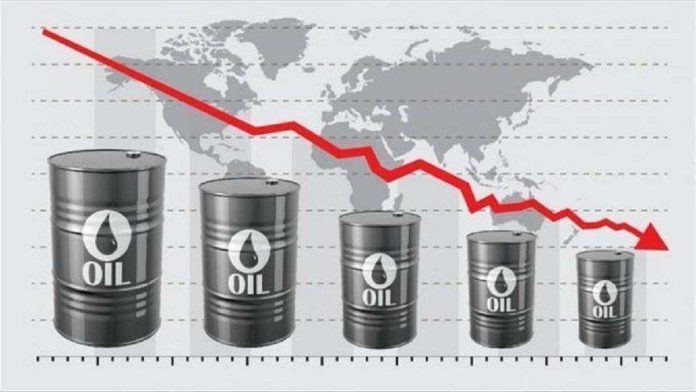
Crude prices, which had recently surged amid escalating trade threats and geopolitical uncertainty, came under renewed pressure as investor sentiment stabilised. Brent crude fell to $64.58 per barrel, slipping around 0.2 percent from the previous session, while U.S. benchmark West Texas Intermediate (WTI) declined 0.1 percent to $60.55 per barrel.
The pullback followed Trump’s announcement at the World Economic Forum in Davos that the United States had reached a preliminary understanding on Greenland after discussions with NATO Secretary General Mark Rutte.
Describing the outcome as beneficial for both Washington and its allies, Trump said the agreement could avert a looming trade confrontation with several European nations. He confirmed that tariff measures previously scheduled to take effect on February 1 would be suspended.
“This solution, if consummated, will be a great one for the United States of America and all NATO Nations,” Trump said in a post on his Truth Social platform, adding that tariff threats tied to the Greenland issue would no longer proceed under the current framework.
The U.S. president also disclosed that negotiations were continuing over the proposed “Golden Dome” missile defense system, which could have implications for Greenland’s strategic role in Arctic security.
Earlier this month, Trump had threatened to impose tariffs of up to 25 percent on imports from several European countries, including Denmark, Germany, France, and the UK, unless an agreement was reached over Greenland’s future. Those threats had weighed heavily on commodity markets, pushing oil prices higher on fears of global trade disruption.
While the easing of tariff risks provided some support to broader market sentiment, gains in oil were limited by persistent concerns over geopolitical stability in the Arctic and the balance between global oil supply and demand.
Markets were also influenced by Trump’s remarks on U.S. monetary policy. Speaking in Davos, he indicated that he was close to naming a successor to Federal Reserve Chair Jerome Powell, fuelling speculation about a shift toward a more accommodative monetary stance.
Trump’s criticism of Powell and hints of a leadership change have weakened the dollar, which typically supports oil prices by making commodities cheaper for non-dollar buyers. However, investor unease about the Fed’s independence has continued to cap optimism.
On the fundamentals side, the International Energy Agency slightly upgraded its outlook for global oil demand. The agency now expects demand to grow by approximately 932,000 barrels per day in 2026, bringing total consumption to nearly 105 million barrels per day.
Global oil supply, however, declined by 350,000 barrels per day in December, marking the third consecutive monthly drop and leaving output about 1.6 million barrels per day below the September 2025 record high.
Despite signs of tightening conditions, analysts note that supply levels still exceed demand, limiting the scope for a sustained price rally in the near term.
Meanwhile, Denmark reiterated its position following Trump’s comments. Prime Minister Mette Frederiksen confirmed ongoing dialogue with NATO allies, stressing that while Copenhagen remains open to discussions on security and investment, Danish sovereignty over Greenland remains non-negotiable.