






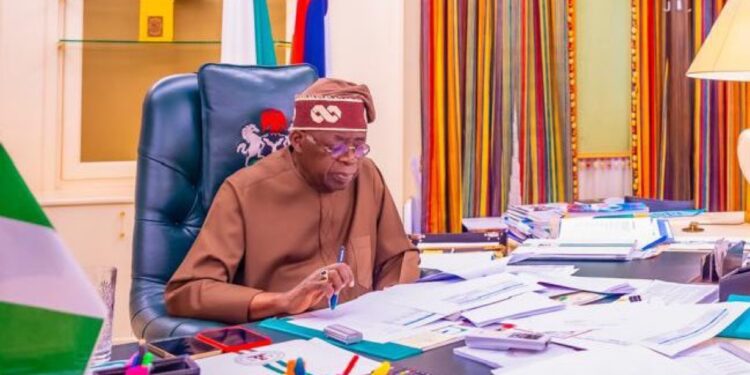
President Bola Ahmed Tinubu has revoked the presidential pardon previously granted to 175 inmates, including several convicted of drug trafficking, kidnapping, and fraud, after widespread public criticism of the clemency list announced on October 11.
According to a statement issued by Bayo Onanuga, the President’s Special Adviser on Information and Strategy, Tinubu ordered a comprehensive review of the list approved at the National Council of State meeting on October 9, 2025.
Following consultations with the Council and security agencies, the number of beneficiaries was reduced from 175 to 120, with several high-profile individuals—such as Maryam Sanda, convicted in 2020 for murdering her husband—removed from the list.
Onanuga said the decision was made “in view of the seriousness and national security implications of certain offences, and the need to uphold justice, fairness, and public confidence in the judicial system.”
The Presidency cited Section 175(1) and (2) of the 1999 Constitution as the legal foundation for the review, emphasizing that the concept of justice must balance the interests of the accused, the victim, and the state.
The new gazette, issued by the Attorney-General of the Federation, Lateef Fagbemi (SAN), detailed the revised pardon list and outlined new criteria for exercising presidential clemency. The Secretariat of the Presidential Advisory Committee on Prerogative of Mercy has also been relocated to the Ministry of Justice for closer oversight.
Fagbemi explained that some names were struck out after a due-process audit revealed that several convicts failed to meet the requirements for clemency. Others had their sentences reduced rather than fully pardoned to reflect a balance of mercy and justice.
Under the updated list, 15 inmates were granted early release based on good conduct, rehabilitation, and vocational training. Additionally, four prisoners on death row had their sentences commuted to life imprisonment for demonstrating remorse and consistent participation in reformation programmes.
Notably, the revised pardon list retains a few symbolic cases of historic injustice, including Herbert Macaulay, Maj.-Gen. Mamman Vatsa, and the Ogoni Nine activists, who were executed in 1995. It also includes four living former public officials—Anastasia Nwaobia, Hussaini Umar, Ayinla Alanamu, and Farouk Lawan—who were convicted of corruption but have since served their terms.
The Presidency reaffirmed that future pardon lists will undergo stricter scrutiny, with mandatory consultations with law enforcement and prosecuting agencies to prevent a recurrence of controversies.
President Tinubu expressed appreciation for the constructive public feedback and reiterated his administration’s commitment to justice reforms, fairness, and the promotion of restorative justice principles.