








When the Nigerian Electricity Regulatory Commission (NERC) announced a ₦28 billion bailout for electricity distribution companies (DisCos) last month, it was greeted with cautious optimism and weary scepticism.
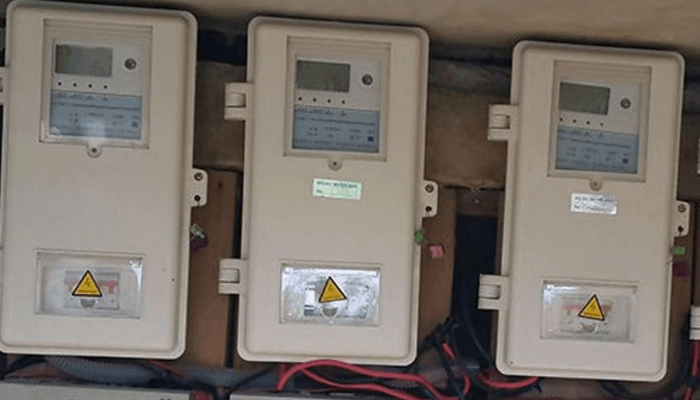
The new funds, earmarked for the procurement and free installation of meters for customers in tariff Bands A and B, form part of the Presidential Metering Initiative (PMI), which targets Nigeria’s estimated seven million unmetered electricity consumers. Yet, for many observers, the initiative feels like another replay of an old, costly drama.
Investigations by BusinessDay show that nearly ₦1.5 trillion has already been injected into previous metering interventions—spanning federal allocations, Central Bank of Nigeria (CBN) loans, and donor funding—with limited progress to show. Despite these massive investments, more than half of Nigeria’s 11.8 million active electricity customers remain unmetered and subjected to controversial estimated billing.
As of 30 June 2025, NERC data indicated that only 6,422,933 customers (54.3 percent) had been metered, leaving about 5.3 million still without meters.
The latest tranche—under the Meter Acquisition Fund (MAF)—was unveiled on 15 October and is being distributed among the 12 DisCos according to their customer base and operational needs. Major beneficiaries include Ikeja Electric, Eko Electricity Distribution Company, Ibadan Electricity Distribution Company, and Abuja Electricity Distribution Company.
According to NERC, the intervention represents “a decisive measure to eliminate estimated billing and deepen efficiency in electricity distribution.” But across the sector, doubts persist.
“The challenge isn’t about funding anymore—it’s about delivery and transparency,” said a senior executive at a Lagos-based meter manufacturing company who requested anonymity. “We’ve seen this before: funds released, promises made, and little impact on the ground.”
A History of Broken Promises
Nigeria’s metering journey is littered with failed schemes and mismanaged funds. The most prominent of these, the National Mass Metering Programme (NMMP), was launched in 2020 with a ₦200 billion CBN-backed facility to deliver one million meters in its pilot phase. By 2022, however, the project had been tainted by scandal after the CBN asked a Lokoja High Court to freeze 157 bank accounts linked to companies accused of diverting NMMP funds.
Less than 940,000 meters were reportedly delivered—many of which were never installed—while billions of naira remain unaccounted for.
Subsequent efforts, including NERC’s initial ₦21 billion MAF phase, also struggled. By mid-2025, only about 107,000 Band A customers had received meters under the scheme. Analysts argue that DisCos, burdened by debt and poor cash flow, have little incentive to accelerate metering, as unmetered consumers can be billed arbitrarily.
“The system rewards inefficiency,” said an Abuja-based power analyst. “As long as estimated billing persists, DisCos can inflate figures without accountability.”
Paying Twice, Waiting Forever
Frustrated by delays, many customers have tried to self-finance their meters under the Meter Asset Provider (MAP) scheme, introduced in 2018. While the programme allows customers to pay upfront and receive refunds through energy-use credits, complaints of non-refund and poor service abound.
“It feels like we’re punished for trying to do the right thing,” said Chidinma Eze, a small business owner in Isolo who paid ₦88,000 for a meter in 2022 but is yet to receive reimbursement.
Foreign Contracts, Local Frustrations
The World Bank’s Distribution Sector Recovery Programme—backed by a $500 million loan, including $155 million earmarked for 3.2 million meters—was expected to bring structure and international oversight. But disputes between local manufacturers and the Transmission Company of Nigeria (TCN) have stalled progress.
Local producers accuse TCN of sidelining Nigerian firms in favour of foreign suppliers, notably two Chinese companies reportedly awarded contracts worth over ₦100 billion for 1.25 million meters. The controversy has left hundreds of thousands of installations in limbo.
The Bigger Problem
With cumulative spending now exceeding ₦1.5 trillion, Nigeria’s metering gap remains stubbornly wide. Experts warn that the implications go beyond billing fairness.
“Metering is the backbone of a functional power market,” said energy economist Ayodele Olawande. “Without accurate measurement, you can’t determine true consumption, attract investors, or enforce accountability.”
Industry analysts argue that the core challenge lies not in regulation but in execution.
“Every new metering scheme recycles old players and old inefficiencies,” said a consultant who has worked on two previous interventions. “Until there’s political will to confront corruption and enforce delivery, Nigeria will keep spending billions to measure darkness.”
For now, the ₦28 billion bailout stands as yet another promise in a long line of metering pledges—haunted by the ghosts of ₦1.5 trillion spent and millions of consumers still waiting for the light of transparency.



 announced a ₦28 billion bailout for electricity distribution ...)