




The Senate has approved life imprisonment for anyone convicted of defiling a minor, marking a significant escalation from the current five-year jail term prescribed under Nigeria’s criminal code.
This development came as the House of Representatives opened an investigation into the utilisation of $4.6 billion in grants received from the Global Fund and the United States Agency for International Development (USAID) for programmes addressing HIV/AIDS, tuberculosis, malaria, and polio between 2021 and 2025.
Lawmakers in the lower chamber also engaged in heated debate over a motion seeking to protect the Dangote Refinery and other strategic private investments from what was described as “unlawful and adversarial” labour union actions.
The Senate’s decision followed the consideration of the Criminal Code (Amendment) Bill, 2025, which aims to impose stiffer penalties for sexual offences and related crimes. Lawmakers described the defilement of minors as a “heinous act capable of destroying a child’s life forever,” insisting that the punishment must reflect the severity of the offence.
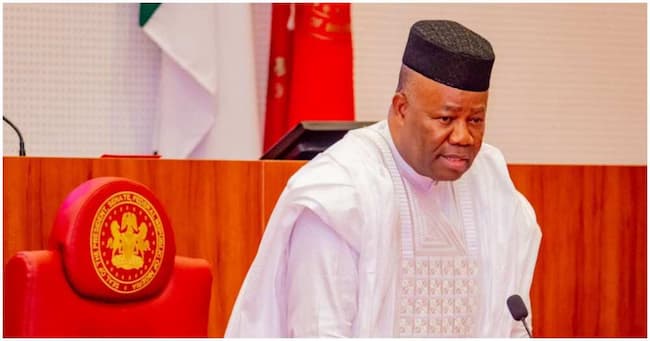
“Any defilement of a minor in Nigeria henceforth attracts life imprisonment without an option of fine,” Senate President Godswill Akpabio declared after a unanimous voice vote.
The bill, earlier passed by the House of Representatives and transmitted to the Senate for concurrence, received overwhelming bipartisan support.
Under the amended provisions, the Senate also strengthened the punishment for rape, prescribing a minimum of 10 years’ imprisonment for any act of forced sexual intercourse involving a boy, girl, man, or woman — up from the previous five-year term.
Former Kebbi State Governor, Senator Adamu Aliero, had pushed for life imprisonment for rapists, but the chamber agreed on 10 years as the minimum, allowing judges discretion to impose stiffer sentences in aggravated cases. The amendment also broadened the definition of victims to include both male and female survivors, following observations by former labour leader Senator Adams Oshiomhole.
However, debate became contentious when the clause addressing abortion and pregnancy termination was introduced. While the existing law criminalises abortion, several lawmakers warned that ambiguous language could criminalise medical professionals acting in emergencies.
Senator Abdul Ningi (Bauchi Central) cautioned that such vagueness might expose doctors to prosecution even when saving lives. In response, Akpabio directed the Committee on Judiciary, Human Rights, and Legal Matters to review the provisions and present recommendations within two weeks.
Meanwhile, the House of Representatives adopted a motion by Philip Agbese (APC, Benue) to probe the utilisation of the Global Fund and USAID grants. The motion, adopted during a plenary presided over by Deputy Speaker Benjamin Kalu, mandated the Committee on HIV/AIDS, Tuberculosis and Malaria Control to conduct a comprehensive investigation and report back within four weeks.
Agbese noted that Nigeria also received over $6 billion in health assistance from the U.S. President’s Emergency Plan for AIDS Relief (PEPFAR) within the same period, yet continues to rank among countries with the highest global burden of HIV/AIDS, TB, and malaria. The House also directed the Minister of Health and Social Welfare to provide details of implementation plans and National Assembly-approved expenditure records of the grants.
In a related development, a motion jointly sponsored by Alhassan Ado Doguwa (APC, Kano) and Abdulssamad Dasuki (PDP, Sokoto) sought to protect the $20 billion Dangote Refinery and other critical investments from disruptions by labour unions. The motion stemmed from the recent face-off between the Petroleum and Natural Gas Senior Staff Association of Nigeria (PENGASSAN) and the refinery, which reportedly caused production losses of about 200,000 barrels of crude oil per day for three days.
Doguwa described the refinery as a “strategic national asset” vital to Nigeria’s energy security and economic stability, warning that recurrent disruptions could deter investors and erode confidence in the economy.
Dasuki cited Section 18(5) of the NEPZA Act, which prohibits strikes or lockouts within free trade zones for the first ten years of operation, as justification for shielding the facility.
However, Minority Leader Kingsley Chinda (PDP, Rivers) urged caution, proposing that the House first investigate the dispute before enforcing any provisions. Deputy Speaker Kalu supported the motion for a more measured approach, invoking the legislature’s constitutional powers to conduct inquiries before taking a definitive stance.
Amid rising tensions, Ahmadu Jaha (APC, Borno) moved an amendment urging the House leadership, led by Speaker Tajudeen Abbas, to mediate directly between the Dangote Group and PENGASSAN through alternative dispute resolution mechanisms. His proposal received overwhelming support, and the House consequently dropped clauses compelling ministries to act immediately under the NEPZA Act.
The House resolved that its leadership should urgently engage both parties to broker peace and ensure uninterrupted operations at the refinery through dialogue and mutual understanding.