








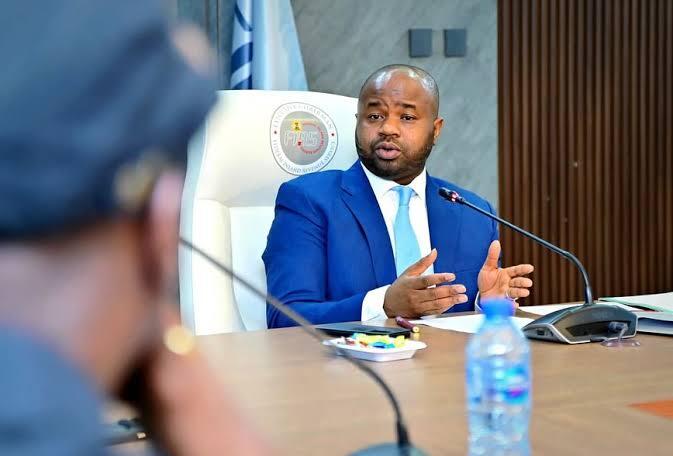
Nigeria’s revenue collection has risen sharply to N3.64 trillion as of September 2025, marking a 411 per cent increase from N711 billion in May 2023, according to figures released by the Federal Inland Revenue Service (FIRS) on Tuesday.
Despite the surge, the Federal Government will sustain its borrowing strategy as part of broader fiscal and economic planning, FIRS Executive Chairman, Zacch Adedeji, told State House correspondents during the “Meet-the-Press” briefing organised by the Presidential Communications Team.

Adedeji insisted that borrowing was neither unusual nor problematic, noting that it formed an integral part of the national budget.
“Borrowing is not a problem. Is borrowing not part of the budget we submitted to the National Assembly? Was it not approved? Are we borrowing outside what was approved?” he asked.
He explained that government borrowing was channelled into long-term capital investments rather than recurrent expenditure such as salaries.
“If my expenditure for this year is N100,000 and I plan N80,000 from revenue, I will borrow N20,000. If I’ve already generated N90,000 and only borrow N10,000 in line with the budget, what is the problem with that?” Adedeji said.
The FIRS boss argued that borrowing helps government spread the cost of large-scale projects, avoid future escalations, and sustain infrastructure delivery, citing what he termed the “Matchy Concept,” which supports financing projects with long-term benefits over extended periods.
His remarks come amid rising public criticism of Nigeria’s debt levels, especially after President Bola Ahmed Tinubu in July sought approval for a $21.5 billion external loan package, including a $2 billion foreign currency bond and a N757.98 billion domestic bond to offset pension liabilities.
Adedeji countered concerns by stressing that borrowing supports economic circulation.
“Banks are part of our economic ecosystem. No country or individual survives on income alone. When government borrows from banks, it pays interest. From that interest, salaries are paid, and from salaries, taxes are collected. That is how the system works,” he said.
On revenue performance, Adedeji credited recent fiscal reforms, including streamlined taxation, rationalised incentives, and reduced burdens on small businesses. Non-oil receipts recorded the sharpest rise, jumping from N151 billion to N1.06 trillion, while oil revenue climbed to N644 billion. Value Added Tax (VAT) receipts more than tripled to N723 billion, and customs revenue hit N322 billion. The Nigerian Upstream Petroleum Regulatory Commission (NUPRC) and the Nigerian National Petroleum Company (NNPC) Limited also made significant contributions.
“Revenue growth alone does not remove the need for borrowing. Borrowing is a key component of a viable economic framework. It ensures investments with long-term benefits are realised without overstretching current resources,” he added.
The FIRS chairman also highlighted ongoing measures to sustain revenue growth, including the rollout of a new fiscal policy framework, e-invoicing, updated excise regulations, and the harmonisation of subnational levies. He disclosed that the service is considering presumptive taxation for hard-to-tax groups and corporate tax reductions as part of broader constitutional reforms aimed at expanding Nigeria’s tax base.
Dismissing sceptics, Adedeji described critics of government borrowing as “container economists,” accusing them of offering shallow analyses based on social media narratives rather than sound economic reasoning.
He maintained that borrowing within approved limits is essential for sustainable development, infrastructure expansion, and long-term fiscal stability.