





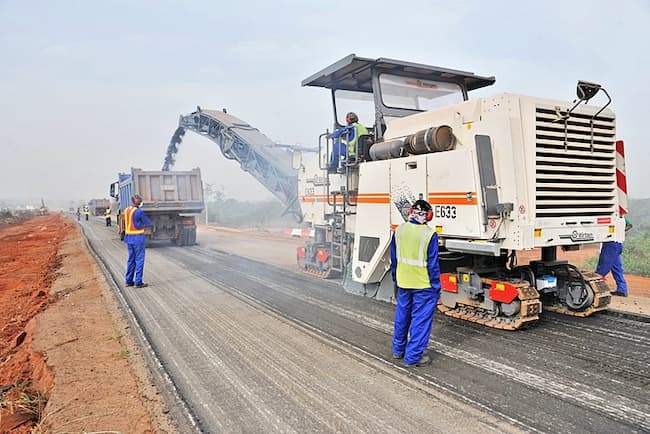
The Federal Government has justified its proposed 5% fuel surcharge, insisting the policy is not intended to overburden Nigerians but to provide a dedicated fund for road infrastructure across the country.
Speaking on Channels Television’s Morning Brief on Tuesday, Taiwo Oyedele, Chairman of the Presidential Committee on Fiscal Policy and Tax Reforms, explained that while public concerns about inflation are valid, the surcharge is necessary to tackle Nigeria’s deteriorating road network.
The surcharge, contained in the newly enacted Nigeria Tax Act 2025, is scheduled to take effect in January 2026. The plan has triggered backlash, with the Trade Union Congress threatening a nationwide strike unless the government reverses the measure.
Oyedele acknowledged the inflationary fears but argued that poor road conditions already contribute significantly to higher costs of goods and transport.
“Nigeria has about 200,000 kilometers of roads, yet only around 60,000 are in acceptable condition,” he said. “This poor state of infrastructure is a major driver of the high cost of moving people and goods, and ultimately fuels inflation.”
He pointed to wide discrepancies between rural and urban food prices, linking them to transport costs. “Sometimes the difference is as high as 5%, compared to less than 1% in most countries. Poor roads and multiple levies along transport routes are key culprits,” he noted.
Addressing criticism that the tax is unnecessary after fuel subsidy removal, Oyedele stressed that the surcharge was first introduced in 2007 but shelved due to subsidies. He maintained that revenues saved from subsidy removal alone are insufficient to bridge Nigeria’s infrastructure deficit.
He added that timing would be crucial in implementing the policy to cushion citizens. “If the naira appreciates by around 5%, or if global crude prices fall by a similar margin, introducing the surcharge at that point will minimize its impact on pump prices,” he said.
Oyedele emphasized that funds raised will be ring-fenced for repairing and upgrading roads. “This will help reduce transportation costs, ease inflationary pressures, and improve safety,” he said.
The committee chair also highlighted the effectiveness of the Road Infrastructure Tax Credit Scheme, which has enabled private firms like Dangote, Lafarge, NLNG, and MTN to rehabilitate roads in exchange for tax incentives. He suggested a similar collaborative model could apply to the fuel surcharge.
He assured Nigerians that the government would monitor the policy closely. “If, after implementation, it does not serve its intended purpose, mechanisms exist for the National Assembly to amend or repeal the law,” he added.