








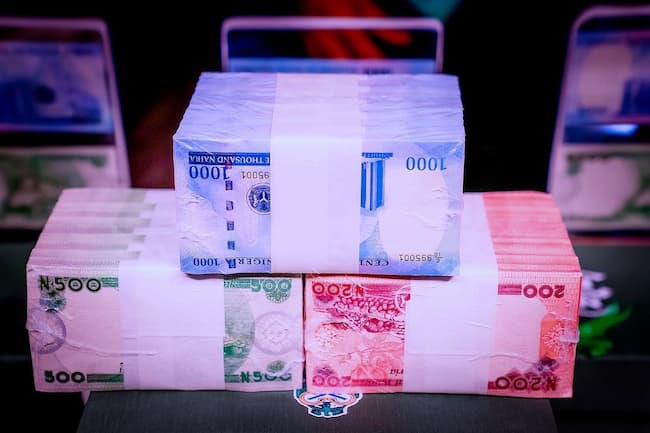
In the recently concluded trading week, the disparity between Nigeria’s official exchange rate and the parallel market narrowed once more, settling at just a N2 difference. This movement is bolstering expectations among financial analysts that the naira may remain resilient well into 2025, particularly as the Central Bank of Nigeria (CBN) sustains its foreign exchange interventions.
Analysts anticipate continued monetary support by the CBN, reinforcing the belief that the local currency could experience greater stability in the coming months. This sentiment has reduced speculative trading and increased the confidence of foreign investors in Nigeria’s currency environment.

Investor optimism has been largely driven by stronger market confidence in CBN’s policies and the removal of distortions surrounding foreign currency repatriation by offshore players. This has helped ease hoarding tendencies and minimized arbitrage risks.
Based on market sentiment, the naira could appreciate further, with only limited risks of depreciation. This is due to the consistent injection of foreign currency into the financial system through the CBN’s sales to commercial banks and interventions in the parallel market.
As a result, the naira has maintained relative stability, creating unfavorable conditions for speculators and reducing the attractiveness of storing foreign currency locally. In fact, the growing alignment of exchange rates across segments of the market has discouraged opportunistic trades.
At the Nigerian Foreign Exchange Market (NFEM), the local currency experienced a mild dip over the week due to persistent demand pressure. Trading commenced quietly, with the naira fluctuating within the N1532–N1535.5 range and settling at a daily fixing of N1535.50 per dollar.
Midweek trading remained steady, marked by only minor fluctuations. By the end of Friday’s session, the naira closed at N1533.74 to the dollar, down slightly from the previous week’s closing rate of N1534.71. Meanwhile, the parallel market rate stood at N1535.
To attract foreign capital, the CBN held a substantial Open Market Operations (OMO) auction worth N1.6 trillion, signaling its intent to encourage capital inflows and deepen liquidity. This tactic has kept market sentiment stable despite increased dollar demand.
Also contributing to market resilience, Nigeria’s gross external reserves increased by $726.80 million to reach $39.36 billion as of July 30, providing much-needed support for the local currency.
Financial analysts project continued naira stability in the near term, citing refinements in monetary policy and complementary fiscal measures as key drivers. Despite a minor slide in currency value, broader global market trends offered some optimism.
Crude oil prices advanced during the week, buoyed by renewed fears over international sanctions on Russian and Iranian oil exports. Brent crude rose by $1.45 or 2.13%, closing at $69.50 per barrel, while U.S. West Texas Intermediate (WTI) climbed $2.16 or 3.32% to $67.25.
Additionally, gold prices jumped by 0.8%, triggered by underwhelming U.S. employment data that reignited expectations of a Federal Reserve rate cut and increased demand for safe-haven assets amid growing geopolitical trade tensions.
As a U.S. envoy prepares to visit Russia, global markets remain alert to the evolving impact of sanctions and tariffs, which could reshape global trade flows in the weeks ahead.