







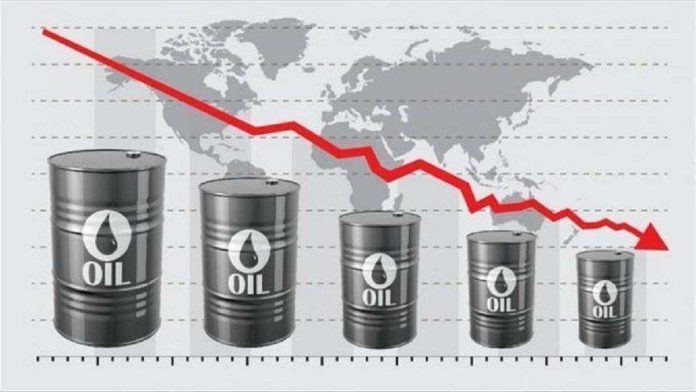
Oil prices declined slightly this week as renewed global trade tensions, fresh sanctions on Russian energy exports, and mixed signals from U.S. economic policy weighed on investor sentiment.
Brent crude, the international benchmark, traded at $68.53 per barrel on Friday, down roughly 0.9% from last week’s close of $68.60. Similarly, U.S. benchmark West Texas Intermediate (WTI) slipped to $65.92 per barrel, a weekly loss of about 1.1% from $66.

Markets opened the week under pressure following the European Union’s adoption of an 18th package of sanctions targeting Russia. The new measures, which affect 105 vessels and entities associated with Russia’s so-called “shadow fleet,” sparked concerns over global supply disruption but also raised uncertainties around enforcement and compliance.
Adding to market volatility, former U.S. President Donald Trump threatened to impose 100% secondary tariffs on any nation continuing trade with Russia unless a resolution to the Ukraine conflict is reached within 50 days.
Following a meeting with Trump, NATO Secretary-General Mark Rutte issued a stark warning to countries such as China, India, and Brazil, stating they could face severe U.S. sanctions if they failed to pressure Moscow into negotiations.
Meanwhile, geopolitical uncertainty intensified as Iran confirmed it would resume nuclear talks with the UK, France, and Germany in Istanbul on July 25. The prospect of easing sanctions and the potential return of Iranian oil to global markets added downward pressure to prices already threatened by potential oversupply from increased OPEC+ production.
Midweek losses deepened after Trump announced a new trade agreement with Japan, featuring a 15% tariff and securing $550 billion in Japanese investments. While the deal was seen as a partial win, the administration hinted at possible further tariffs, especially amid lingering uncertainty surrounding ongoing negotiations with China and the European Union.
Tensions in the Middle East also remained elevated. Trump defended recent strikes on Iranian nuclear sites, warning of further action if provoked. Iran’s foreign minister acknowledged the damage was “serious,” while Trump insisted the facilities were “destroyed” and accused the media of underreporting the scale of the attack.
Analysts say markets remain fragile, with crude prices vulnerable to both demand-side economic pressures and escalating geopolitical risks.