




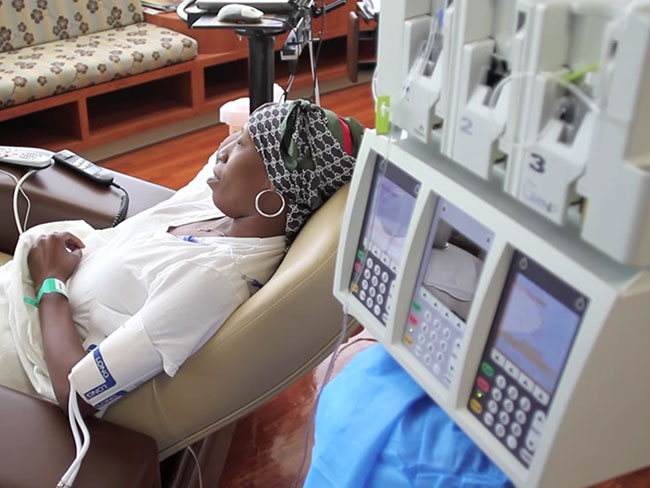
Nigeria’s health authorities have raised alarms over the escalating cancer crisis, revealing that the nation records approximately 127,000 new cancer diagnoses every year, with about 80,000 fatalities annually.
This was made known by the Coordinating Minister of Health and Social Welfare, Professor Muhammad Ali Pate, during the official inauguration of a state-of-the-art Oncology Centre at the Federal Teaching Hospital (FTH), Katsina, on Thursday.
According to Pate, the statistics reflect a significant public health challenge. “We’re witnessing a rising tide of cancer cases, with devastating implications—not only for patients and their families but for our health system as a whole,” the minister stated.
Pate underscored the growing burden of non-communicable diseases (NCDs) such as cancer, noting that they now rival infectious diseases in terms of impact. He also pointed out the financial toll such illnesses inflict on Nigerian families, warning that catastrophic health expenditures could push many households into deeper poverty.
Reiterating the Federal Government’s commitment to healthcare reforms, Pate said that the administration of President Bola Tinubu is working to decentralize cancer care across Nigeria. “Our aim is to have functional cancer treatment centres in all six geopolitical zones to enhance early diagnosis and access to life-saving treatment,” he said.
Pate further disclosed that the 2026 national budget will feature designated allocations for federal hospitals to subsidize cancer care and ease the cost burden on patients.
The Chief Medical Director of FTH Katsina, Dr. Suleiman Bello-Muhammed, provided insight into the newly launched oncology facility, which houses a 20-bed chemotherapy suite, including VIP private rooms. The centre is fully staffed with a team of 26 oncology nurses, 7 therapy radiographers, 8 medical physicists, and 6 specialized oncology pharmacists.
In terms of infrastructure, Bello-Muhammed said the pharmaceutical compounding unit is equipped with globally standardized facilities for the safe preparation of chemotherapy drugs.
However, he expressed concern over a potential brain drain, revealing that the hospital’s only trained nuclear medicine specialist—who received advanced training in South Africa—might leave the country if the nuclear medicine unit is not swiftly completed.
“In the spirit of progress, we are appealing to the minister to expedite the establishment of the nuclear medicine section to maximize the skills of our available personnel,” he said.