







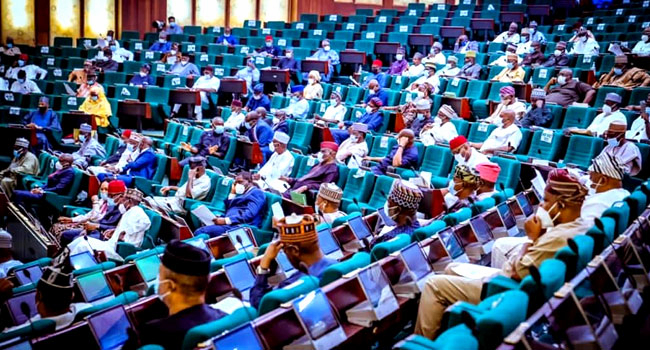
A new legislative proposal aimed at reshaping the conduct of public service in Nigeria is gaining attention following its introduction in the House of Representatives. The bill, sponsored by Rep. Amobi Ogah (Labour Party – Abia), seeks to bar all public and civil servants, along with their immediate families, from utilizing private healthcare and educational institutions.
The proposed law, presented during Tuesday’s plenary for first reading, marks what Ogah described as a “historic turning point” in efforts to realign governance with national development objectives.
Ogah argued that Nigeria’s early leaders, including Ahmadu Bello, Nnamdi Azikiwe, Obafemi Awolowo, and Tafawa Balewa, were educated in public institutions—a standard he believes today’s public officials have abandoned to the detriment of the country.
The legislator condemned the growing preference among officials for private services, labeling it a conflict of interest that erodes public trust and contributes to the decline of government institutions.
“In 2024, the Nigerian government budgeted ₦1.33 trillion for healthcare, yet Nigerians spent over $1 billion on medical tourism annually,” Ogah stated. “Between 2015 and 2023 alone, an estimated $29.29 billion was spent abroad on healthcare during the previous administration.”
Turning to education, Ogah revealed that Nigerians spent $38.17 million on foreign education in the first quarter of 2024 and over $218 million in the previous year. He urged lawmakers and citizens alike to support the bill as a moral imperative for restoring confidence in public infrastructure.
“This practice of fleeing abroad for basic health and education services is damaging our national image. In some tragic cases, officials even die overseas,” he lamented.
If passed, the bill would effectively end both medical and educational tourism for government workers, forcing them to rely on and thus help rebuild public institutions.
Ogah called on the Nigerian media and civil society to champion the bill and support a shift toward patriotic service and accountability.