










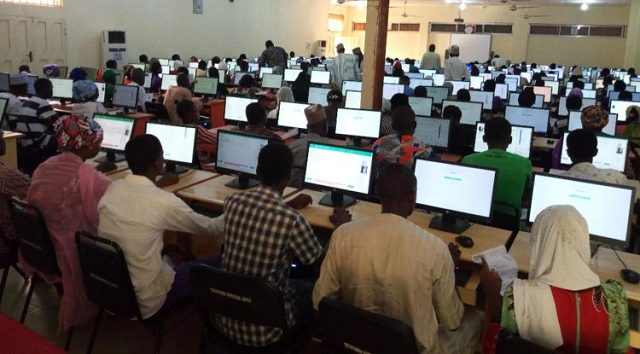
In a bid to restore confidence in its examination process, the Joint Admissions and Matriculation Board (JAMB) has confirmed that it will release the results of 379,000 candidates who participated in the rescheduled 2025 Unified Tertiary Matriculation Examination (UTME) on Wednesday.
The resit, which took place between Friday and Monday, was necessitated by widespread reports of irregularities and unusually low scores recorded during the initial nationwide UTME exercise. JAMB had faced a public backlash after disclosing that over 1.5 million out of nearly 1.9 million candidates scored below 200 out of 400—sparking national outrage.

Following mounting criticism from education stakeholders and parents, JAMB conducted a thorough review and discovered that both technical malfunctions and human-related errors had significantly distorted candidates’ performance—particularly in examination centres located in Lagos and the South-East.
Taking responsibility for the failure, JAMB Registrar, Prof. Ishaq Oloyede, last week made a public apology and emotionally announced the decision to offer a makeup test for those affected. JAMB’s spokesperson, Dr. Fabian Benjamin, confirmed in a statement that the outcome of the rescheduled exams would be officially released this Wednesday.
“These results will be available to the affected candidates by Wednesday,” Benjamin stated.
According to Oloyede, the UTME challenges impacted 379,997 candidates—206,610 of them in 65 examination centres across Lagos and 173,387 in 92 centres in South-East Nigeria. He described the situation as a case of “deliberate sabotage,” adding that the candidates were informed via SMS ahead of the resit, which commenced last Thursday.
An analysis of the original UTME results showed troubling trends: Of the 1,955,069 candidates processed, only 4,756 candidates (0.24%) scored 320 and above. A further 7,658 candidates (0.39%) scored between 300 and 319, meaning only 0.63% of all candidates reached the 300+ tier.
Meanwhile, 73,441 students (3.76%) scored between 250 and 299, while 334,560 (17.11%) fell within the 200–249 range. The majority—983,187 candidates (50.29%)—scored between 160 and 199, which is the cutoff for several tertiary institutions. Scores of 140–159 were recorded by 488,197 candidates (24.97%), followed by 57,419 (2.94%) in the 120–139 range, 3,820 (0.20%) between 100–119, and 2,031 (0.10%) scoring below 100.
These statistics indicate that more than 75% of all examinees fell below the 200 mark, prompting broader questions about the integrity and reliability of the nation’s most important entrance examination.
Meanwhile, backlash from the South-East continues to escalate. On Monday, the South-East Caucus in the House of Representatives issued a scathing statement demanding the immediate resignation of the JAMB Registrar. The group described the situation as a “systemic failure of epic proportions,” alleging institutional negligence in the execution of the UTME.
In a statement signed by Hon. Iduma Igariwey (PDP, Ebonyi), the lawmakers condemned the chaotic planning and poor communication around the rescheduled test. They argued that the short notification period for affected candidates—many of whom were also sitting for ongoing West African Senior School Certificate Examinations (WASSCE)—exacerbated stress and confusion.
“On May 14, Prof. Oloyede admitted publicly that a ‘technical glitch’ disrupted the exam experience of 379,997 students. All five South-Eastern states were directly impacted by these score irregularities,” the statement read.
The lawmakers called on JAMB to cancel the 2025 UTME entirely and conduct a fresh examination only after the completion of both WAEC and NECO exams to ensure fairness. They also urged the immediate suspension of all personnel responsible for JAMB’s technical operations, saying apologies were not sufficient to restore public trust.
While the caucus acknowledged Prof. Oloyede’s courage in owning up to the shortcomings, it criticized JAMB’s response as “inadequate and reactionary.” The statement noted that many South-East students were given less than 48 hours to prepare for the rescheduled UTME, which clashed with WAEC papers and led to a low turnout in several centres.
Citing Section 18(1) of the 1999 Constitution, the lawmakers emphasized that the government is legally obligated to provide equitable and adequate educational opportunities. They concluded that JAMB’s actions had effectively violated the rights of affected candidates to access fair and equal education.











 has confirmed that it...)