








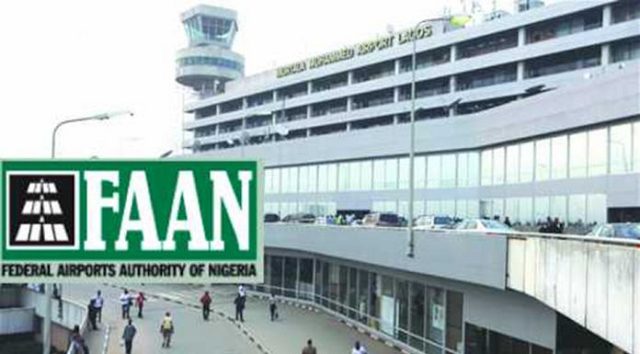
Despite ongoing infrastructure challenges at Nigerian airports, the Federal Airports Authority of Nigeria (FAAN) has significantly boosted its revenue. Between January and November 2024, FAAN generated ₦343.87 billion—more than double the ₦155.49 billion it earned in the same period the previous year.
Sources within the aviation industry revealed that most of this revenue came from Lagos, Abuja, and Port Harcourt airports.
FAAN’s Managing Director, Mrs. Olubunmi Kuku, wasted no time after assuming office, tackling revenue leakages and cutting unnecessary expenditures that had plagued the agency for years. Her efforts have helped FAAN increase its earnings, but the improvements in revenue have yet to translate into better airport infrastructure.
In January 2025, Kuku announced that FAAN would need ₦580 billion to rehabilitate runways across the country, many of which have outlived their lifespan. Additionally, she pointed out that airport terminals and other infrastructure require urgent upgrades to enhance operational efficiency and safety.
A document obtained by The PUNCH highlighted some of the reforms introduced by the FAAN leadership, including a review of aeronautic and non-aeronautic tariffs, optimization of revenue generation, re-evaluation of concessions, and a revised pricing structure to align with market realities.
Other key achievements include the completion and test-running of the multi-level car park at Nnamdi Azikiwe International Airport in Abuja, streamlining work processes to improve turnaround time, and installing prepaid meters to curb electricity revenue leakages.
However, despite these strides, FAAN still faces major hurdles. The agency struggles with ageing infrastructure, security threats, and land encroachment due to the absence of perimeter fencing. Many airport facilities, including runways and terminals, require significant repairs and modernization. The agency also battles security risks as increased air travel brings greater potential threats.
Additionally, a shortage of CCTV cameras, outdated firefighting equipment, obsolete air conditioning systems, and worn-out conveyor belts continue to affect efficiency. FAAN also suffers from a staffing shortage, limiting its ability to manage airport operations effectively.
Although FAAN has made remarkable financial progress, budget constraints still hinder its ability to carry out essential development projects, including much-needed airport upgrades.
Kuku has called for sustained investment in human and physical infrastructure to ensure Nigeria’s airports remain competitive. She emphasized FAAN’s commitment to enhancing passenger experiences by implementing digital solutions, improving staff training, and upgrading airport facilities.
She outlined plans to reduce processing times, renovate lounges, and introduce more user-friendly amenities for travelers and airport stakeholders. FAAN is also working towards full digitalization to streamline operations and improve service delivery.









 has significantly boosted...)