





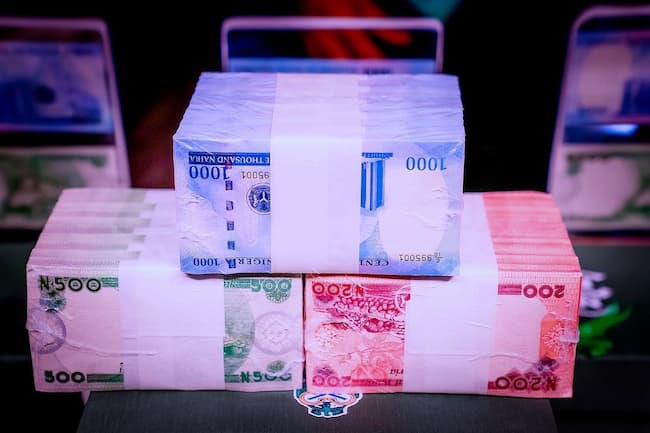
The Nigerian naira appreciated significantly in January, strengthening by 4.3% against the US dollar. This improvement was fueled by an increase in foreign exchange inflows from three key sources: foreign portfolio investors (FPIs), international oil companies (IOCs), and the Central Bank of Nigeria (CBN).
By the end of January, the naira was trading at N1,474.78 per US dollar in the official market, compared to its previous levels. This increase was driven by improved dollar supply, as the CBN intervened by selling dollars to authorized dealer banks. In addition, inflows from foreign investors and oil companies contributed to the improved liquidity in the foreign exchange market.
During the week, the exchange rate fluctuated within a range of N1,490 to N1,548 per dollar before strengthening midweek. The CBN’s intervention played a key role, as it provided $18.4 million to the market at rates between N1,510 and N1,515 per dollar.
In the forward contracts market—where traders lock in exchange rates for future transactions—investor confidence in the naira remained strong. One-month forward contracts rose by 3.8% to N1,533 per dollar, while six-month contracts increased by 4.3% to N1,705.97 per dollar. However, Nigeria’s foreign reserves declined by $218.05 million to $39.77 billion, marking the fourth consecutive weekly drop.
Looking ahead, analysts expect that the naira will remain relatively stable, supported by continued foreign investment, a more efficient foreign exchange framework, and improved macroeconomic conditions.