Keypoints
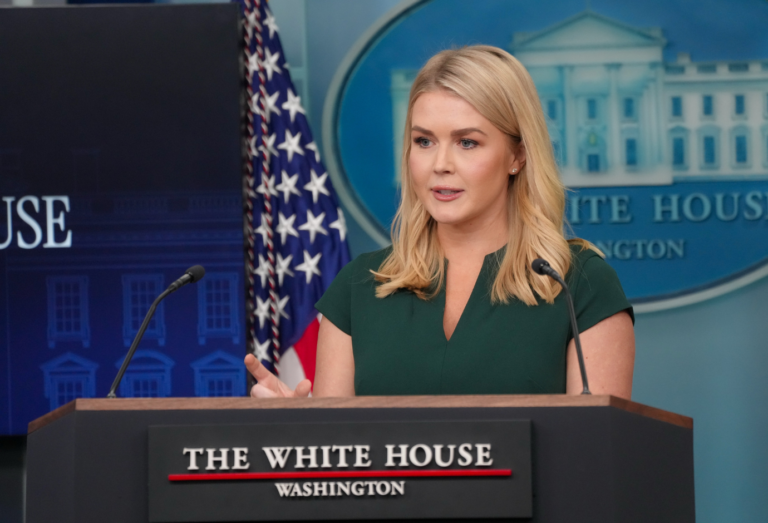
- White House Press Secretary Karoline Leavitt described the ceasefire as a “victory for the United States,” crediting President Trump’s “maximum leverage” for forcing Iran to the negotiating table.
- The 14-day truce went into effect shortly before a Tuesday night deadline, during which Trump had threatened the “complete demolition” of Iran’s power grid and bridges.
- The agreement is predicated on the reopening of the Strait of Hormuz, which Iran has agreed to manage under a new “Safe Passage Protocol” in coordination with its military.
- Negotiations based on Iran’s 10-point plan—which includes demands for sanctions relief and the withdrawal of US forces—are set to begin in Islamabad, Pakistan, this Friday, April 10.
Main Story
The White House has officially framed the new two-week ceasefire with Iran as a strategic triumph for the Trump administration’s “peace through strength” approach.
Speaking on Wednesday morning, Press Secretary Karoline Leavitt stated that the President and the U.S. military successfully compelled Tehran to lift its blockade of the Strait of Hormuz. She emphasized that the President’s willingness to set hard deadlines and threaten the destruction of Iran’s energy infrastructure provided the necessary leverage to “create an opening for a diplomatic solution.”
The ceasefire, which was mediated by Pakistani Prime Minister Shehbaz Sharif, narrowly averted a massive U.S. bombing campaign. President Trump confirmed on Truth Social that he viewed Iran’s 10-point peace proposal as a “workable basis” for further talks.
While the President has previously set and shifted deadlines, the White House maintains that this specific truce is the most significant step toward “Longterm PEACE” since hostilities escalated on February 28. High-level delegations from both nations are now preparing to meet in Islamabad to discuss the complex details of the proposal, which seeks to fundamentally reset U.S.-Iran relations.
The Issues
The primary diplomatic challenge remains the wide gap between the two nations’ definitions of a “workable” deal. While the U.S. views the reopening of the Strait of Hormuz as a baseline requirement, Iran’s 10-point plan includes “poison pill” demands such as the total withdrawal of U.S. combat forces from the Middle East and the recognition of its right to enrich uranium. Furthermore, there is a dispute over the ceasefire’s scope; while Pakistan and Iran claim the truce includes a halt to fighting in Lebanon, Israeli Prime Minister Benjamin Netanyahu has explicitly stated that Israel’s operations against Hezbollah will continue.
What’s Being Said
- “This is a victory for the United States that President Trump and our incredible military made happen,” wrote Karoline Leavitt in a statement on X.
- Leavitt added that Trump’s efforts “got Iran to agree to reopening” the waterway, which carries 20% of the world’s oil and gas.
- “President Trump’s words speak for themselves: this is a workable basis to negotiate, and those negotiations will continue,” Leavitt told reporters regarding the 10-point plan.
- Iranian Foreign Minister Abbas Araghchi confirmed the truce, stating that “safe passage through the Strait of Hormuz will be possible” through military coordination, but warned that “technical limitations” may affect traffic.
What’s Next
- High-level delegations are scheduled to arrive in Islamabad on Friday, April 10, 2026, for the first round of face-to-face negotiations.
- Global shipping traffic will begin to clear the bottleneck in the Strait of Hormuz, though military escorts and Iranian “coordination” protocols will likely remain in place.
- The White House will face intense scrutiny from Congress and regional allies, particularly over the clauses in Iran’s plan regarding sanctions relief and military withdrawal.
Bottom Line
The White House is doubling down on the success of its “maximum pressure” tactics, but the next 14 days will test whether the 10-point plan is a genuine bridge to peace or a tactical pause for a regime under immense military threat.