





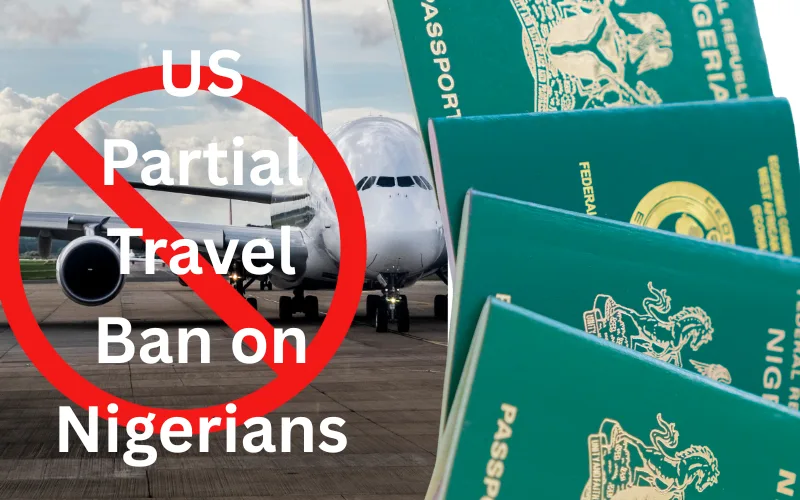
You know, when news breaks about changes in US immigration policy, it hits close to home for so many—especially if you’re a Nigerian professional juggling international deals or an executive eyeing that next big conference stateside. The latest presidential proclamation, signed just days ago on December 16, 2025, by President Trump, expands travel restrictions to include Nigeria under a partial ban.
It’s not a blanket shutdown, but it sure shakes things up for travelers, students, and business folks. Effective January 1, 2026, this policy targets specific visa categories while sparing others, all in the name of bolstering national security. But what does it really mean for you? Let’s break it down in a way that cuts through the jargon, with some real talk on the implications. Honestly, it’s a mix of reassurance for some and headaches for others, but knowledge is your best ally here.
Here’s the thing: Policies like this don’t just alter travel plans; they ripple into careers, family ties, and even Nigeria’s economic links with the US. Think about it—Nigeria sends thousands of students and professionals across the Atlantic each year, contributing to everything from tech innovation to cultural exchanges.
With overstay rates and security concerns cited as reasons, the White House is tightening the reins. But don’t panic yet. I’ve pulled together eight key insights to help you navigate this, whether you’re renewing a visa or plotting your first trip.
1. Understanding the Core of the Proclamation—What’s Changed?
Picture this: You’re in Lagos, wrapping up a board meeting, and suddenly your phone buzzes with alerts about a new US travel ban. The proclamation builds on earlier ones, like the June 2025 version, but now ropes in Nigeria for “partial restrictions.” Entry is suspended for immigrants and nonimmigrants on B-1 (business), B-2 (tourist), combined B-1/B-2, F (student), M (vocational), and J (exchange) visas. For other nonimmigrant visas—like H-1B for skilled workers or L-1 for intracompany transfers—consular officers can shorten validity periods if the law allows.
Why Nigeria? The document points to groups like Boko Haram operating in parts of the country, making vetting tougher, plus overstay stats: 5.56% for B-1/B-2 and 11.90% for F, M, and J visas from a 2024 DHS report. It’s data-driven, they say, but critics argue it’s overly broad. And get this—it kicks in at 12:01 a.m. EST on January 1, 2026, so if you’re mid-application, time is ticking. This isn’t retroactive, though; it’s about future entries.
2. If You Already Have a Valid Visa, Breathe a Little Easier
Good news first, right? If you’re holding a valid US visa right now—say, a B-1 for that upcoming trade show or an F-1 for your MBA program—you’re not suddenly locked out. The policy explicitly doesn’t revoke existing visas issued before the effective date. So, Nigerians abroad or planning trips can proceed, as long as you pass the usual border checks at ports like JFK or LAX.
That said, expect more questions at customs. Officers might dig deeper into your travel purpose, ties back home, or even financials. It’s like that extra layer of scrutiny during a job interview—you know you’re qualified, but they’re double-checking. For executives, this means prepping your itinerary like a pitch deck: clear, concise, and backed by evidence. One mild contradiction here? While the ban isn’t retroactive, heightened enforcement could feel like it is, especially if your visa’s in a restricted category. But overall, it’s a green light with caution signs.
3. Visa Renewals: Not a Slam Dunk Anymore
Ah, renewals—where things get tricky. Under US law, renewing a visa counts as a fresh application, even if you’ve held the same type before. For Nigerians eyeing extensions on those B-1/B-2, F, M, or J visas, you’ll fall squarely under the partial suspension. No automatic denials, but brace for longer waits, stricter reviews, and a heavier lift on proving your case.
You’ll need to show strong roots in Nigeria—think property deeds, job contracts, or family obligations—to convince officers you won’t overstay. Students might face grilling on grades, funding, and post-grad plans; professionals could need letters from US partners verifying business needs. It’s frustrating, isn’t it? Like reapplying for a promotion you already earned. Processing times, already sluggish, might stretch from weeks to months. If your visa expires before January 1, act fast—apply now to potentially grandfather in under old rules.
4. First-Time Applicants Face the Steepest Hill
Newbies, this one’s for you. If you’re applying for a US visa for the first time, especially in those suspended categories, the bar just got higher. Applications are still accepted at the US Embassy in Abuja or Consulate in Lagos, but approvals will hinge on rigorous security checks, your travel history, and rock-solid intent.
Consular folks will zero in on finances—can you afford the trip without working illegally?—and credibility. With Nigeria’s overstay rates flagged, even solid applicants might hit snags. Imagine pitching a startup idea to skeptical investors; that’s the vibe. For business owners, a B-1 for market research? Tougher sell now. The upshot? Diversify your options—maybe eye Canada or the UK, where policies are more welcoming. But if the US is non-negotiable, build your file like a fortress: references, bank statements, the works.
5. Students and Academics: A Major Setback in the Making
Let’s talk education, because Nigeria ranks in the top 10 for sending students to the US—nearly 22,000 in 2024-25 alone. The ban slams F, M, and J visas, meaning new student or exchange visas could grind to a halt post-January 1. Current holders are okay, but renewals or switches? Dicey.
Delayed enrollments might force deferrals or shifts to online programs, disrupting careers in fields like engineering or finance. Professionals moonlighting as instructors on J visas? Same boat. It’s a blow to knowledge transfer—think of all those Nigerian innovators who’ve fueled Silicon Valley. Yet, there’s a silver lining: Case-by-case waivers for “national interests,” like if your research aids US tech. Groups like NAFSA are pushing back, calling the overstay data flawed. If you’re a student exec planning study abroad, consider alternatives like Australia’s skilled migration paths. Harsh, but adaptable minds win out.
6. Professionals and Executives: Business as Usual, or Not?
For the C-suite crowd, this hits where it hurts—mobility. B-1/B-2 visas for conferences, negotiations, or site visits? Suspended for new entries. If you’re on an H-1B or L-1, you’re not fully barred, but shorter validity means more frequent renewals, adding costs and uncertainty.
Picture sealing a multimillion-dollar deal, only to scramble for a waiver. Disruptions could slow partnerships, like those in oil or fintech between Lagos and Houston. Economically, it’s a drag; Nigeria-US trade topped $10 billion last year. But here’s a tangent that matters: This might boost remote tools like Zoom or Microsoft Teams for virtual meetings—handy in a post-pandemic world. Executives, lean on your networks; lobby for exceptions if your work serves US interests, say in energy security. It’s not the end of transatlantic business, just a detour.
7. Family Ties and Immigrant Paths: Longer Roads Ahead
Families feel this deeply. Immigrant visas are suspended outright, narrowing paths for reunification. No more broad exceptions for spouses or kids of US citizens—it’s tighter now to curb perceived loopholes.
Waiting lists could balloon, straining emotional bonds. A Nigerian exec with family in the States? Travel for visits on B-2s gets complicated. It’s poignant, really—policies meant for security end up splitting homes. But exemptions exist for lawful permanent residents, so if you’re a green card holder, you’re exempt. For others, waivers might apply if entry’s deemed vital. Tie this to broader trends: With global migration rising amid climate shifts, families need contingency plans, like dual citizenship pursuits.
8. Exemptions, Waivers, and Looking Ahead—Your Playbook
Don’t overlook the outs. Beyond LPRs and diplomats, athletes for events like the Olympics get a pass. Dual nationals? Travel on your other passport. And waivers? Secretaries of State or Homeland Security can grant them for national interests—think critical business or humanitarian cases.
Apply during interviews; disclose everything. Advocacy groups like the Presidents’ Alliance are mobilizing, so stay tuned via their sites or X (formerly Twitter). Looking forward, this could evolve with diplomacy; Nigeria might improve info-sharing to lift restrictions. For now, pros like you should audit travel plans—renew early, explore Schengen visas for Europe. It’s a curveball, but strategic minds turn obstacles into opportunities.
Whew, that’s the lay of the land. This proclamation reshapes the US-Nigeria bridge, but with smarts and preparation, you can cross it. If you’re affected, consult immigration lawyers—firms like Fragomen or local experts in Lagos. Stay informed; policies shift like market trends. What are your thoughts—does this change your 2026 plans?