KEY POINTS
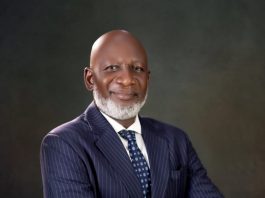
- Finance Minister Wale Edun declared that Nigeria’s economy has been “reset” following the bold reforms of the Tinubu administration.
- Speaking at the 8th APC National Convention, Edun noted a jump in GDP growth from 2% to 4% per annum.
- The government’s medium-term target is 7% growth to effectively lift millions of Nigerians out of poverty.
- Key growth drivers include local crude refining, a free foreign exchange market, and large-scale investments in agriculture and digital infrastructure.
MAIN STORY
The Federal Government has described the current economic climate as a transition from a “broken system” to a foundation of credibility.
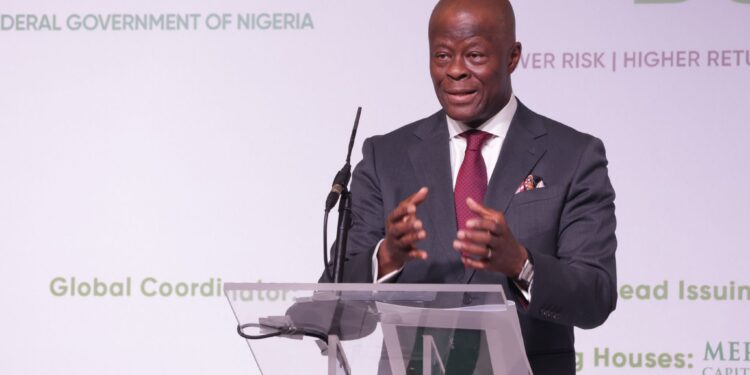
Addressing the APC National Convention in Abuja on Friday, Wale Edun, the Minister of Finance and Coordinating Minister of the Economy, argued that years of neglecting economic realities had forced a “moment of reckoning.”
By removing market distortions and improving the fiscal situation, the administration claims to have rebuilt trust with both local citizens and international investors.
A significant portion of this “reset” involves a $1 trillion economy vision. To achieve this, the government is partnering with the World Bank to boost electricity supply and providing increased support to farmers via the Bank of Industry.
Additionally, the administration is betting on “digital exports” to curb the “Japa” syndrome. By investing in fiber optics and automation, the government aims to enable Nigerian youth to export services remotely, providing a high-value alternative to physical migration.
THE ISSUE
The primary challenge acknowledged by the Minister is the “Reform-Hardship Gap.” While macroeconomic indicators like GDP are improving, the “Cost of Correction” is still being felt heavily by ordinary Nigerians. This “Transition Pain” is the result of shifting from subsidized systems to a free-market model. To resolve this, the government is pushing for a 7% growth rate, which Edun believes is the “gold standard” required to ensure that growth translates into actual job creation and poverty reduction across the 31 APC-governed states.
WHAT’S BEING SAID
- “What we have done is to reset Nigeria’s economy… we chose reform over delay,” stated Minister Wale Edun.
- “The hardship we see today is the cost of correcting past imbalances. What matters is the direction of travel,” Edun added during the convention.
- “The economy has strengthened from a previous two per cent growth rate to the current four per cent,” the Minister noted regarding performance.
- “The giant has reawakened. We must rise to the challenge of building a vibrant economy,” he concluded.
WHAT’S NEXT
Following the convention, the Ministry of Finance is expected to fast-track the deployment of the newly approved agricultural support funds through the Bank of Industry. In the coming weeks, a detailed roadmap for the “remote service exports” initiative is anticipated, outlining how youth can access the new digital infrastructure. Investors will also be watching for the next World Bank-backed power sector update to see if the promised boost in electricity supply matches the “reset” rhetoric. Finally, the administration will continue to monitor GDP data to see if the 4% growth rate can be sustained into the second half of 2026.
BOTTOM LINE
The bottom line is that Nigeria is trading “comfort” for “correction.” Minister Edun’s report suggests that while the “reset” button has been pressed, the real test lies in reaching that 7% growth target. For the average Nigerian, the promise of a “gold standard” economy depends entirely on whether these high-level reforms can soon deliver cheaper food and reliable power.