Key Points
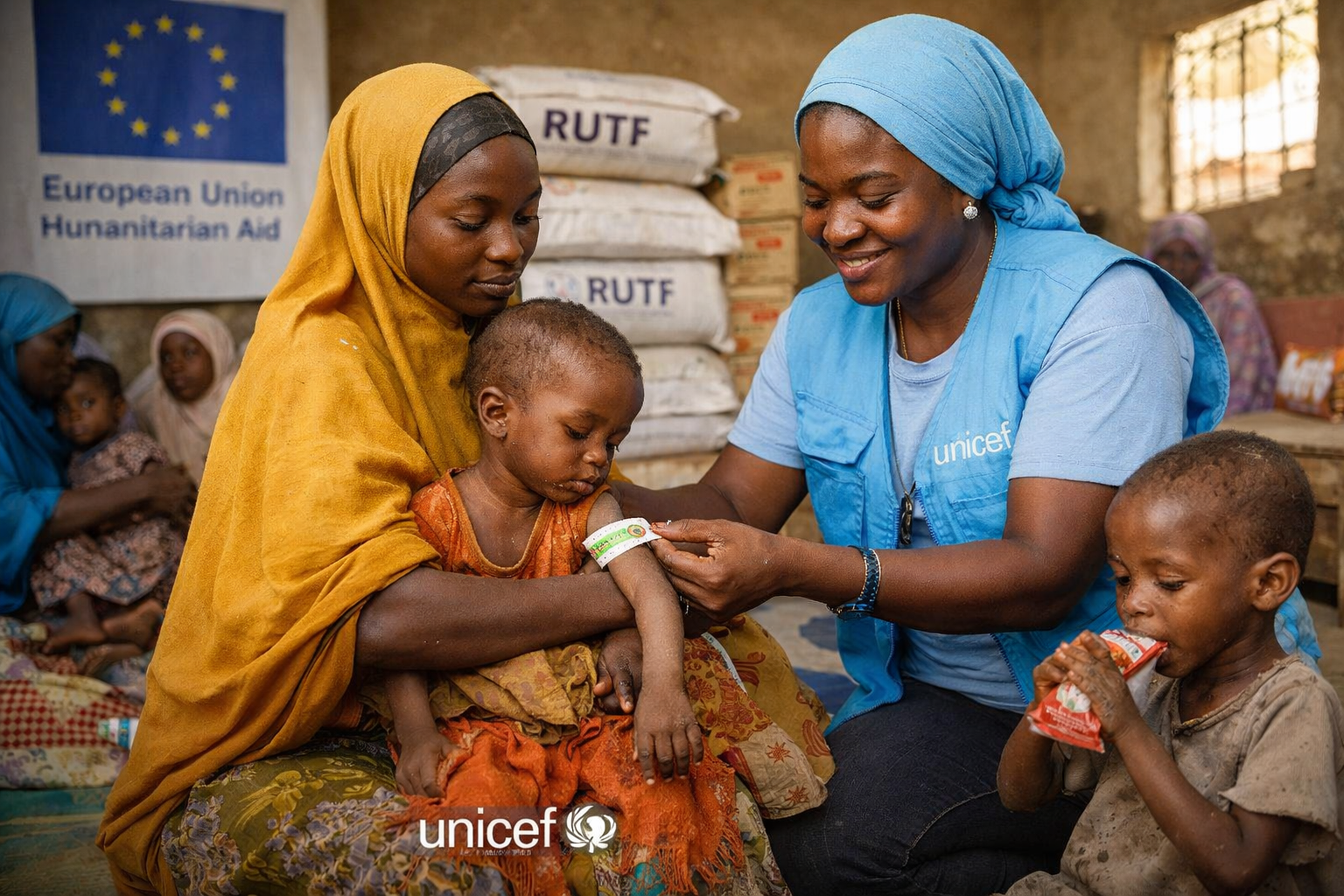
- Over 40,000 malnourished children in Yobe State have received treatment through EU-funded programmes
- UNICEF says the May–September lean season worsens child malnutrition each year
- Ready-to-Use Therapeutic Food (RUTF) has improved recovery rates among affected children
- 306 health facilities now provide nutrition treatment services across the state
- Despite progress, conflict, flooding, and food shortages remain major challenges
Main Story
More than 40,000 malnourished children in Yobe State have received life-saving treatment through nutrition programmes supported by the European Union, according to the United Nations Children’s Fund (UNICEF).
This was disclosed by UNICEF’s Malnutrition Manager, Joseph Senesie, during a media field visit and virtual dialogue held in Damaturu. He explained that the intervention has been especially critical during the annual lean season, which runs from May to September.
The lean season is a period when food supplies are often limited, making children more vulnerable to acute malnutrition. During this time, families struggle to meet their nutritional needs, leading to a rise in severe health conditions among children.
Senesie, however, expressed optimism about the outlook for 2026. He noted that the state may avoid the high levels of malnutrition seen in previous years, thanks to sustained humanitarian support from the European Union.
A key part of this success has been the availability of Ready-to-Use Therapeutic Food (RUTF). This specially formulated food is used to treat children suffering from severe acute malnutrition. According to Senesie, children who begin treatment with RUTF often recover quickly and return to healthy living conditions.
He also highlighted the importance of collaboration between UNICEF, government agencies, and other partners. This joint effort has strengthened the overall response to malnutrition in the state.
The Issues
Malnutrition remains a serious public health challenge in Yobe State and across many parts of Nigeria. Several factors contribute to this problem, including food shortages, disease outbreaks, and displacement caused by conflict.
Large numbers of people have been displaced from their homes, limiting access to food and healthcare services. At the same time, flooding and economic hardship have worsened food insecurity, leaving many households vulnerable.
Another challenge is the strain on healthcare systems. Without proper resources and infrastructure, it becomes difficult to detect and treat malnutrition early, increasing the risk of severe cases.
What’s Being Said
According to Dr Babagana Machina, Executive Secretary of the Yobe State Primary Health Care Board, these conditions have made it difficult for many families to provide adequate nutrition for their children.
Health officials say the EU-funded intervention has made a significant difference in addressing these challenges.
Dr Machina noted that the support has ensured a steady supply of essential treatment materials, including RUTF and therapeutic milk. He added that 306 health facilities across the state are now equipped to provide Outpatient Therapeutic Programme (OTP) services.
These services allow children with severe malnutrition to receive treatment without being admitted to hospitals, making care more accessible for families.
Machina also highlighted improvements in community-based screening and data systems. According to him, these advancements have helped health workers identify malnutrition cases early and respond more quickly.
Meanwhile, the State Nutrition Officer, Hajiya Hadiza Adamu, commended UNICEF and the European Union for their continued support. She noted that their contributions have strengthened nutrition programmes and improved access to treatment across the state.
Adamu shared data showing that malnutrition rates in Yobe dropped to about eight percent in 2022 but later increased to 10.9 percent in 2023. This rise placed the state in Phase Three of the Integrated Food Security Phase Classification (IPC), indicating a serious situation.
What’s Next
Despite the challenges, Yobe State is working towards improving its nutrition status. According to Adamu, the goal is to reduce malnutrition levels and move the state to Phase Two classification by the end of 2026.
To achieve this, the government and its partners plan to continue expanding nutrition services and strengthening existing programmes.
Currently, the state has:
- 306 Outpatient Therapeutic Programme (OTP) sites
- 120 supplementary feeding centres
- Stabilisation facilities for severe cases
These facilities are expected to play a key role in improving treatment access and recovery rates.
However, experts stress that more needs to be done. Continuous investment, stronger partnerships, and expanded interventions will be necessary to sustain progress and reach more vulnerable communities.
Bottom Line
The support from UNICEF and the European Union is making a real impact in the fight against child malnutrition in Yobe State. Thousands of children have already received life-saving treatment, and more are expected to benefit as programmes expand.
However, the fight is far from over. Ongoing challenges like conflict, food insecurity, and climate-related issues continue to threaten progress.
Sustained efforts, stronger systems, and long-term commitment will be crucial to ensuring that every child has access to proper nutrition and a healthy future.